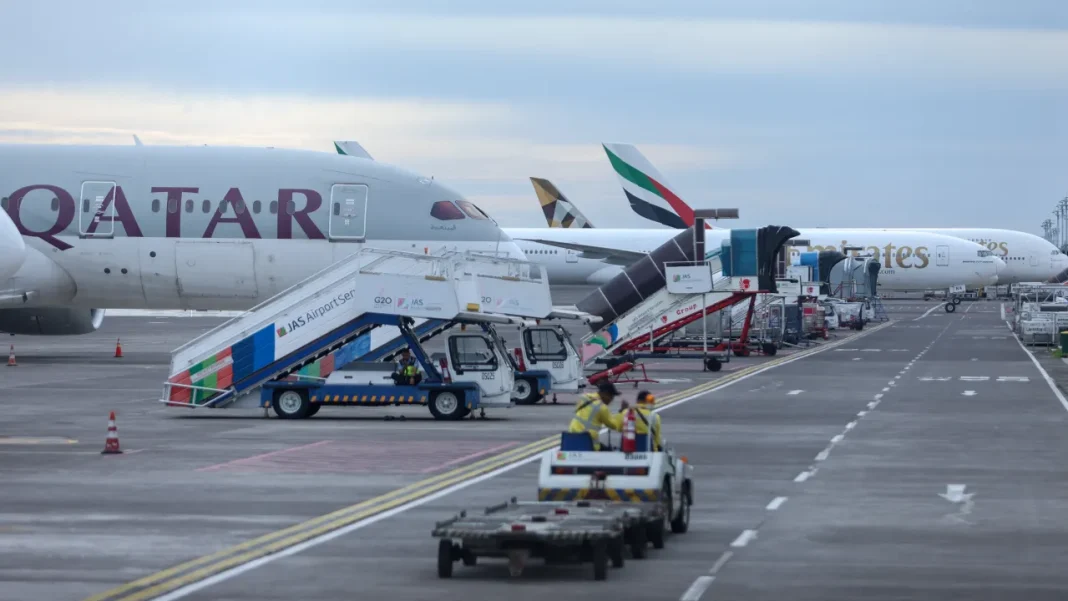

With recent tensions escalating in the Middle East, various nations have implemented airspace closures, leading to significant disruptions in international travel. These restrictions are impacting airlines and passengers globally, leading to altered routes and delays.
Impact on International Airlines

Airlines operating in the Middle East are facing challenges as countries close their airspace amidst rising geopolitical tensions. Carriers are being forced to reroute flights, leading to increased fuel costs and longer travel times. This not only affects airlines financially but also impacts the passenger experience due to prolonged journeys and potential delays.
The closure of major air routes has a ripple effect, compelling airlines to find alternative pathways, thereby straining existing flight schedules. Key carriers operating within and around the region are working vigilantly to minimize disruptions and provide timely updates to passengers, yet the unpredictability of the situation remains a significant hurdle.
Passenger Experience and Adjustments

Travelers are finding themselves having to navigate last-minute changes to their itineraries due to the ongoing airspace closures. Many passengers are experiencing delays and extended layovers as airlines adjust to the new routing requirements, leaving some anxious about their travel plans.
To cope with these disruptions, airlines are enhancing customer service support and ensuring clear communication with affected travelers. Passengers are advised to stay informed by frequently checking airline announcements and flight statuses to manage expectations and adjustments efficiently.
Economic Implications for the Travel Industry

The airspace restrictions in the Middle East are posing economic challenges for the global travel industry. Airlines are incurring additional costs due to longer flight paths and increased fuel consumption, which may eventually reflect on ticket prices and the overall cost of air travel.
Moreover, the uncertainty caused by these geopolitical disputes is causing unease among travelers, potentially leading to a decline in bookings to and from affected regions. The travel industry, still recovering from the pandemic, faces an arduous task in maintaining stability amidst these new challenges.
Global Efforts and Future Outlook

International aviation authorities and governments are engaging in dialogues to address the situation, hoping to find diplomatic resolutions that will lead to a reopening of airspace. However, until such agreements are reached, airlines and passengers will need to adapt to the current complexities surrounding Middle Eastern airspace.
The long-term outlook remains uncertain, and it is crucial for airlines to develop robust contingency plans while continuing to prioritize passenger safety and operational efficiency. As the situation evolves, the global travel community remains hopeful for a swift resolution.
The continued adaptation and cooperation among global airlines emphasize the collective effort to mitigate the impact of these closures. Passengers are encouraged to remain patient and supportive as the industry navigates these turbulent times.