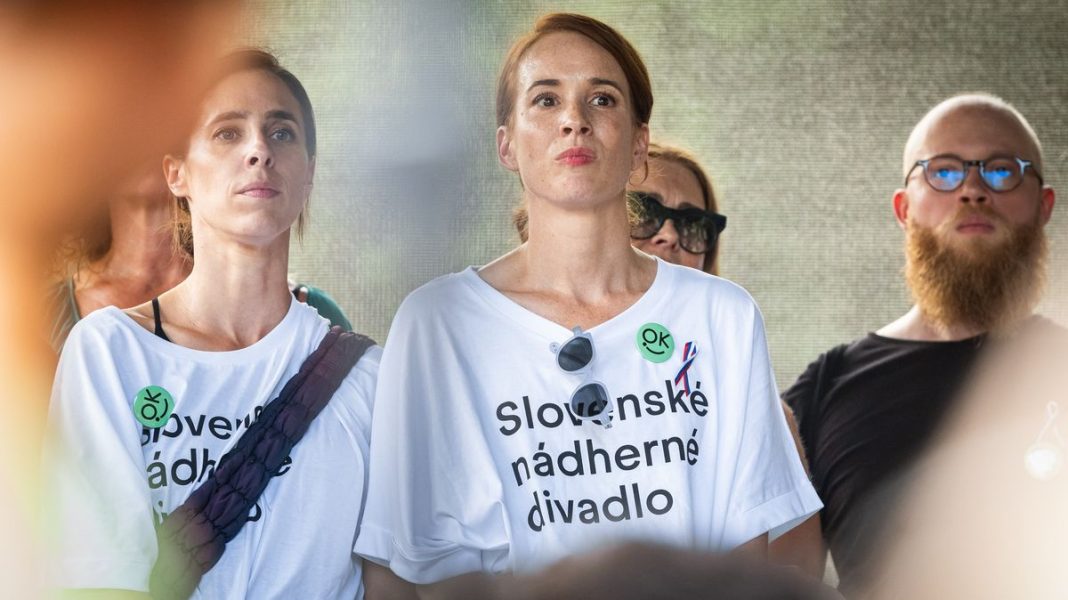

The Slovak National Theatre recently announced the dismissal of Tatiana Pauhofova, a decision that has raised concerns within the Slovak acting community. This move may signal further changes as more actors are rumored to leave the esteemed institution.
Director’s Decision Sparks Controversy

The dismissal of Tatiana Pauhofova, a beloved actress known for her impactful performances, has sent ripples throughout the Slovak cultural scene. The director of the Slovak National Theatre has cited internal restructuring efforts as the primary reason for her dismissal, sparking debate about the future direction of the theatre. With Pauhofova’s departure, there is widespread speculation about the underlying motives and whether artistic differences played a role.
Colleagues and fans alike have expressed their disappointment. Pauhofova, who has been a prominent figure on the Slovak stage, brought significant acclaim to the theatre. Her exit raises questions about the institution’s commitment to maintaining its current standard of artistic excellence.
Implications for the Slovak Theatrical Landscape

The departure of Pauhofova is indicative of possible larger shifts within the Slovak National Theatre. Rumors suggest that other actors may follow suit, either due to dissatisfaction with the current administration or in search of new opportunities that better align with their artistic aspirations.
Such changes could have broader implications for the Slovak theatrical landscape, shifting talent towards other venues and companies across the region. This potential exodus may impact the theatre’s ability to draw audiences and maintain its status as a cornerstone of Slovak culture.
Reactions from the Artistic Community

The artistic community in Slovakia has been vocal in its response to these developments. Numerous actors and directors have taken to social media to express their discontent and concern for the future of the institution. Many fear that the dismissal reflects a shift away from fostering local talent and innovative productions.
However, some industry insiders suggest that change could be beneficial, bringing fresh ideas and perspectives to the theatre. It remains to be seen whether the current administration can balance these new directions with preserving the theatre’s rich heritage.
Theatre Management’s Next Steps
In response to the backlash, the Slovak National Theatre’s management has outlined plans to engage in open dialogue with its staff and the public. A series of meetings and forums are being scheduled to address concerns and glean insights into how best to move forward collaboratively.
While acknowledging the challenges, theatre officials have emphasized a commitment to maintaining artistic integrity and supporting the development of Slovak talent. Their ability to navigate this transition period will likely influence the theatre’s reputation for years to come.
The developments at the Slovak National Theatre highlight the complexities of modern theatre management and the balancing act necessary to honor tradition while embracing change.
Source: Official Slovak National Theatre website.