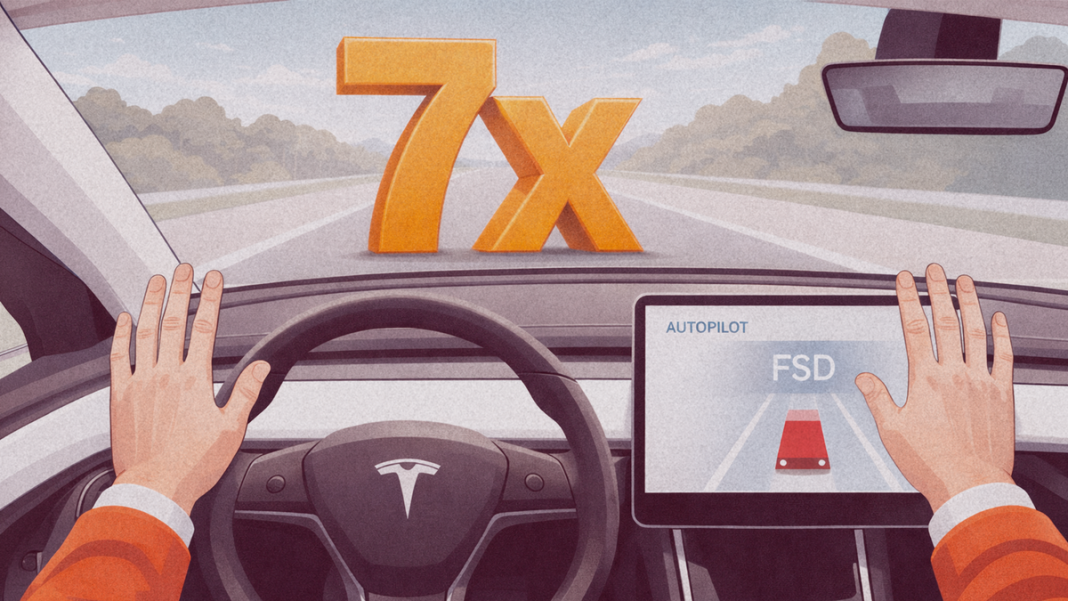

Tesla’s Autopilot system is often touted as a revolutionary step in vehicle safety, but how does it truly compare to human drivers? This article examines the available data and evaluates the claims surrounding this innovative technology.
Understanding Tesla’s Autopilot

Autopilot is an advanced driver-assistance system developed by Tesla, designed to handle certain driving scenarios such as highway cruising and lane changes. The company claims that this technology can reduce human error, which is the most significant cause of road accidents. Utilizing cameras, sensors, and complex algorithms, Autopilot constantly monitors the vehicle’s surroundings to make real-time decisions.
Supporters argue that this technology marks a major leap forward in automotive safety. Tesla regularly updates its vehicles with new features and improvements through over-the-air updates, enhancing system performance and adding new capabilities without any physical vehicle modifications. However, the success of these updates in terms of safety improvements remains a topic for examination.
Data on Safety and Accidents

Tesla frequently releases data claiming that its vehicles operating on Autopilot are involved in fewer accidents compared to the national average. According to their reports, Tesla vehicles have been found to experience fewer accidents per million miles driven when Autopilot is engaged. However, some critics point out that the data can be misleading, as the technology is mostly used in highway conditions, which are statistically safer than urban environments.
Independent studies and government reports, such as those from the National Highway Traffic Safety Administration (NHTSA), also contribute to the ongoing debate. While there is evidence suggesting increased safety, skeptics argue for greater transparency and third-party verification to truly assess Autopilot’s impact on driving safety.
Legal and Ethical Considerations

The introduction of Autopilot technology raises several legal and ethical questions. Who is liable in the event of an accident when the vehicle is operated under Autopilot? Current regulations vary widely across different jurisdictions, with some regions enforcing stricter rules on semi-autonomous driving than others.
Moreover, ethical concerns have emerged about how autonomous vehicles should handle unavoidable accidents. Engineers and policymakers continue to grapple with these dilemmas, attempting to codify moral decisions into lines of code. As technology advances, this will remain a contentious arena requiring broad discussion and consensus.
Public Perception and Real-World Applications

Public opinion on Tesla’s Autopilot varies significantly, with enthusiasts praising the innovation and critics highlighting concerns about safety and reliability. Media coverage sometimes influences these perceptions, emphasizing incidents involving Autopilot without always providing contextual data regarding overall safety performance.
In real-world applications, some users report enhanced safety and convenience, while others caution users to remain engaged and ready to take control. Tesla reiterates that Autopilot is meant to assist, not replace, human drivers, urging constant vigilance despite the automated capabilities.
In conclusion, while Tesla’s Autopilot may represent a significant step toward safer driving, its effectiveness and safety are still being evaluated. Continued advancements, transparent reporting, and regulatory developments will be crucial in determining its long-term impact on road safety.