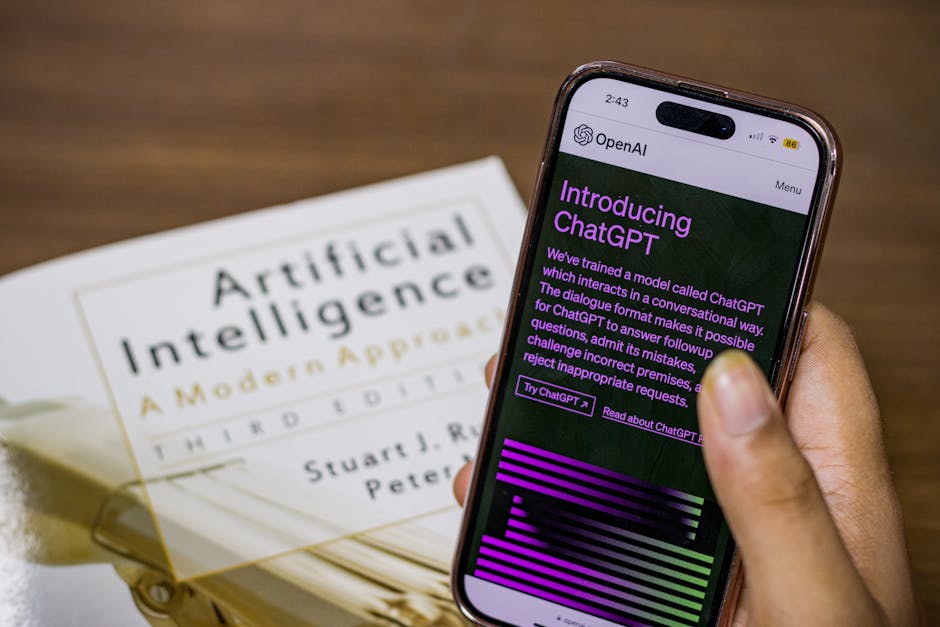

The discussion on whether artificial intelligence (AI) has reached the level of human intelligence is complex and multifaceted. Perspectives vary greatly, depending on specific interpretations of intelligence and AI’s potential capabilities.
Definitions of Intelligence

Human intelligence is characterized by problem-solving abilities, emotional fluctuations, and creativity. Comparatively, AI is designed to simulate cognitive functions, but it often lacks the emotional depth and intuition that humans possess. While AI can process and analyze vast datasets much faster than humans, it doesn’t exhibit genuine understanding or consciousness.
Many experts argue that AI mimics aspects of human intelligence but hasn’t achieved parity. The development of neural networks and machine learning algorithms allows AI to learn from data, improving its responses in specific scenarios. However, true intelligence involves abstract reasoning and consciousness, areas where AI still falls short.
Achievements and Limitations

AI has made significant strides in areas such as natural language processing, image recognition, and predictive analytics. Notably, AI models like GPT can generate human-like text and understand contextual nuances to some extent. These advancements suggest a nearing of certain human-like capabilities.
Nevertheless, AI’s limitations are evident in tasks requiring human empathy, ethical judgment, or creative innovation. These areas involve complex human experiences and societal norms, which are challenging for AI to navigate. Such tasks highlight the qualitative differences between human and artificial intelligence.
AI Across Industries
In various industries, AI is enhancing efficiency and productivity by automating routine tasks and providing data-driven insights. In healthcare, AI aids in diagnosing diseases and personalizing treatment plans, while in finance, it detects fraudulent activities and automates trading.
These applications demonstrate AI’s ability to augment human intelligence rather than replace it. By handling large-scale data analysis, AI frees human professionals to focus on tasks requiring emotional intelligence and strategic thinking.
Ethical and Philosophical Perspectives

The question of AI reaching human intelligence also involves ethical considerations. As AI systems become more autonomous, concerns about accountability, privacy, and decision-making arise. Philosophical debates center around the nature of consciousness and whether an AI system could ever achieve a state of self-awareness.
These discussions highlight the importance of establishing ethical frameworks and guidelines to govern AI development and deployment, ensuring that technological advancements benefit society without compromising human values.
In conclusion, while AI has made remarkable progress, it remains distinct from human intelligence, excelling in specific domains while lacking in others. The dialogue on AI’s potential continues to evolve, shaped by ongoing technological advancements and ethical considerations.