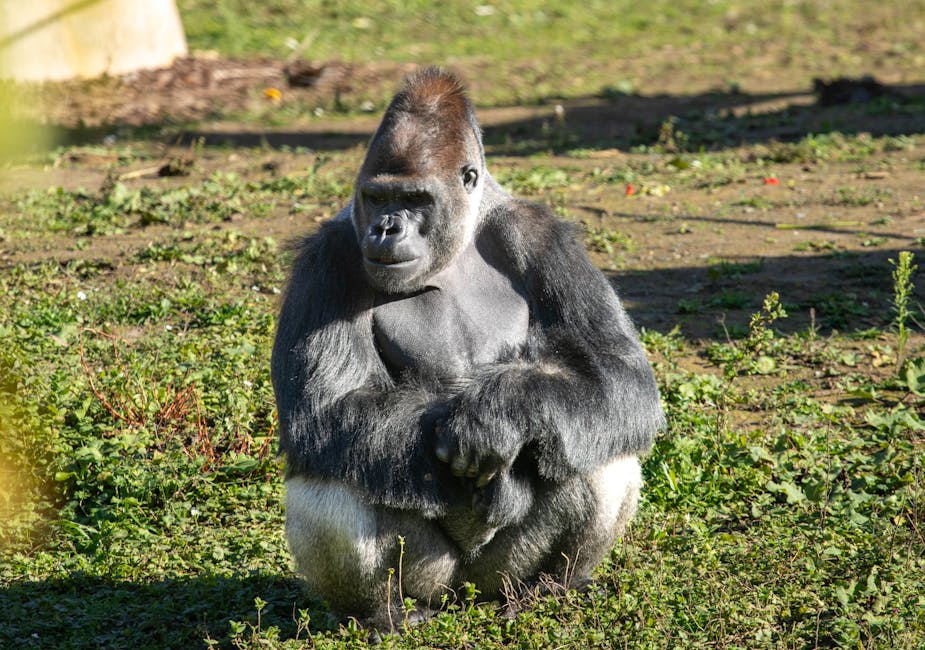

A team of Czech scientists is making strides in the conservation of critically endangered mountain gorillas by mapping the parasites that threaten their survival. This innovative approach aims to provide essential data to improve gorilla health and support ongoing conservation efforts.
Understanding the Threats to Mountain Gorillas

Mountain gorillas, often referred to as “Gorillas in the Mist,” are facing numerous challenges that threaten their existence. Among these challenges, parasitic infections pose a significant risk to their health. Parasites can cause severe health problems for gorillas, leading to decreased populations if not adequately managed. Recognizing the urgency, Czech researchers have embarked on a mission to identify and map these harmful organisms.
The research team is utilizing advanced technology to study the parasites affecting gorilla populations. By identifying the different species of parasites and understanding their life cycles, scientists can develop targeted strategies to mitigate their impact. This research not only enhances our understanding of infectious diseases in primates but also contributes to the broader field of wildlife conservation.
The Role of Technology in Conservation Efforts

Modern technology plays a crucial role in conservation efforts, offering tools that were unimaginable just a few decades ago. The Czech scientists are employing genomic sequencing and other advanced methodologies to identify parasite species with unprecedented accuracy. These techniques allow them to track parasite prevalence and distribution more effectively, providing data crucial for informed conservation strategies.
Furthermore, technology facilitates collaboration among international conservationists. By sharing data globally, researchers can develop a more comprehensive approach to solving the complex issues faced by endangered species. The cross-border collaboration helps ensure that conservation methods are both effective and sustainable.
Czech Contributions to Global Wildlife Conservation

Czech Republic’s involvement in such high-impact conservation projects underscores the country’s dedication to global wildlife preservation. Czech scientists are increasingly recognized for their contributions to various international efforts aimed at protecting endangered species. This work not only elevates the country’s standing in the scientific community but also plays a vital role in the fight to save mountain gorillas.
By mapping parasites and understanding their effects on gorilla populations, Czech researchers are providing invaluable insights that further global conservation efforts. The data generated through these studies is essential not only for the immediate needs of gorilla health but also for long-term preservation strategies.
Future Directions and Implications

Looking ahead, the information gathered by Czech scientists could serve as a model for similar conservation efforts worldwide. As data continues to be analyzed, researchers anticipate developing more effective health management strategies aimed at mitigating existing threats to gorillas.
The implications of this work extend beyond mountain gorillas. By pioneering these techniques, Czech researchers are paving the way for future studies on other endangered species. The innovative methodologies used in this research have the potential to transform how conservationists approach the protection of wildlife, providing new tools and insights that could be applied across various ecosystems.
In conclusion, the contributions of Czech scientists are proving instrumental in the global efforts to preserve mountain gorillas. By focusing on understanding and combating parasitic threats, they are helping secure a future where these magnificent creatures can thrive.