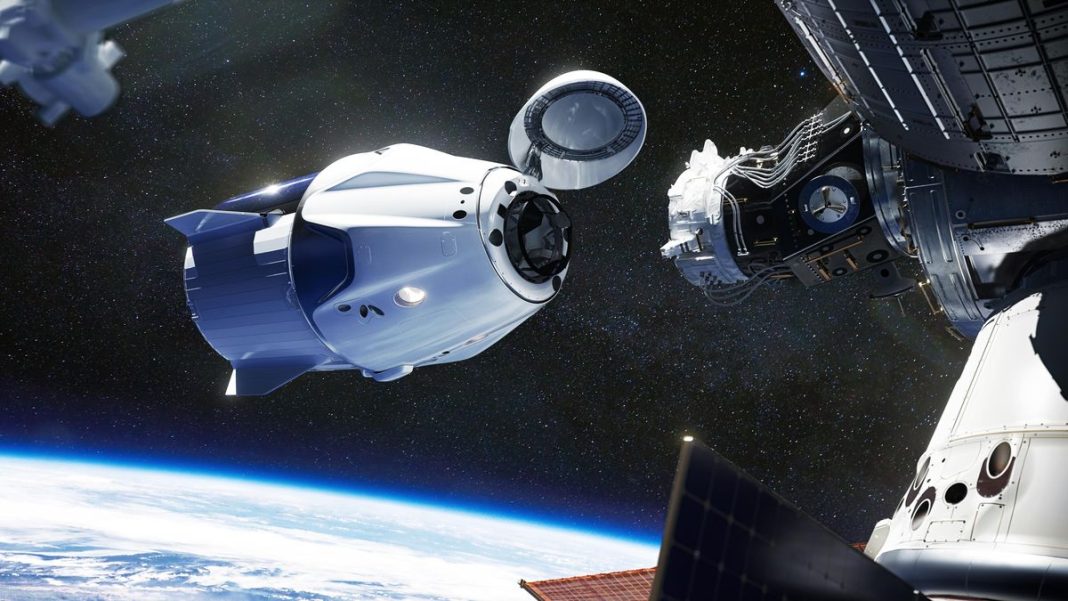

The Crew Dragon spacecraft has successfully arrived at the International Space Station, carrying essential scientific research initiatives including a study on pneumonia. This mission marks another significant milestone in the collaboration between NASA and private aerospace companies.
Successful Arrival at the ISS
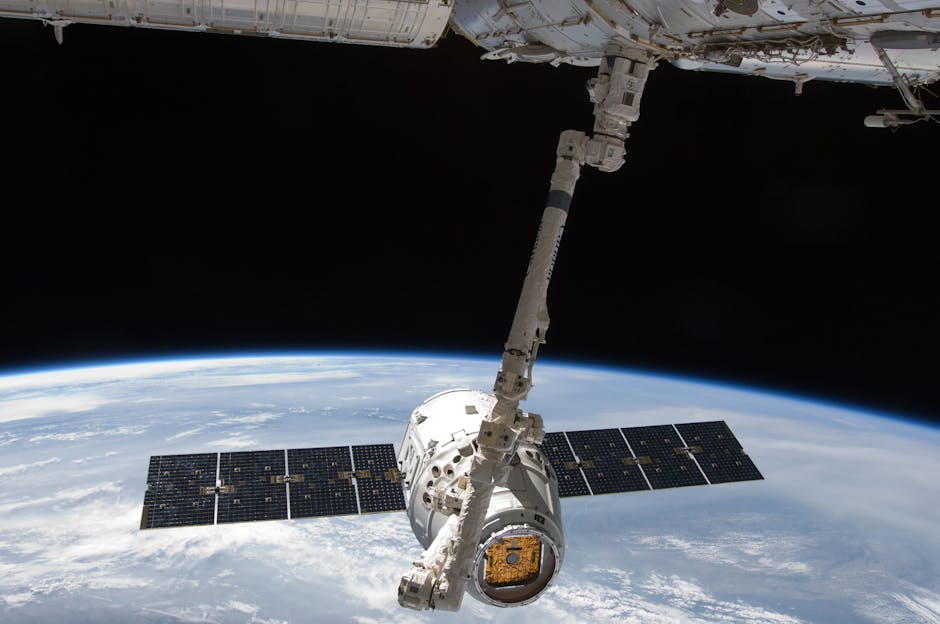
The Crew Dragon spacecraft, developed by SpaceX, docked with the International Space Station early Tuesday morning. The mission, which launched from Kennedy Space Center, carried both astronauts and vital scientific experiments. This rendezvous highlights the growing role of commercial partnerships in space exploration and research.
With this achievement, SpaceX continues to solidify its position as a leading force in the aerospace industry. The Crew Dragon’s docking showcases the capabilities of private companies in supporting major governmental space initiatives and ensures a steady stream of supplies and experiments to the ISS.
Investigating Pneumonia Causes in Space

One of the most crucial aspects of this mission is the investigation into pneumonia and its causes. Researchers aim to study the bacteria that often lead to pneumonia infections to understand better how microgravity influences their behavior. This study could lead to breakthroughs in prevention and treatment both in space and on Earth.
The unique environment of space offers scientists an unparalleled opportunity to observe bacterial growth and mutation under zero-gravity conditions. The findings could offer new insights into the infection’s development and potentially uncover innovative medical approaches.
Implications for Medical Research

The research conducted on the ISS holds significant implications for medical science. Understanding how diseases manifest in space can provide breakthroughs in how we manage infections on Earth. This study specifically focuses on the genetic behavior of bacteria, offering the potential for new drug developments.
The experiments may reveal vulnerabilities in bacterial life cycles that have gone unnoticed under Earth’s gravity. The ultimate goal is to pioneer new antibiotics and treatment methodologies that are more effective against resistant strains of bacteria.
Future of Space-Based Research

The success of the Crew Dragon mission serves as a testament to the growing potential for space-based research and its applications. The increased frequency of missions to the ISS allows for more diverse and extensive experimentation that would be challenging to conduct on Earth.
As commercial organizations continue to work alongside governmental space agencies, the possibilities for scientific discoveries expand considerably. The hope is that findings from space research contribute to technological advancements and improved quality of life, especially in fields such as medicine and biotechnology.
The continued collaboration between entities like NASA and SpaceX is paving the way for a future where space-based research will play a critical role in solving global challenges. The Crew Dragon’s recent mission to the ISS reaffirms this trend and highlights the excitement around potential scientific breakthroughs.
Source: Official NASA website.