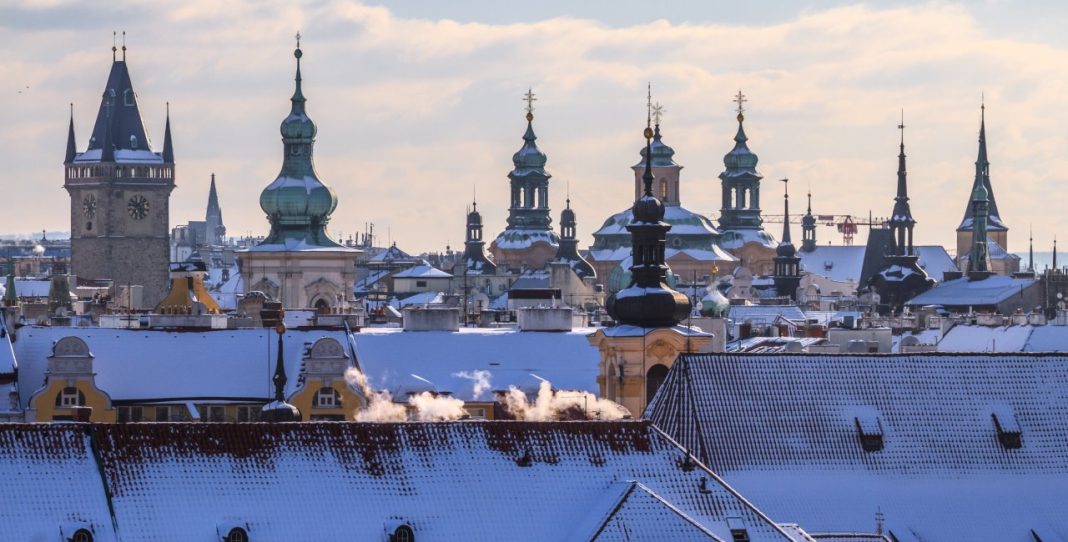

Czechia has recently experienced a period of intense cold, earning it the nickname “Central Europe’s Scandinavia.” This historical deep freeze has taken the country by surprise and provoked many questions about its origins and long-term impacts.
The Historical Context of Czechia’s Cold Spells

The recent cold wave in Czechia isn’t an isolated phenomenon but rather part of a historical pattern. Czechia has a history of severe winters dating back to medieval times. Periodically, the country experiences extreme cold spells that stem from a combination of geographical positioning and atmospheric conditions. These cold phases are influenced by air masses from Siberia, which travel westwards, bringing with them icy temperatures.
Records indicate that some of the coldest winters in Czech history occurred during the Little Ice Age, which spanned from approximately the 14th to the 19th centuries. Notably, the winters of 1929 and 1962 were particularly harsh, serving as benchmarks for today’s weather phenomena. Understanding these patterns is crucial for preparing infrastructural and agricultural adaptations necessary to withstand future temperature drops.
Climatic Influences and Current Conditions

Current climatic conditions are influenced by several atmospheric patterns. The polar vortex, a large area of low pressure and cold air surrounding the Earth’s North Pole, has shown increased activity, often leading to extreme weather conditions across Europe, including Czechia. When the polar vortex is strong, it keeps the cold air restricted to polar regions, but if it weakens, cold air can plunge farther south, affecting Central Europe.
In recent years, climate change has also played a pivotal role. While global warming suggests rising temperatures, it also leads to erratic weather patterns that can paradoxically cause severe cold snaps due to shifts in atmospheric circulation patterns. Scientists continue to study the interactions between a warming globe and the persistence of severe winter events.
Impact on Czech Society and Economy

The unexpected cold wave has profound impacts on Czech society, affecting various sectors, from transportation and energy to agriculture and public health. In transport, icy conditions lead to delays and disruptions, highlighting the need for improved infrastructure to cope with such extreme weather. The heavy demand for energy also underscores the need for sustainable and reliable heating solutions.
Furthermore, the cold significantly impacts agriculture, with crops and livestock at risk due to harsh conditions. Farmers must adapt their practices to mitigate losses and enhance resilience. Public health systems are also strained as hypothermia and other cold-related illnesses become more prevalent.
Future Preparedness and Adaptive Strategies

As Czechia faces more frequent extreme weather events, adaptive strategies are essential to mitigate the impacts. Building resilience involves enhancing infrastructure to withstand harsh winters, developing efficient energy systems, and encouraging sustainable agricultural practices. Such measures will help ensure societal stability during future cold spells.
The government and local organizations are crucial in educating the public about safety measures during extreme weather and investing in meteorological research to improve forecasting accuracy. This proactive approach will better prepare Czechia for the next deep freeze, maintaining the country’s stability and safety.
While the recent cold spell has challenged Czechia, it also presents an opportunity to enhance preparation and adaptability for future climate-related events.