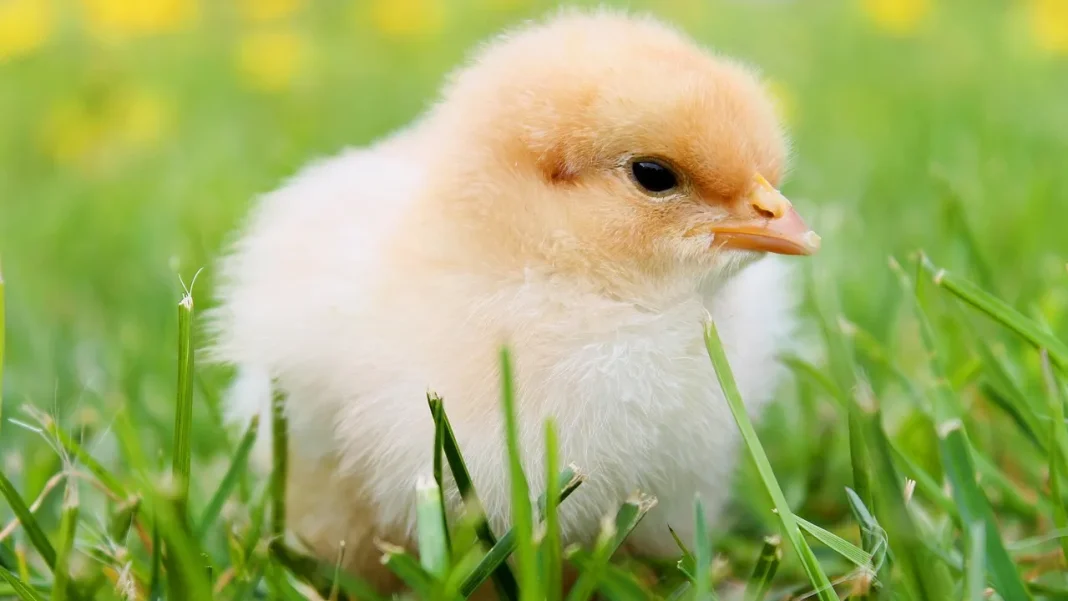

A groundbreaking study has observed the Bouba-Kiki effect in chickens, challenging longstanding assumptions held within the field of linguistics. This discovery could have significant implications for our understanding of cognitive processes across species.
The Bouba-Kiki Effect Explained

The Bouba-Kiki effect is a phenomenon where people consistently match certain sounds with specific shapes. Typically, a “bouba” sound is associated with a rounded shape, while a “kiki” sound correlates with a jagged shape. This effect has been primarily studied in humans, leading to significant discussions concerning its implications for language development and cognitive science.
The recent discovery that chicks also exhibit this effect prompts new questions about the universality of these cognitive processes. This insight suggests that the Bouba-Kiki connection may not be exclusive to humans, providing an exciting avenue for interdisciplinary research.
Implications for Cognitive Science

This finding challenges the notion that language-related phenomena are solely human constructs. The study’s results imply that certain cognitive processes might be more deeply rooted in biology than previously thought. It raises the question of whether these sound-shape associations are innate, suggesting a shared evolutionary trait across species.
Researchers are now considering whether the ability to connect sounds to shapes is present in other non-human animals. This could lead to a re-evaluation of existing theories related to linguistic evolution and the cognitive abilities of various species.
Methodology of the Study

The study employed a controlled experiment where newly hatched chicks were exposed to both “bouba” and “kiki” sounds alongside corresponding shapes. Astonishingly, the chicks exhibited a preference consistent with the classic human response to the Bouba-Kiki effect, indicating a cross-species ability to associate sounds with visual stimuli.
These findings were meticulously analyzed, ensuring that the observed behaviors were consistent and statistically significant. Such rigorous methodology adds credibility to the study’s conclusion and opens doors for further exploration into non-human cognitive abilities.
Future Research Directions

The implications for future research are vast. Scientists are now eager to explore whether similar phenomena exist in other bird species or even mammals. Such studies could enhance our understanding of animal cognition and contribute to fields as diverse as artificial intelligence and neurology.
Moreover, analyzing the neurobiological basis behind these associations might offer insights into shared evolutionary pathways. This could potentially lead to breakthroughs in understanding how cognitive processes develop in various species, including our own.
The observation of the Bouba-Kiki effect in chicks could revolutionize our approach to studying cognition, breaking down barriers between linguistic theory and biological sciences.
Source: Official study publication website.