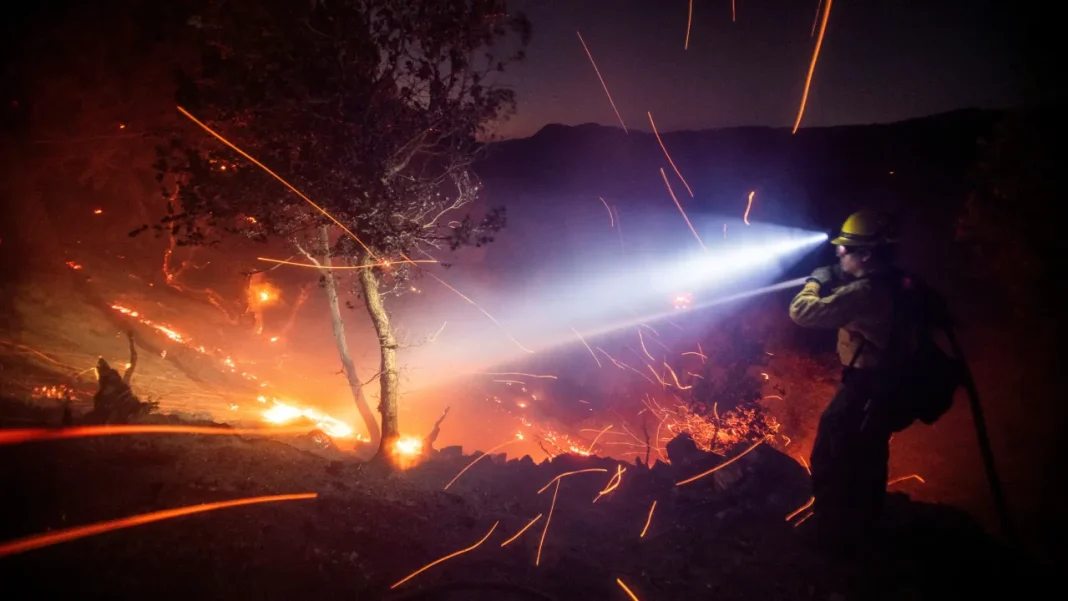

American scientists have recently uncovered crucial data regarding the impact of wildfire pollution on mortality rates. This study sheds light on the significant health risks associated with wildfire smoke, which has become an increasing concern due to the rising frequency of wildfires worldwide.
The Science Behind Wildfire Pollution

Wildfires release vast amounts of pollutants, including particulate matter (PM2.5), carbon monoxide, and volatile organic compounds, which can travel long distances and affect air quality over vast regions. American researchers have utilized advanced computational models to predict how these pollutants impact human health, particularly focusing on mortality rates associated with prolonged exposure to fine particulate matter.
These models analyze data from numerous wildfire incidents and their consequent air quality impacts. By correlating increased PM2.5 levels with hospital admissions and mortality rates, scientists are able to estimate the long-term health repercussions of wildfire pollution. The findings underline the correlation between poor air quality due to wildfires and a subsequent rise in respiratory and cardiovascular diseases.
Estimated Health Impacts

The recent study estimates that wildfire pollution could be responsible for thousands of premature deaths annually across the United States. Populations in areas frequently exposed to wildfire smoke face increased risks, with vulnerable groups such as children, elderly, and individuals with preexisting conditions being most affected.
This research provides invaluable insights for healthcare providers and policymakers by highlighting areas with elevated health risks. Understanding these patterns helps in developing targeted interventions and public health strategies to mitigate the adverse effects of wildfire smoke on human populations.
Strategies for Mitigation and Preparedness

Given the significant health implications of wildfire pollution, there is a pressing need for effective mitigation strategies. Implementing early warning systems and improving community preparedness can significantly reduce health impacts. Efforts to manage and reduce fuel loads in forests, coupled with fire suppression tactics, are crucial in minimizing wildfire occurrences and severity.
Advancements in air quality monitoring technology are also pivotal. Real-time data tracking can inform the public and policymakers about current pollution levels, allowing for timely health warnings and the implementation of protective measures.
Environmental Policy and Future Research

Policy developments aimed at reducing carbon emissions and addressing climate change are essential in managing future wildfire risks. This research advocates for an integrated approach that combines environmental policy reform with public health initiatives to address the root causes of increasing wildfire frequency and severity.
Further research is necessary to comprehend the full extent of long-term health impacts of wildfire pollution exposure. Continued investment in scientific research will be key to developing innovative solutions and enhancing resilience to wildfire-related health challenges.
In conclusion, the findings of this study highlight a critical environmental and public health issue, emphasizing the need for comprehensive strategies to mitigate the harmful effects of wildfire pollution on human populations.