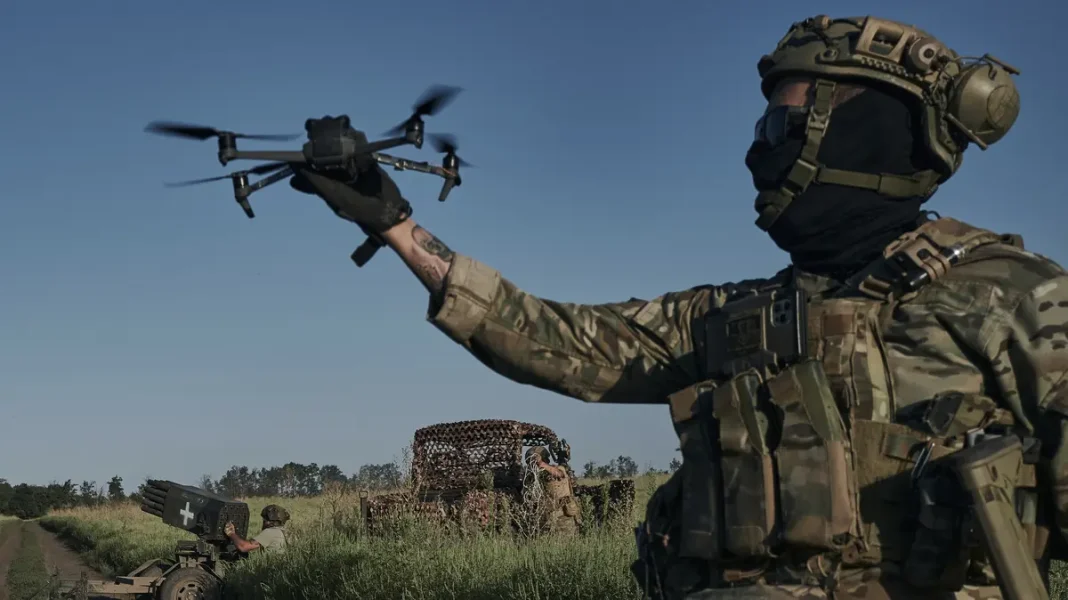

Recent warnings from the USA about Chinese-manufactured drones have brought attention to their increasing presence in Europe. This is particularly relevant in the Czech Republic, where these drones have gained traction among both the military and police forces.
Growing Popularity of Chinese Drones in Czech Security

In recent years, Chinese drone manufacturers have captured significant market share worldwide, thanks to advanced technology and competitive pricing. In the Czech Republic, law enforcement and military entities have been embracing these drones to augment operational capabilities. The Czech Army and police units have found these drones invaluable for reconnaissance and surveillance missions due to their efficiency and reliability.
Chinese drones like those from DJI have been favored for their easy integration into existing systems and their advanced features, such as high-resolution cameras and long battery life. The capability to quickly deploy and cover vast areas makes them an essential tool for tasks ranging from crowd monitoring to search and rescue operations.
U.S. Concerns Over Data Privacy and Security

The U.S. government has expressed concerns that Chinese-made drones could pose national security risks, primarily due to potential data privacy issues. The fear is that these drones might be transmitting sensitive data back to China, given that companies such as DJI are obligated to comply with Chinese laws that could require data sharing with the state.
In response to these concerns, the U.S. has urged its allies, including those in Europe, to reconsider their use of Chinese drones. This has led to a complex situation where the capability benefits provided by these drones must be weighed against potential cybersecurity threats.
Impact on Czech Military and Policing Strategies

The reliance on drones for various security operations has led the Czech Army and police forces to evaluate the balance between operational advantages and security risks. The potential for surveillance and data manipulation by foreign entities presents a dilemma in strategizing the drone fleet for national security missions.
Policymakers in Czechia are tasked with investigating alternatives and ensuring that their procurement decisions are aligned with both security priorities and technological advancement goals. This might involve diversifying suppliers or investing in European or locally developed technologies to mitigate risks.
Exploring Alternatives and Safeguards

As part of risk mitigation, the Czech government is exploring alternative suppliers and embedding cybersecurity measures into drone operations. Implementing stringent data encryption and ensuring drones operate within secure communication networks are pivotal steps.
Collaboration with European partners to develop homegrown drone technology could also be a long-term solution, fostering local industry and reducing dependency on potentially compromised foreign equipment. Increased cooperation within the EU could catalyze advancements in this sector.
The increasing objections to Chinese drones highlight the ongoing struggle between leveraging technological advancements and safeguarding national security. In Czechia, as in other countries, this balance will require continuous review and adaptation to maintain robust and secure operations.
Source: Official DJI website.