
The ongoing conflict in Ukraine has prompted the United States and Kyiv to make significant adjustments to their peace proposals. However, the reactions from the Kremlin indicate clear opposition to these developments, highlighting the complexities of achieving lasting peace in the region.
Revised Peace Proposals Unveiled

The United States, in coordination with Ukrainian officials, has unveiled new peace proposals aimed at ending the conflict that has ravaged eastern Ukraine for nearly a decade. These revisions are reportedly designed to accommodate the shifting dynamics on the ground and involve a series of diplomatic and security measures. The proposals emphasize the importance of adhering to international law and maintaining Ukraine’s territorial integrity.
Key elements of the adjusted proposals include a withdrawal of foreign military forces and a ceasefire agreement monitored by international peacekeepers. They also propose pathways for the reintegration of separatist-held territories under Ukrainian control, along with decentralized governance structures that respect local autonomy. These changes aim to address previous stumbling blocks that have hindered progress in negotiations.
Kremlin’s Sharp Dissent

The Kremlin has expressed clear dissent against the revised proposals from the US and Kyiv, stating that they fail to address Russia’s security concerns and interests. Russian officials have criticized the lack of direct negotiations with the separatist leaders in eastern Ukraine and reiterated their demand for Ukraine to implement the Minsk Agreements fully.
Moscow views the new proposals as one-sided, arguing that they impose unfair constraints on Russia while overlooking legitimate regional issues. Russian diplomats have claimed that without a balanced approach that includes lifting economic sanctions, any peace initiative is unlikely to succeed in the long term.
International Reactions and Diplomatic Efforts

The international community has responded with cautious optimism and concern. Several European nations have welcomed the efforts by the US and Ukraine to renew peace talks, emphasizing the need for diplomatic engagement to prevent further military escalation. However, there is also acknowledgment of the Kremlin’s grievances, underscoring the necessity for a balanced and inclusive peace process.
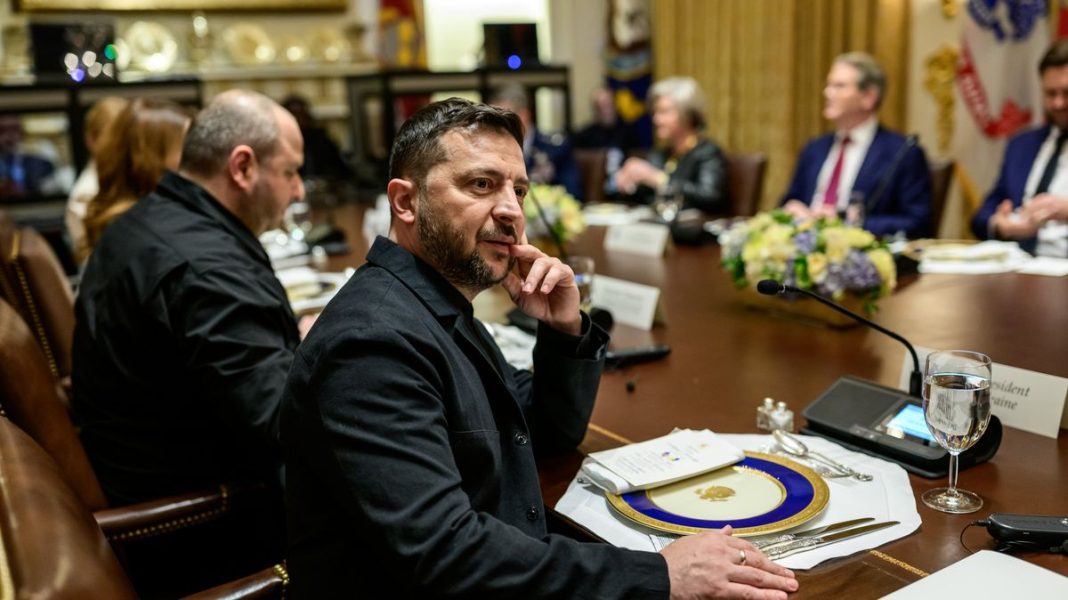
Meanwhile, bilateral discussions and multilateral forums have intensified as global leaders seek to mediate between the opposing sides. Diplomatic channels are being leveraged to encourage dialogue, with the hope of finding common ground that could lead to a sustainable resolution to the conflict.
Challenges Ahead

The path to peace in Ukraine is fraught with challenges. The entrenched positions of the involved parties and the geopolitical ramifications of the conflict complicate negotiations. The situation is further aggravated by historic distrust and nationalistic sentiments on all sides.
Despite these hurdles, the call for a peaceful resolution remains strong among international stakeholders. The potential for regional instability makes it critical for a peaceful and practicable agreement to be reached. Efforts by influential nations to bridge divides and encourage concessions could be pivotal in advancing toward a resolution.
In conclusion, while the adjusted peace proposals mark a significant step forward, the road to peace in Ukraine will likely require sustained diplomatic effort and considerable compromise. Effective engagement with all stakeholders remains essential to foster conditions conducive to lasting peace.