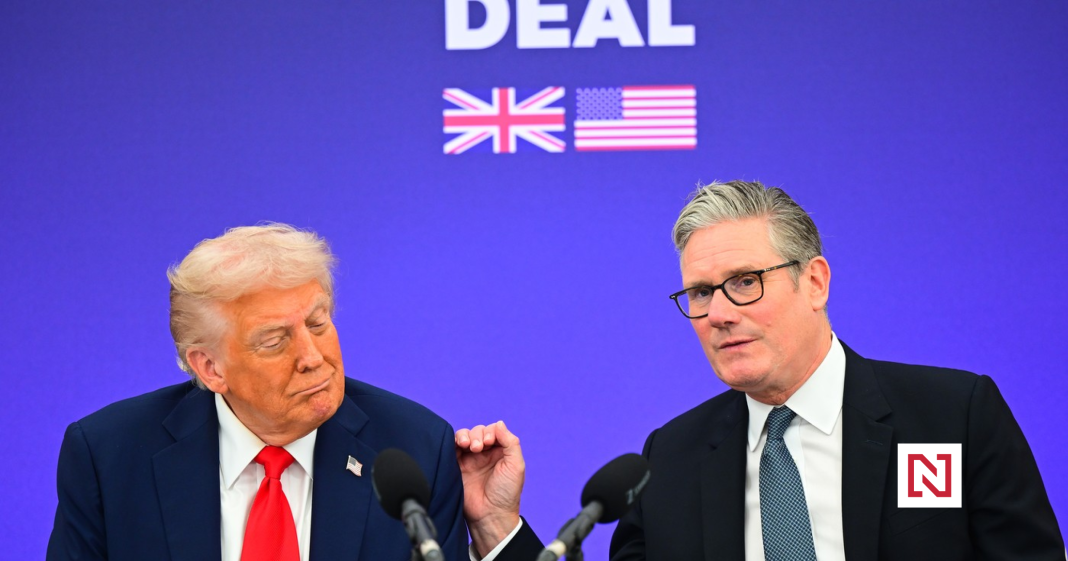

In a bold move that underscores the UK’s cautious approach to foreign military involvement, Prime Minister Keir Starmer has reportedly denied the US request to use British military bases for potential strikes against Iran. This decision marks a significant moment in the UK’s foreign policy, particularly in its relations with both the US and the Middle East.
Reasons Behind the Decision

Prime Minister Starmer’s refusal to grant the US access to British bases stems from a complex interplay of diplomatic and strategic considerations. The UK has historically balanced its special relationship with the US with a cautious approach to military engagements. Starmer’s government appears committed to maintaining this balance, ensuring that any military support aligns with the UK’s long-term strategic interests and values.
The decision also reflects the UK’s ongoing commitment to seeking diplomatic solutions in the Middle East. By denying the use of bases, the UK signals its preference for pursuing dialogue and negotiation, rather than escalating military tensions in an already volatile region.
Impact on UK-US Relations
While this decision might strain ties with the US, it could also exemplify the UK’s autonomy in foreign affairs. It reinforces the notion that while the UK values its alliance with the US, it is not obliged to align with all US military strategies, especially those that might provoke significant geopolitical repercussions.
This stance may lead to diplomatic discussions between the two nations to reassess military cooperation and strategic alignment. However, it is unlikely to severely damage the longstanding alliance, given the deeply rooted ties in trade, security, and shared values.
Reactions from Iran and the Middle East

From Iran’s perspective, Starmer’s decision could be interpreted as a positive gesture, fostering hope for renewed diplomatic engagement. The UK may leverage this move to bolster its role as a peace-building force in the Middle East, advocating for dialogues that address mutual concerns without resorting to military action.
Regional allies and partners may view the UK’s decision with mixed reactions. Countries reliant on US military support may express concern, while those advocating for de-escalation in the region might welcome the UK’s independent stance.
Domestic Implications

Domestically, Starmer’s decision is likely to ignite debate among political parties and within public discourse. Supporters will view it as a principled stance emphasizing diplomacy over warfare, aligning with broader public sentiment wary of foreign military entanglements.
Critics might argue that denying support to the US could endanger the UK’s strategic partnerships and undermine its influence on global security matters. This decision could serve as a litmus test for Starmer’s foreign policy agenda and its alignment with national interests.
As the situation develops, Prime Minister Starmer must navigate the intricate dynamics of international diplomacy, ensuring that the UK’s actions resonate with its global standing and favor peaceful conflict resolution.