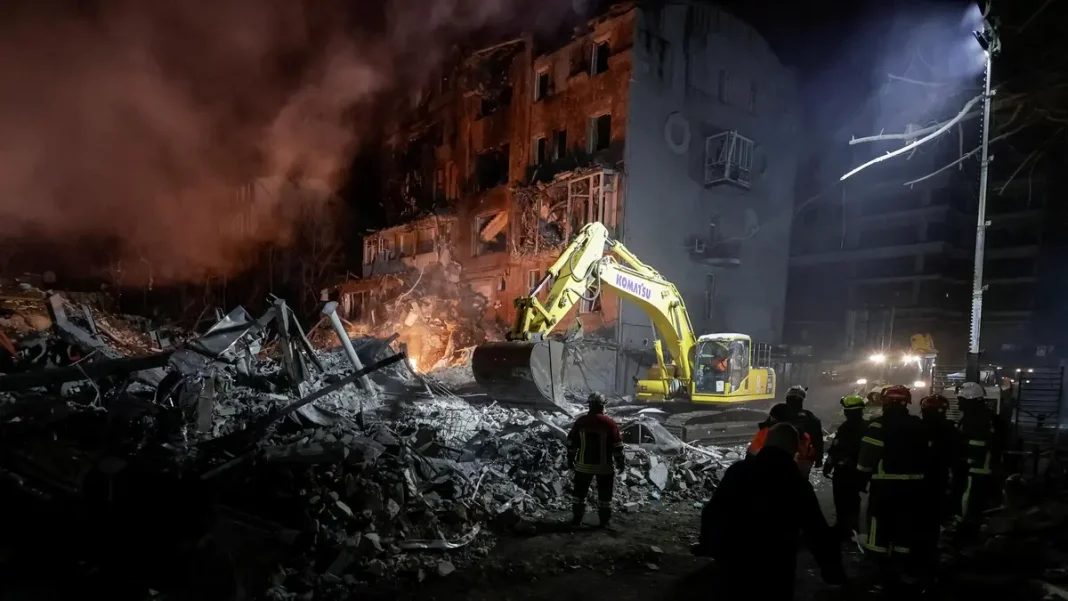

A recent Russian attack on the Ukrainian city of Kharkiv has resulted in at least two deaths and five injuries, escalating tensions in the ongoing conflict between the two nations. The assault has drawn widespread condemnation from the international community.
The Incident in Kharkiv

The attack occurred late Wednesday night, targeting residential areas in one of Ukraine’s most populous cities, Kharkiv. According to local authorities, Russian missiles struck multiple locations, leading to significant destruction and civilian casualties. Rescue teams were dispatched promptly, working through the night to rescue trapped individuals and assess the extent of the damage.
Witnesses described scenes of chaos as buildings collapsed and fires broke out, engulfing parts of the city. Emergency services have been on high alert, with medical facilities overwhelmed by the influx of injured civilians. The attack underscores the vulnerability of urban centers in the ongoing conflict, prompting increased security measures.
International Reaction

Ukrainian President Volodymyr Zelensky condemned the attack, urging the global community to increase support for Ukraine. Many nations have already expressed solidarity with Ukraine, denouncing the assault and calling for immediate diplomatic interventions to de-escalate the situation.
The European Union and the United Nations have both issued statements criticizing the attack and warning of potential consequences. The ongoing conflict in Ukraine has led to a humanitarian crisis, with thousands displaced and in need of urgent aid.
Continuing Conflict

The attack on Kharkiv is part of a broader strategy by Russian forces to exert pressure on Ukraine. The conflict, which began in 2014, has seen periodic escalations, each exacerbating the humanitarian situation in the region. Despite multiple attempts at peace talks, a resolution remains elusive.
Military analysts suggest that such attacks aim to destabilize Ukraine’s efforts to regain control over its territories. This latest incident has once again highlighted the grim realities of war and the urgent need for effective diplomatic interventions to prevent further loss of life.
Implications for Eastern Europe

The persistent conflict has implications not only for Ukraine but for the entire Eastern European region. Neighboring countries are closely monitoring the situation, with many increasing their military readiness in response to perceived threats from Russia. The stability of the region is a growing concern, leading to calls for stronger NATO involvement.
As tensions persist, the focus remains on diplomatic solutions to address the root causes of the conflict. International bodies continue to advocate for dialogue, emphasizing the importance of protecting civilian lives and restoring peace.
The attack on Kharkiv serves as a stark reminder of the conflict’s human toll, urging for renewed efforts towards resolution.
Source: Official Ukrainian Government website.