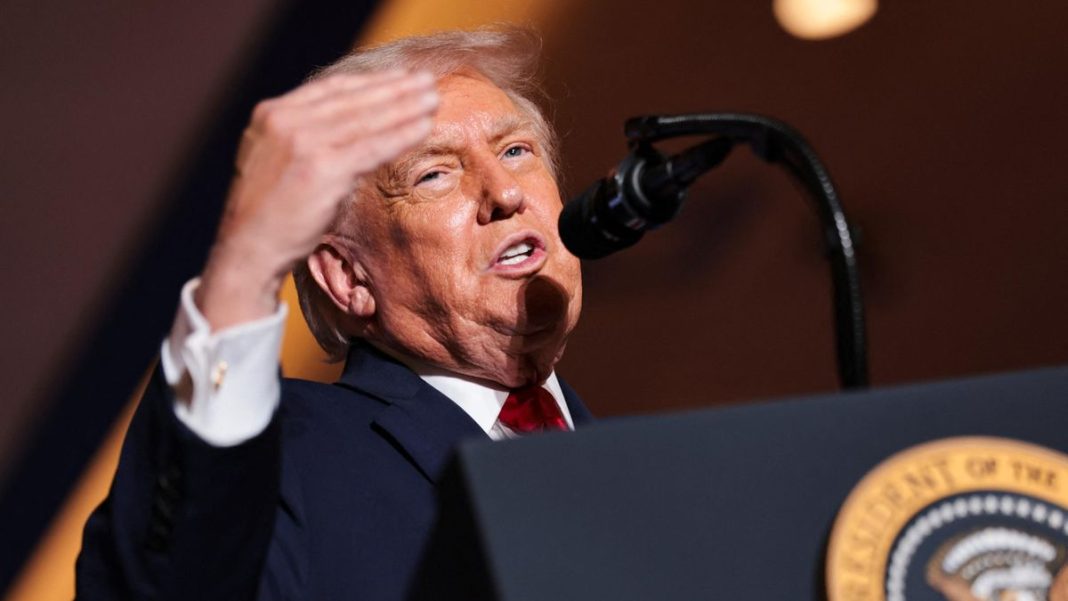

Recent comments by former President Donald Trump regarding Venezuela have reignited discussions about his past interest in acquiring Greenland. These remarks highlight continued geopolitical interests and stir memories of his previous statements that were widely discussed globally.
The Context of Trump’s Greenland Remarks

In 2019, Trump made headlines with his expressed interest in purchasing Greenland, an autonomous territory of Denmark. At the time, the suggestion was met with surprise and amusement in political circles, as well as outright rejection by the Danish government. Trump’s comments were part of larger discussions regarding the strategic importance of Greenland due to its location and natural resources.
Trump’s interest in Greenland was not without precedent, as the United States has historically regarded the region as geopolitically significant. The U.S. maintains a military base at Thule, Greenland, which is vital for missile defense and space surveillance. Therefore, this renewed interest, albeit indirectly, underscores ongoing American strategic considerations in the Arctic.
Economic and Strategic Drivers

The resurfacing of Greenland remarks comes amid Trump’s recent statements on Venezuela, a country rich in oil and natural resources. His focus on acquiring resource-rich territories reflects broader economic and strategic motivations that characterized his administration’s foreign policy.
Both Greenland and Venezuela hold the potential for significant economic gain through resource extraction. For Greenland, this includes untapped mineral resources and rare earth elements which are increasingly valuable in technology and defense industries. Meanwhile, Venezuela’s vast oil reserves could have provided the U.S. with increased energy security.
International Reactions and Implications

The international community reacted strongly to Trump’s initial Greenland proposition. Danish leaders described the idea as “absurd,” leading to a diplomatic rift between the United States and Denmark. Meanwhile, Greenlandic officials emphasized their autonomy and were quick to assert that they were not for sale.
Such proposals also present wider geopolitical implications, particularly involving China and Russia, who have shown interest in increasing their presence and influence in the Arctic. For allies, Trump’s comments might have set a precedent for how U.S. interests in resource-rich territories could be pursued.
Reflection on U.S. Territorial Ambitions

The renewed discussion over Trump’s territorial ambitions presents a moment to reflect on U.S. geopolitical strategies and international relationships. Acquiring new territories, especially in such a publicly discussed manner, raises questions about sovereignty, modern imperialism, and international diplomacy.
While the acquisition of whole territories seems anachronistic, these discussions reveal the continuing importance of natural resources and strategic locations in the formulation of U.S. foreign policy. For analysts and policymakers, it prompts an evaluation of how these objectives align with contemporary global norms and multilateral agreements.
As Trump’s Greenland remarks resurface, they provide insight into the complex interplay between historic geopolitical interests and modern economic strategies. While often theatrical, they underline enduring themes in international relations.