
Former President Donald Trump has expressed his belief that the United States will remain involved in Venezuela’s affairs for an extended period. His projections have sparked discussions about the U.S.’s geopolitical strategies in Latin America and their potential implications.
Trump’s Predictions on Venezuela

In recent statements, Donald Trump predicted that the United States would have a long-term involvement in managing the situation in Venezuela. His comments come amid ongoing political and humanitarian crises in the South American country. Trump suggested that the complexity of Venezuela’s issues, including its economic instability and political turmoil, necessitates sustained foreign engagement, particularly from the U.S.
Trump’s remarks have reignited debates surrounding America’s foreign policy decisions under his administration. Known for his confrontational approach toward the Venezuelan government, particularly under Nicolás Maduro, Trump often emphasized the need for rigorous measures and international coalitions to address the situation.
Venezuela’s Ongoing Crisis

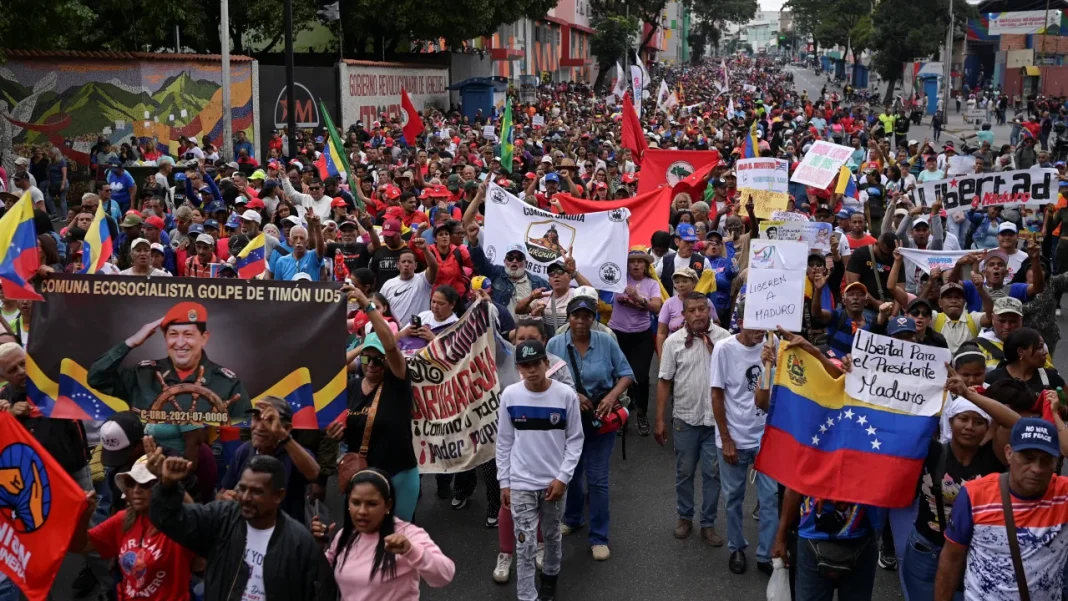
Venezuela has been grappling with severe political and economic challenges over the past decade. Widespread corruption, hyperinflation, and shortages of basic goods have led to a humanitarian crisis that the international community finds increasingly difficult to ignore. As millions of Venezuelans flee, regional stability remains at risk, prompting calls for external intervention.
The United States has historically taken a leading role in addressing these crises, employing sanctions and diplomatic efforts to apply pressure on the Venezuelan government. These measures have often been met with mixed results, raising questions about the effectiveness of such strategies.
U.S. Involvement Under Scrutiny

The notion of long-term U.S. involvement in Venezuela brings with it certain controversies. Critics argue that prolonged intervention might infringe on Venezuelan sovereignty and could potentially lead to negative perceptions of the U.S. in Latin America. Others, however, assert that without significant international efforts, the situation in Venezuela could further deteriorate.
Trump’s prediction underscores the complexity of the situation and the challenges involved in crafting a coherent foreign policy that balances moral obligations with pragmatism. Stakeholders often debate the ethical considerations of foreign intervention versus respect for national self-determination.
Future Prospects for U.S.-Venezuelan Relations

Looking forward, the U.S.’s approach to Venezuela will likely depend on its administration’s diplomatic strategies and the evolving dynamics within Venezuela. Continuous dialogue with international partners and regional organizations will be crucial to formulating policies that aim to stabilize Venezuela while respecting its autonomy.
While Trump’s statement highlights his administration’s hardline stance, future U.S. policies may adopt a varied approach, possibly emphasizing more collaborative and humanitarian strategies to aid the Venezuelan people without exacerbating tensions.
The ongoing discourse around U.S. involvement in Venezuela reflects the broader challenges of global diplomacy in unstable regions. Whether Trump’s predictions materialize will largely depend on how the U.S. balances intervention with global cooperation and respect for sovereignty.