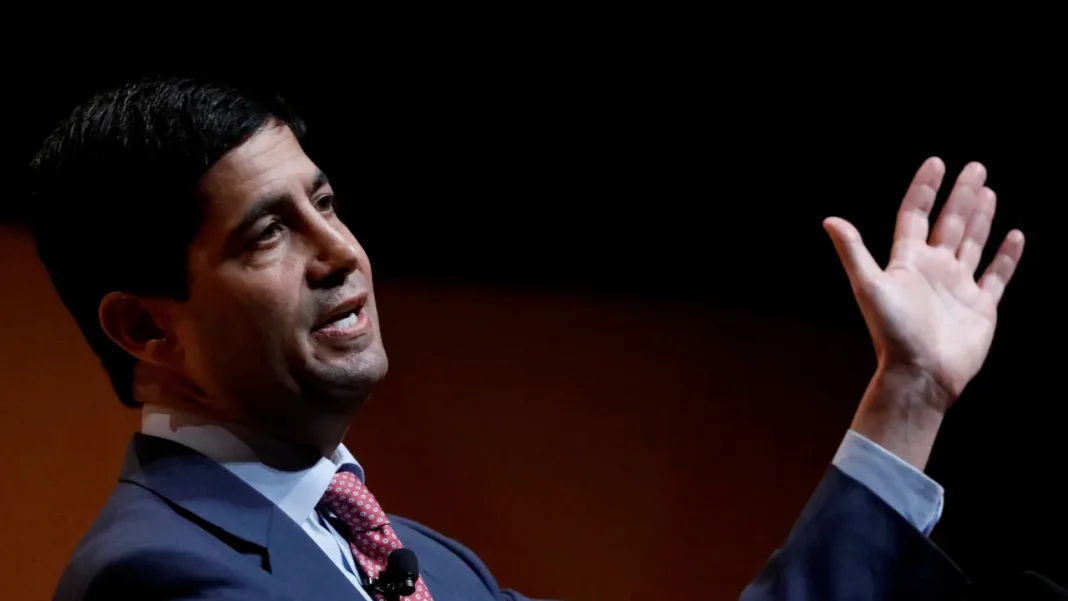

In a significant move, former President Donald Trump nominated Kevin Warsh as the head of the Federal Reserve. This decision could lead to notable shifts in U.S. monetary policy and its broader economic impact.
Who is Kevin Warsh?

Kevin Warsh is a well-known figure in financial circles, having served as a Federal Reserve governor from 2006 to 2011. During his tenure, he played a critical role in navigating the economic turbulence of the 2008 financial crisis. Warsh’s experience in high-stakes financial decision-making and his robust academic background make him a highly qualified candidate for the top spot at the Fed.
Beyond his time at the Federal Reserve, Warsh has also served as an economic advisor and held positions in the private sector, which further expands his understanding of both public and private financial ecosystems. His nomination signals a potential shift towards more market-friendly policies, aligning with Trump’s broader economic agenda.
Potential Impact on Monetary Policy

Kevin Warsh is known for advocating a cautious approach to monetary expansion, which could mean a shift away from the ultra-low interest rates that have characterized recent years. He has often expressed concerns about the long-term risks of an excessively accommodative monetary policy, suggesting potential changes in how the Federal Reserve approaches inflation and interest rates.
This emphasis on stability and caution might lead to a more restrained pace for future interest rate hikes. Such a strategy could resonate well with investors seeking predictability in the central bank’s policies, although it might spark debates about growth strategies in a post-pandemic economy.
Reactions from Financial Markets

The prospect of Warsh leading the Federal Reserve has elicited mixed reactions from financial markets. While some investors are optimistic about his experience and market-friendly stance, others express concern over how swift policy changes might disrupt current economic recovery efforts.
Market analysts are closely monitoring the nomination process and any emerging policy directions that Warsh might introduce. His views on regulation, combined with his past fiscal conservatism, have the potential to influence sectors that are sensitive to interest rate changes, including housing and automotive industries.
International Implications

Warsh’s potential leadership of the Federal Reserve could also influence international monetary policies. As the head of one of the most influential central banks worldwide, his decisions will reverberate across global economies, impacting exchange rates and international trade relations.
Countries with strong economic ties to the United States, such as those in Europe and Asia, are watching the nomination process closely. Any shifts in U.S. interest rates can have considerable effects on global markets, affecting everything from currency stability to cross-border investments.
In conclusion, Kevin Warsh’s nomination by Donald Trump signifies a pivotal moment for the Federal Reserve and its future policies. As the process unfolds, the financial world awaits the potential changes Warsh may bring as a leader and policymaker.
Source: Official Federal Reserve website.