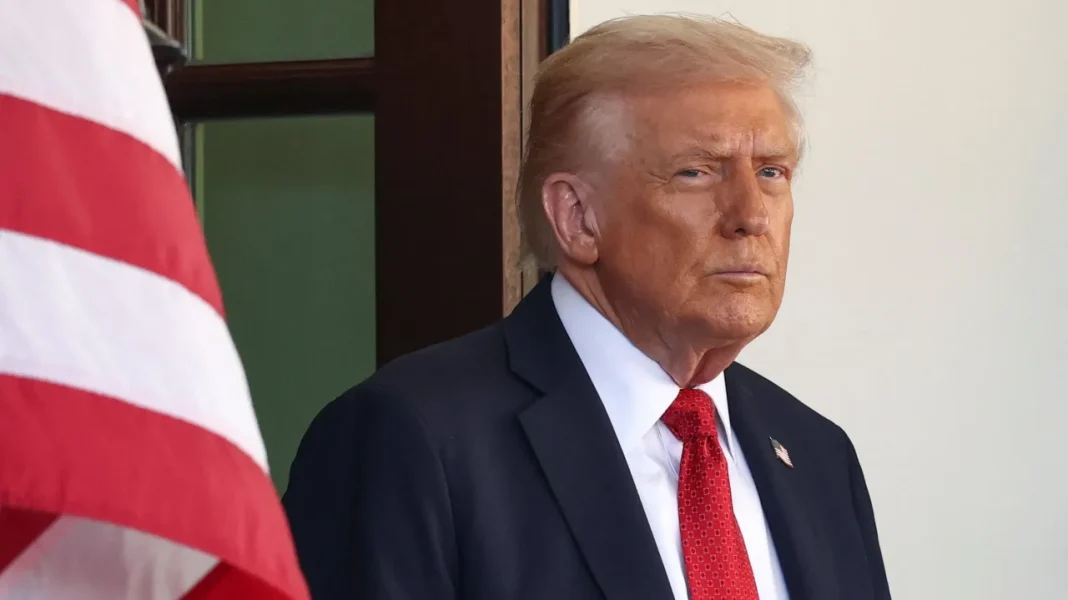

In a recent revelation, former U.S. President Donald Trump claimed that Ukraine, rather than Russia, is responsible for halting progress on peace negotiations. This assertion was reported by Czech Television, sparking discussions across diplomatic circles and media platforms.
Trump’s Controversial Statement

Donald Trump’s unexpected disclosure has stirred political and public debate. The assertion that Ukraine, a nation grappling with ongoing conflict, is the primary obstacle to peace contradicts widely held views among Western nations that have largely implicated Russia in prolonging the tensions. Trump’s statement raises questions about his perspective on international relations and his understanding of Eastern European geopolitics.
The timing of Trump’s comments coincides with delicate negotiations where international stakeholders are vying to mediate between the two countries. The former president’s view diverges significantly from the current administration’s stance, which maintains strong support for Ukraine in its defense against Russian aggression.
Reactions from Political Figures

Western leaders, analysts, and political figures have reacted with skepticism and concern. Many believe Trump’s commentary undermines the collective efforts aimed at bringing stability to the region. Key voices in the European Union, including representatives from Prague, have reaffirmed their commitment to Ukraine, emphasizing the importance of international solidarity in confronting Russian hostility.
Czech politicians, given their country’s history with Eastern European matters, have been particularly vocal in dismissing Trump’s claims. They argue that such narratives could potentially distort public perception and diminish the urgency of supporting peace through robust diplomatic channels.
Implications for International Diplomacy
Trump’s stance could have far-reaching impacts on international diplomacy, particularly with nations that may perceive his remarks as a shift in the U.S. foreign policy narrative. While he no longer holds official sway, his influence remains notable among a segment of the American populace and global leaders who track his opinions closely.
Analysts suggest that such statements could complicate ongoing talks facilitated by intermediaries, adding layers of complexity to already intricate peace discussions. Furthermore, these remarks highlight the persistent divide in how global leaders view the root causes and solutions to the crisis in Eastern Europe.
The Role of Media in Shaping Public Opinion

The coverage by Czech Television and similar outlets plays a crucial role in informing the public about significant developments in international politics. By spotlighting Trump’s remarks, these media platforms contribute to a broader discourse that scrutinizes public figures’ impact on geopolitical landscapes.
Media narratives are pivotal in shaping perceptions and policy decisions, underscoring the importance of factual reporting. Czech Television’s report provides an avenue for discussion in the Czech Republic and beyond, inviting experts and citizens alike to engage in a critical analysis of the situation.
While Trump’s claim has sparked controversy, it also underscores the complexity of peace efforts in Eastern Europe. The international community remains committed to finding a resolution, advocating for continuous dialogue and strategic diplomacy to achieve sustainable peace.