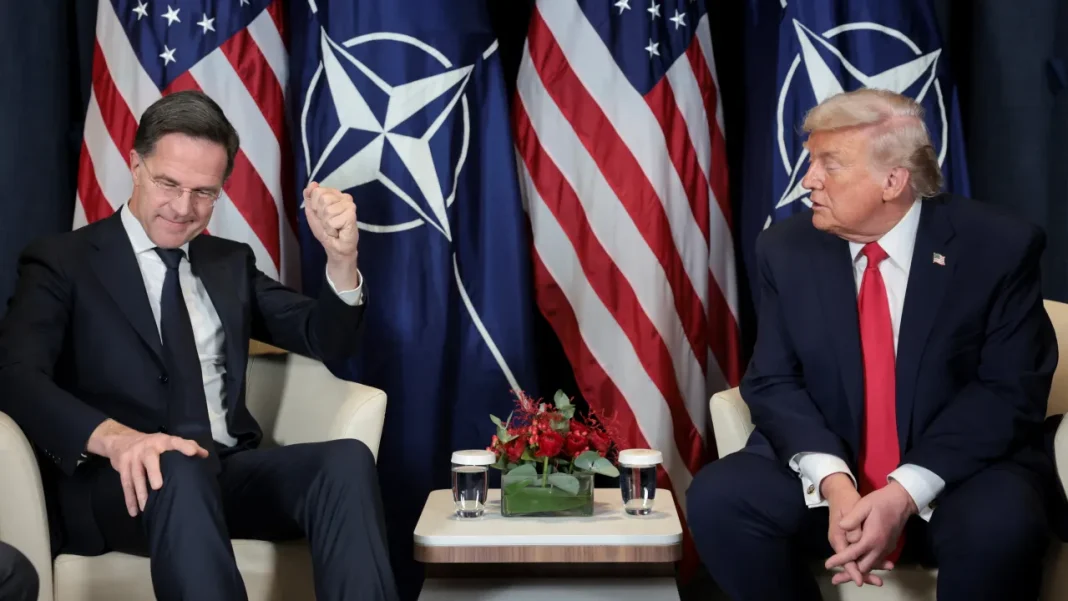

The recent announcement that the United States and the Netherlands have reached an agreement involving Greenland has garnered significant attention. While the details of this agreement remain under wraps, it is clear that US tariffs will remain unchanged.
The Unprecedented Agreement

On a remarkable diplomatic note, former President Donald Trump and Dutch Prime Minister Mark Rutte have reportedly struck a bilateral agreement concerning Greenland. This surprising development comes amidst heightened global interest in the region due to its strategic location and natural resources. The specifics of the agreement are not publicly disclosed, but it highlights the growing influence of Arctic geopolitics.
Greenland, an autonomous territory within the Kingdom of Denmark, has been the subject of international discussions due to its potential mineral wealth and strategic positioning. The involvement of the Netherlands in these discussions suggests a broader European interest in the Arctic.
Implications for US Tariffs
Despite the new agreement, US tariffs on various goods, including those affecting European partners, will remain unchanged. This decision indicates a continuity in American trade policy, especially under this unspecified agreement’s context. Analysts suggest that maintaining existing tariffs might be a strategic move to secure favorable terms in ongoing or future negotiations.
For many European nations, US tariffs have been a point of contention, impacting trade flows and economic relations. However, the unchanged tariff stance might indicate a stable economic outlook between the US and its European allies, including the Netherlands.
Geopolitical Reactions

The agreement has sparked diverse reactions across the globe. Some geopolitical analysts see it as a strategic effort by the US to strengthen its presence in the Arctic, a region rich in untapped resources and significant for global shipping routes due to the melting polar ice caps. Meanwhile, the inclusion of the Netherlands suggests that European nations are keen to play a pivotal role in Arctic affairs.
Countries like China and Russia, with vested interests in the Arctic, will likely monitor these developments closely. The agreement might serve as a precursor to more comprehensive multinational talks concerning Arctic sovereignty and resource management.
Environmental Considerations
Amidst geopolitical maneuvers, the environmental implications of increased attention to Greenland cannot be overlooked. The region’s fragile ecosystem is already under threat from climate change, and further exploration or exploitation could worsen the situation. This underscores the need for sustainable practices as nations explore Arctic resources.
Environmental groups have expressed concerns about potential ecological impacts, urging governments to prioritize conservation efforts as part of any agreements involving the Arctic. The US and the Netherlands, both committed to sustainability, might integrate environmentally friendly clauses within their agreement.
As global interest in Greenland continues to grow, the recent agreement between the US and the Netherlands is a pivotal development. Its impact on international relations, trade, and environmental policies will likely be significant, reflecting the complex intersection of geopolitical and ecological considerations. Official details are keenly awaited as stakeholders analyze the broader implications.
Source: Official Netherlands Government website.