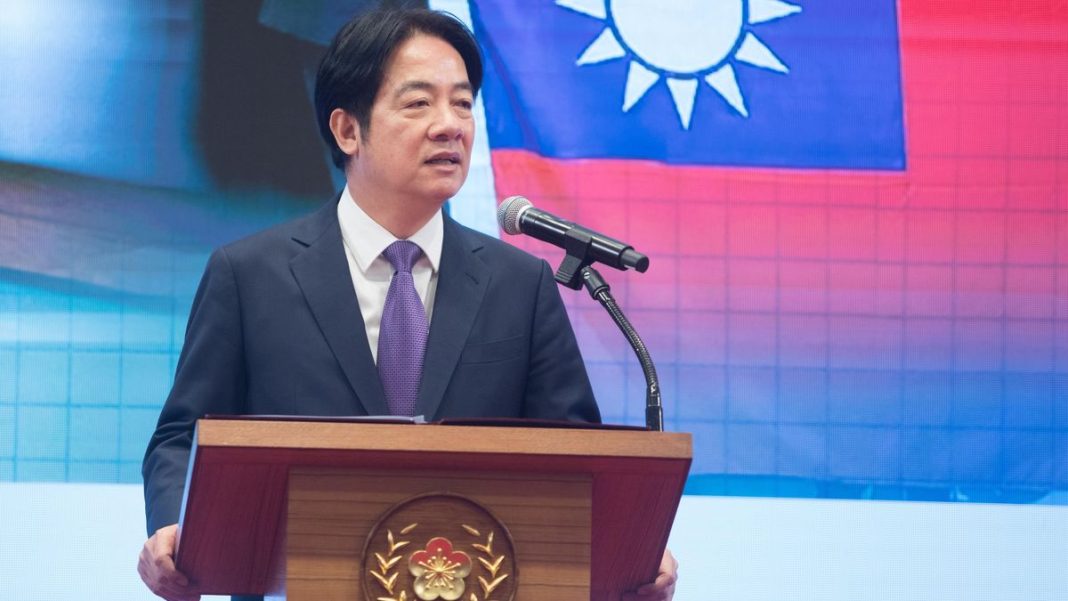

The President of Taiwan has reaffirmed the nation’s commitment to defending its sovereignty amidst rising tensions with China. This comes after Beijing accused Taipei of political deception, escalating the ongoing regional conflict.
Background of Tensions

The tension between Taiwan and China has been a persistent geopolitical issue, rooted in historical disagreements and territorial claims. China views Taiwan as a breakaway province destined to be reunited with the mainland, while Taiwan asserts its status as a sovereign state. These disputes have led to diplomatic friction and military posturing, with both sides reinforcing their positions through various means.
Recently, China’s accusations against Taiwan have intensified, alleging that Taipei is deceiving the international community about its independence and political intentions. This has led to increased strain in cross-strait relations, prompting strong reactions from Taiwanese leadership.
President’s Response

In a recent public statement, the Taiwanese President declared that the country would not succumb to external pressure and would continue to uphold its democratic values and governance. The President emphasized that Taiwan’s sovereignty is non-negotiable and highlighted the importance of international support in maintaining regional stability.
The President’s firm stance is seen as a message to both domestic and international audiences that Taiwan is committed to defending itself against any form of coercion. This commitment is further backed by Taiwan’s continuous efforts to strengthen its defense capabilities and foster global diplomatic relations.
International Reactions

The global community has reacted with mixed responses to the ongoing situation. Some countries have expressed support for Taiwan’s democratic processes and stressed the importance of peace and stability in the Asia-Pacific region. Others have urged both Taiwan and China to engage in dialogue to avoid a potential conflict.
International organizations and diplomatic entities have also called for adherence to international laws and norms. The focus has been on seeking peaceful resolutions to avoid escalating tensions further, which could have broader implications for global security.
Future Implications

The Taiwanese government’s insistence on defending national sovereignty continues to shape its foreign and domestic policies. The ongoing dispute with China could influence Taiwan’s international partnerships and its position in global political dynamics.
Analysts suggest that the situation warrants close monitoring, as any significant developments could affect trade, security, and diplomatic alliances in the region. The response from major powers and their engagements in the Asia-Pacific will likely play a critical role in determining the future course of events.
The reaffirmation of Taiwan’s sovereignty by its President marks a critical moment in cross-strait relations, emphasizing the complexities of regional politics amidst external challenges.
Source: Official Taiwanese Presidential Office website.