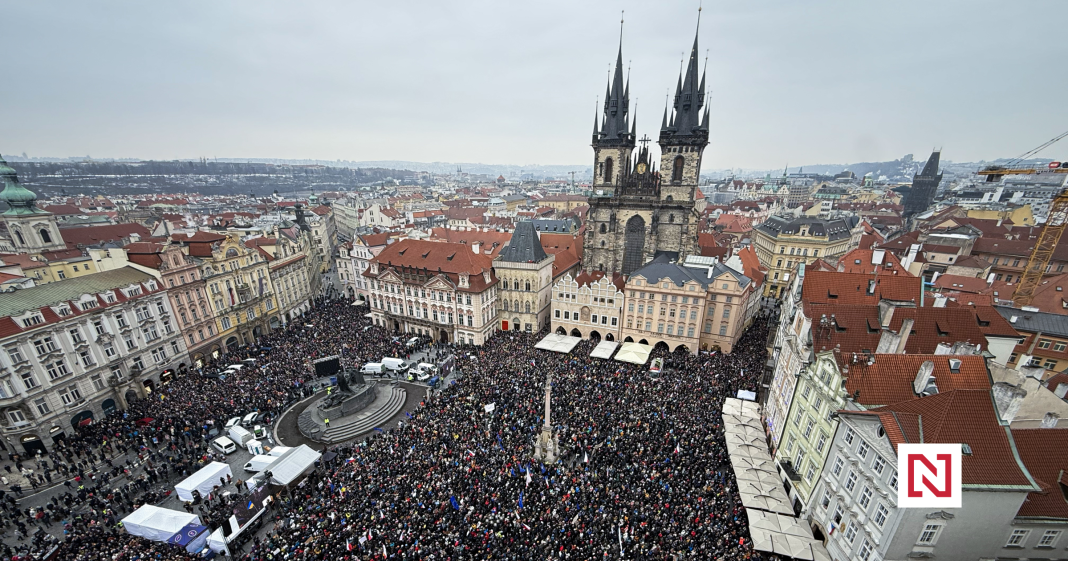

On a brisk day in Prague, demonstrators took to the streets, voicing their dissent against the current government while simultaneously showing support for the President’s recent policies. This dual-focused protest highlights the intricate political landscape of the Czech Republic, reflecting both local dissatisfactions and broader national support.
Backdrop of the Demonstrations

The protest, held in the heart of Prague, was organized amidst growing discontent over economic and social policies implemented by the government. Citizens gathered in large numbers at Wenceslas Square, a historic site known for its tumultuous past, to express their concerns about rising inflation and economic inequality. The participants, armed with placards and chanting slogans, aimed their criticism at measures they believe disproportionately impact vulnerable groups within society.
Speaking to various protestors, it was clear that the rally was a culmination of widespread frustration. Many attendees expressed unease over recent tax reforms and public spending cuts, which they argue have not provided the promised benefits to the lower and middle classes. This sentiment was echoed throughout the crowd, uniting citizens from diverse backgrounds under a common cause.
Support for the President

In an intriguing twist, the protests also involved a significant show of support for the President of the Czech Republic. It seems that while dissatisfaction with the government runs high, there is a distinct faction that appreciates the President’s efforts to address the nation’s challenges. Several demonstrators highlighted recent presidential initiatives aimed at improving transparency and combatting corruption as steps in the right direction.
The President, often seen as a stabilizing figure, has championed policies that resonate with many citizens. His advocacy for stronger EU cooperation and push for green energy solutions have also garnered praise, making these protests a venue for contrasting political views to coexist.
Impact on Local Businesses and Commuters

The protest had immediate effects on local businesses and commuters in the area. Shops and restaurants in the vicinity reported mixed reactions, with some witnessing a boost as protesters patronized local establishments, while others chose to close temporarily due to heightened congestion. The impact on daily commutes was significant as public transport routes were altered to accommodate the assembly, causing delays and disruptions.
Commuters expressed a range of emotions, from frustration due to longer travel times to understanding and empathy for the demonstrators’ causes. Despite the disruptions, the general sentiment among locals was one of patience and solidarity with the nation’s democratic practices, underscoring Prague’s enduring spirit of civic engagement.
Government Response

The national government has responded cautiously to the protests, acknowledging the citizens’ right to express their views while urging for constructive dialogue. Officials have invited representatives from the protest to engage in discussions aimed at addressing their grievances, signaling an openness to recalibrate current policies to better serve the population.
This approach reflects a broader strategy by the government to maintain social harmony and ensure that economic and political adjustments are undertaken collaboratively. How these dialogues progress remains to be seen, but the initial willingness to converse suggests a potential pathway toward resolution.
The protest in Prague demonstrates the vibrant and dynamic nature of Czech democracy, where citizens actively participate in shaping their country’s future. As discussions between protesters and officials continue, it remains to be seen what lasting impacts this demonstration will have on Czech politics.