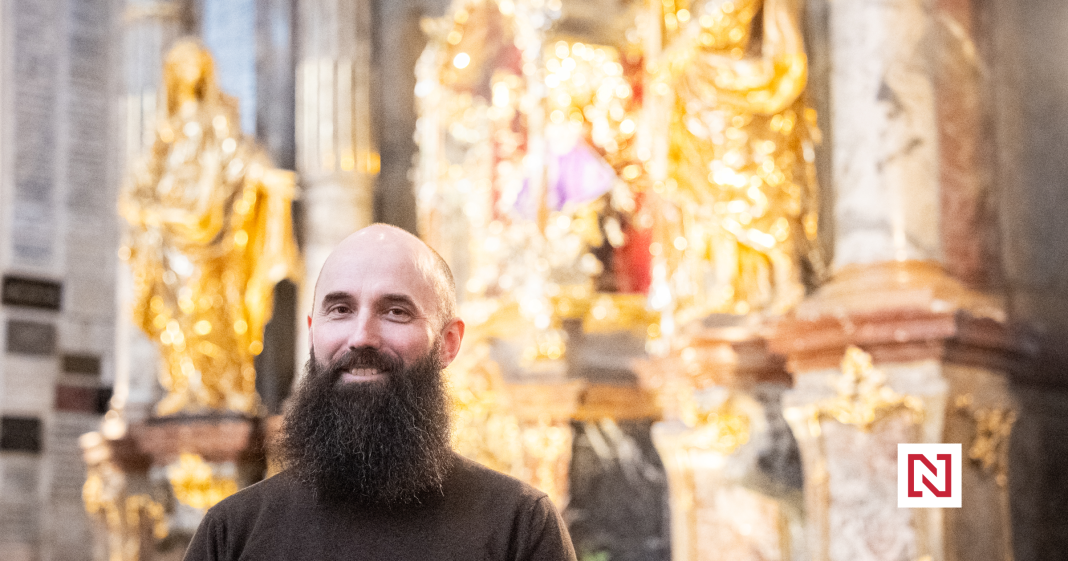

In a world often divided by political and ideological differences, the perspective of individuals who hold on to hope becomes increasingly significant. Priest Pola’s reflections delve into the complexities of faith and expectations for change in political leaders, with a particular focus on President Putin.
The Role of Faith in Political Change

Priest Pola embodies a unique approach to political discourse by integrating faith and hope into his outlook on international leadership. As a religious figure, Pola believes that faith can be a transformative force, capable of influencing even the most rigid personas. His reflections on President Putin are grounded in a belief that genuine change is possible when driven by moral and spiritual considerations.
Pola’s perspective is not without its challenges. He grapples with the inner conflict between an idealistic hope for transformation and the reality of political obstinacy. It is a delicate balance, where faith meets the real-world complexities of governance and change.
Inner Conflict: Balancing Hope and Reality

Priest Pola acknowledges the tension that arises from maintaining hope in a figure often criticized on the global stage. This inner conflict highlights the struggle between optimistic belief and pragmatic skepticism. Pola argues that while it is essential to remain hopeful, it is equally important to recognize the realities and limitations of political structures.
Throughout his reflections, Pola aims to inspire others to hold onto hope while being grounded in reality. This balance is necessary to nurture a constructive political discourse, one that avoids cynicism and champions the potential for positive change.
Hope for Putin: A Path to Redemption?

The priest’s reflections suggest that despite the criticisms of President Putin, there remains a path to redemption through conscious change. Pola believes that even the most controversial leaders can find a renewed sense of purpose guided by ethical principles and a commitment to the greater good.
His hope is that by fostering conversations rooted in empathy and understanding, leaders like Putin might undergo a transformation that aligns with global peace and cooperation. It is not a naïve hope but rather a call to action for leaders to reflect on their roles and responsibilities.
The Broader Implications for Global Leadership

Priest Pola’s reflections extend beyond the realm of Russian politics, offering a broader commentary on global leadership. By advocating for a faith-driven approach to political change, he encourages a shift in how leaders are perceived and how change can be achieved.
His perspective urges citizens and leaders worldwide to consider the power of ethical leadership, one where moral values are at the core of decision-making processes. In doing so, Pola hopes to contribute to a more peaceful and cooperative international community.
Priest Pola’s reflections on hope and change offer a distinct perspective amidst the often tumultuous world of politics. By integrating faith and ethics, he presents a vision of leadership that is both hopeful and grounded in reality.