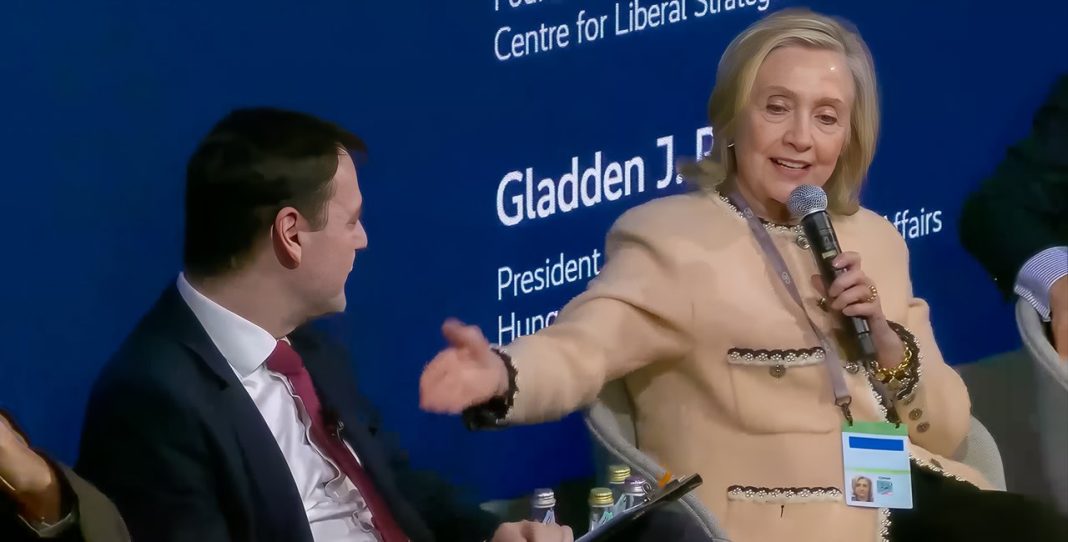

The recent confrontation between Czech politician Jiří Macinka and former U.S. President Bill Clinton in Munich has quickly gained viral attention, shedding light on the deep-seated divisions within Czechia’s political landscape. This incident is not just an isolated occurrence but part of a broader conversation about national identity and political alignment in the region.
The Incident in Munich

The incident took place during an international political forum in Munich, where tensions unexpectedly escalated between Jiří Macinka, a prominent figure in Czech politics, and Bill Clinton. Macinka’s pointed remarks towards Clinton were reportedly centered on Czechia’s foreign policy choices and its position within Europe. The clash caught the attention of global media, instantaneously spreading across social networks.
Eyewitnesses describe the exchange as heated, with Macinka challenging Clinton’s past policies and their perceived impact on Central Europe. Clinton, known for his diplomatic skill, responded firmly yet diplomatically, emphasizing the importance of cooperation between nations. The dialogue has since sparked debates across various platforms, illustrating the existing rifts in international political perspectives.
Czech Political Landscape

The altercation in Munich reflects underlying tensions in Czechia’s political sphere, where debates over European Union (EU) membership and foreign alliances are particularly pronounced. Sections of the political community, including figures like Macinka, have questioned the benefits of EU membership, advocating for a re-evaluation of foreign policy directions.
On the contrary, other political leaders emphasize the strategic importance of maintaining strong ties with Western nations and institutions. This intra-national division is characteristic of the broader discourse on globalism versus nationalism in Czechia, highlighting the challenges of creating a unified domestic policy approach.
Public Reaction and Media Coverage

The public response to the Munich incident has been varied, with some applauding Macinka for standing up for national interests, while others view his confrontation as detrimental to Czechia’s diplomatic relationships. Online forums and social media have become arenas for intense debate, with users dissecting the implications of the incident from multiple angles.
Media outlets in Czechia and abroad have offered differing interpretations, further fueling the discourse. Some publications have focused on the sensational aspect of the confrontation, while others have urged a deeper look into the policies and historical contexts discussed during the clash.
Implications for Czechia’s International Relations
This incident underscores the complexities of Czechia’s role on the international stage. With growing scrutiny on how the country navigates its alliances, the Munich confrontation could influence future diplomatic strategies and policy formation. Analysts suggest that Czechia might need to balance assertive national stances with the necessity for international cooperation.
As the dust settles from the Munich event, questions arise about its broader ramifications for Czech diplomacy. The potential recalibration of foreign relations could define Czechia’s interactions with both Eastern and Western powers in the coming years.
The Macinka-Clinton clash serves as a focal point for understanding the polarizing dynamics within Czechia’s political discourse. As events unfold, it will be crucial for leaders to address these divisions constructively to ensure cohesive policy development and international collaboration.
Source: Official Bill Clinton website.