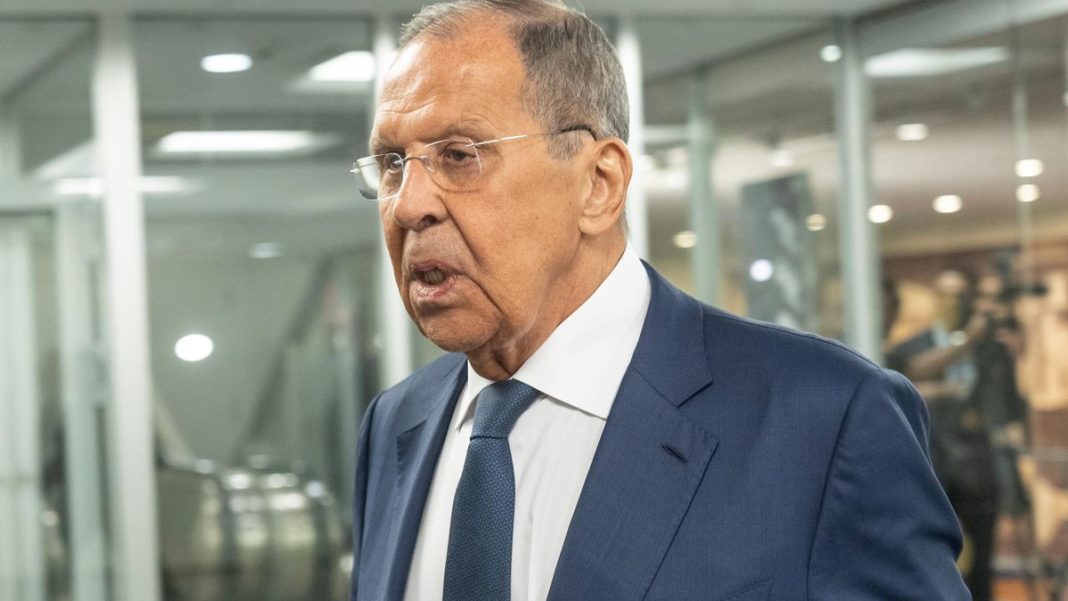

In a recent statement, Russian Foreign Minister Sergei Lavrov drew a striking analogy by comparing the geopolitical significance of Crimea to Russia with that of Greenland to the United States. This comparison highlights the deep-rooted strategic interests nations hold in specific territories, serving both historical and security purposes.
Russia’s Perspective on Crimea

The annexation of Crimea by Russia in 2014 remains a contentious issue in international politics. Lavrov’s comparison underscores Russia’s stance that Crimea is not merely a territorial acquisition but an integral part of its national identity and security framework. The region is viewed by Moscow as essential not only for historical reasons but also for its strategic military position on the Black Sea, providing crucial access for the Russian Navy.
Since the annexation, Russia has invested heavily in Crimea’s infrastructure, aiming to integrate it fully into the Russian Federation. This includes improving transportation networks, boosting local economies, and enhancing military facilities. The emphasis remains on reinforcing Crimea’s status as a permanent part of Russia’s geopolitical landscape.
Greenland’s Role for the United States

In Lavrov’s analogy, Greenland’s significance to the United States serves to illustrate how major powers perceive certain territories as vital to their security and influence. Greenland, governed by Denmark, is strategically located within the Arctic Circle and plays a critical role in U.S. military strategy, particularly for monitoring and operations related to the Arctic.
The Arctic region, rich in natural resources and new shipping routes, has attracted considerable interest from global powers, including the U.S. The Thule Air Base in Greenland is a key component of NATO’s missile defense systems and underscores the strategic relevance of the island.
International Reactions and Tensions

Lavrov’s remarks have sparked varied reactions on the international stage, with many Western countries continuing to oppose Russia’s claim over Crimea. Sanctions imposed by the European Union and the United States remain in place, reflecting the ongoing discord between Russian and Western perspectives on territorial sovereignty.
Similarly, the geopolitical importance of Greenland has seen heightened interest from other global players. The competition for influence in the Arctic signifies growing international interest in territories previously seen as peripheral, underscoring the strategic calculations made by global powers in response to changing geopolitical dynamics.
Implications for Global Geopolitics
The comparison made by Lavrov holds broader implications for understanding how nations justify territorial claims and influence in an interconnected world. Sovereign control over strategic regions can significantly impact global political alignments and alliances, affecting both regional stability and international relations.
As the geopolitical landscape evolves, these territories’ roles in global politics may continue to shift, influenced by climate change, resource availability, and military strategy. Understanding the motivations behind such claims aids in comprehending the broader geopolitical strategies of major world powers.
As discussions about territorial significance and global security continue, Lavrov’s comparison offers a lens through which to view the intricate balance of power and strategic interests that define modern geopolitics.
Source: Official Russian Ministry of Foreign Affairs website.





