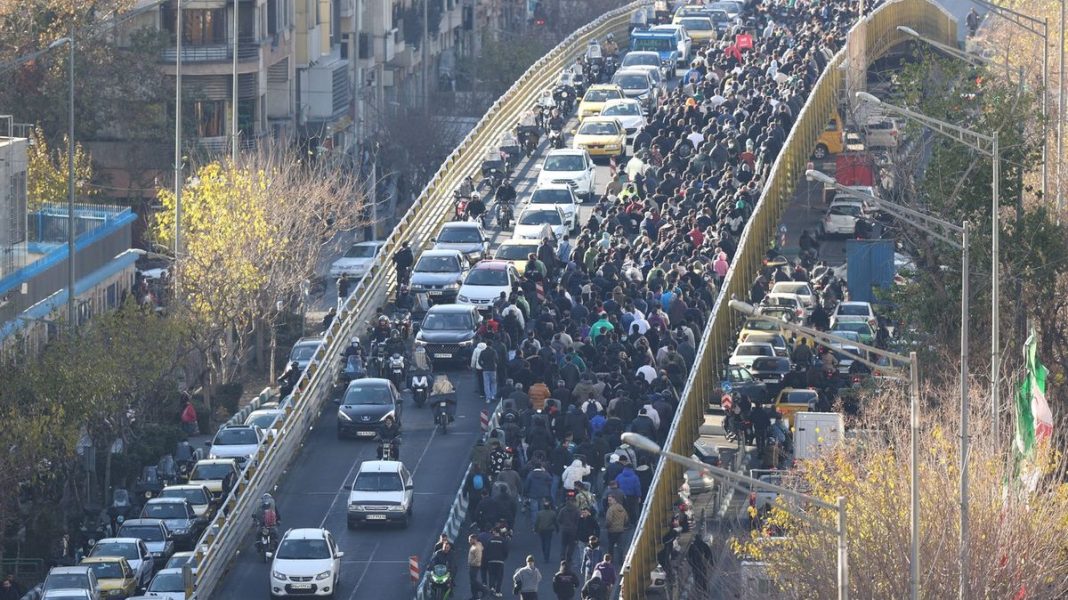

Protests have erupted across Iran in response to the country’s plummeting currency and widespread dissatisfaction with the government. Demonstrators are calling for significant changes, including chants of “Death to the Dictator” directed at the nation’s leaders.
Economic Instability Sparks Unrest

The Iranian currency, the rial, has seen a sharp decline, resulting in increased pressure on the nation’s economy. Economic instability has led thousands to the streets in protest, demanding government action to address the crisis. The government’s response to these economic challenges has been criticized as insufficient, further fueling public discontent.
Many Iranians have reported difficulty in affording basic necessities, with inflation rates soaring. The currency’s weak performance against global benchmarks has heightened financial hardships, leading to calls for monetary reform and more transparent economic policies.
The protests arise amid a broader context of economic sanctions and isolation that have strained Iran’s economy, exacerbating internal pressures and triggering public demonstrations across major cities.
Political Tensions and Public Demonstrations

Besides economic grievances, many protesters are motivated by political dissatisfaction. The regime’s handling of domestic and foreign affairs has been a significant point of contention, with critics accusing leaders of prioritizing personal power over national well-being.
Chants of “Death to the Dictator” reflect deep-seated frustrations with the political system, emphasizing a demand for change in leadership. The government’s response to these protests has been marked by attempts to suppress dissent, including reports of arrests and internet blackouts.
This recent wave of protests is part of a broader pattern of civil unrest in Iran, indicating a populace increasingly unwilling to tolerate perceived governmental inadequacies and repressions.
International and Domestic Reactions
The international community has expressed varied reactions to the protests. Some global leaders have urged Iran to respect the rights of demonstrators and address underlying economic concerns, while others have remained silent, cautious of interfering in the nation’s internal affairs.
Domestically, Iranian officials have sought to downplay the scale of the unrest, often attributing it to external influences. Nevertheless, the persistence and intensity of the protests suggest that public dissatisfaction remains a growing challenge for the government.
Observers note that the outcome of these protests could significantly impact Iran’s future trajectory, influencing both domestic policy and international relations.
The Path Forward

With protests continuing, the Iranian government faces critical decisions regarding its response strategy. Acknowledging economic grievances and implementing reforms could potentially ease tensions, but this requires substantial governmental shifts that may not align with current leadership agendas.
Long-term stability may depend on the government’s willingness to engage with its citizens transparently and constructively. This includes addressing economic disparities and expanding political freedoms, which have long been points of contention.
The road ahead for Iran is uncertain, with many watching closely to see how the nation navigates these complex challenges amid mounting public pressure.
The conclusion of these protests could have lasting implications, potentially reshaping Iran’s economic and political landscape in significant ways.