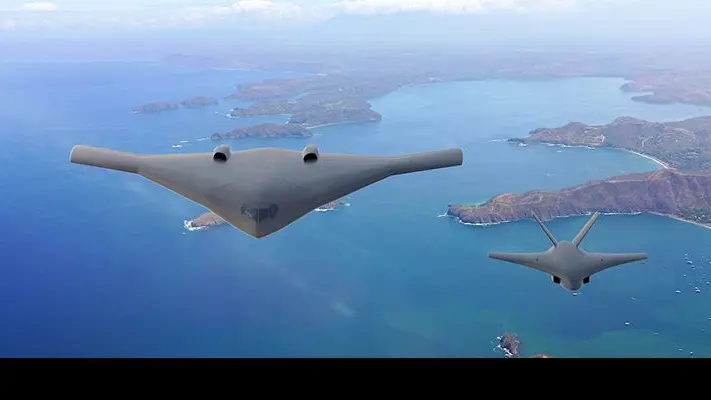

The United States is pioneering a new era in military aviation with aircraft that do not require traditional runways. This breakthrough could significantly alter military strategies and logistics.
Revolutionary Aircraft Design

These innovative aircraft incorporate vertical take-off and landing (VTOL) capabilities, allowing them to operate in environments previously inaccessible to traditional planes. VTOL technology is transforming military operations by enabling aircraft to launch and land in confined spaces, such as dense urban areas or rugged terrain. This flexibility is crucial for rapid deployment and effective response to modern combat challenges.
Unlike conventional fighter jets and transport planes, these VTOL aircraft are designed to take off and land on almost any surface. This capability provides a tactical advantage by reducing the infrastructure footprint needed for operations and minimizing the risk of enemy interference with runway facilities.
Impact on Military Strategy

The implementation of runway-independent aircraft is reshaping military strategy by facilitating more agile and versatile operations. These aircraft enhance the mobility of troops and equipment, ensuring that military forces can be deployed quickly to respond to threats worldwide.
Furthermore, the flexibility of these aircraft allows for increased operational secrecy and surprise, crucial elements in modern warfare. By eliminating the need for large, fixed bases, military forces can maintain a lower profile, making it harder for adversaries to predict movements and intentions.
Technological Innovations

The development of these aircraft is a testament to the ingenuity and innovation within the aerospace industry. Engineers are continuously advancing propulsion systems, materials, and avionics to improve the performance and efficiency of VTOL aircraft. Advanced rotor and engine designs allow for quieter, more energy-efficient flight, which is crucial for both stealth operations and environmental considerations.
Significant research is dedicated to enhancing the autonomy and adaptability of these aircraft. Incorporating artificial intelligence and advanced navigation systems enables them to operate in complex environments with minimal human oversight.
Potential Applications Beyond Military Use

While these aircraft are primarily developed for military applications, the technology holds promise for civilian uses as well. Disaster response agencies, for example, could leverage VTOL capabilities to quickly deliver aid and personnel to affected areas without the need for traditional airports.
Similarly, these innovations could revolutionize urban air mobility, leading to the development of air taxis and advanced cargo delivery systems. The ongoing advancements in VTOL technology could spearhead a new era of transportation, making it more efficient and sustainable.
In conclusion, the introduction of runway-independent aircraft in the USA marks a significant milestone in military aviation. These developments not only promise to enhance military operations but also hold the potential to revolutionize civilian transport in the future.
Source: Official USAF website.