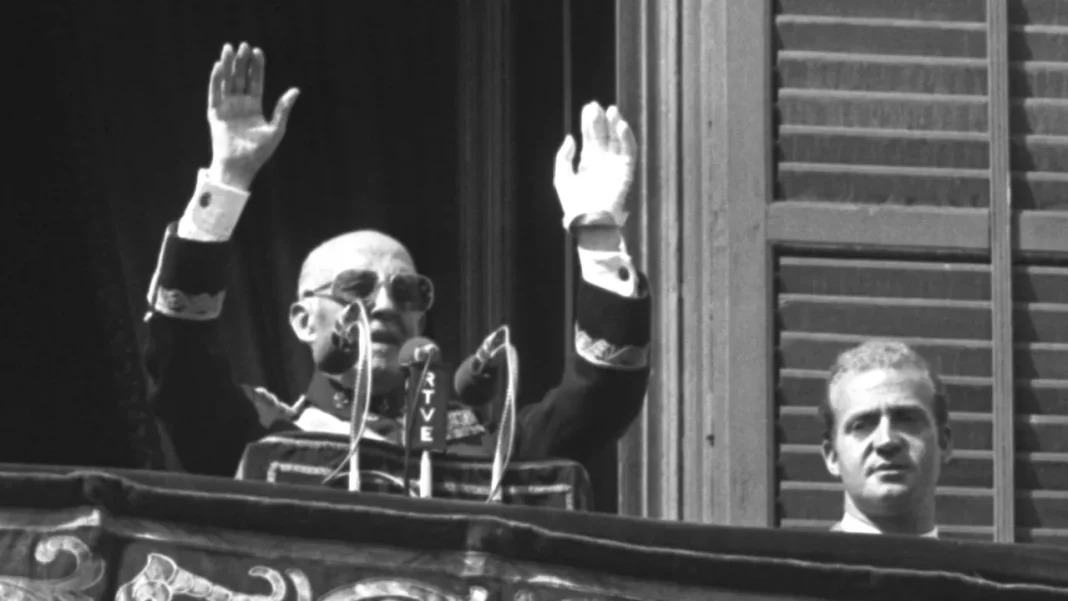

Fifty years after the death of General Francisco Franco, Spain remains a nation divided by his legacy. The shadow of his dictatorship continues to influence political discourse and societal views, reflecting deep-rooted historical conflicts.
The Rise of Franco and His Regime

Francisco Franco rose to power during the Spanish Civil War, leading the Nationalist forces to victory in 1939. His rule, lasting until his death in 1975, was marked by authoritarianism, censorship, and militaristic nationalism. Franco’s regime suppressed dissent, controlled the press, and stifled regional autonomy, especially targeting Catalonia and the Basque Country, regions with strong separatist movements. These actions left deep scars in the socio-political landscape of Spain.
During Franco’s reign, the country was under strict surveillance, with institutions like the police and the Catholic Church playing substantial roles in maintaining order and promoting traditional values. Such measures fostered a society accustomed to repression and fear, laying the groundwork for generational trauma and distrust.
Transitional Challenges to Democracy

Following Franco’s death, Spain embarked on a complex transition to democracy, a period known as the “Transition” (Transición). This shift was not seamless; it required navigating a delicate political landscape where former Francoists and opposition groups vied for influence. The “Pact of Forgetting” (Pacto del Olvido) was an unwritten agreement to avoid dealing with the regime’s crimes to ensure a peaceful transition, but this also resulted in unresolved issues that continue to resurface.
Despite a peaceful transition, the legacy of Franco’s rule remains visible in Spain’s political institutions and tensions. For example, debates about the Valley of the Fallen, Franco’s massive burial site, highlight ongoing national disputes over historical memory and accountability for past atrocities.
Political Polarization and Franco’s Legacy
In contemporary Spain, Franco’s legacy manifests in political polarization, particularly visible with the emergence of far-right parties like Vox, which sympathize with traditional Francoist values. These parties often evoke Franco’s era as a time of national unity and stability, appealing to segments of the population dissatisfied with the current political climate.
The political right and left continue to clash over historical memory laws that seek to address injustices from Franco’s regime. These laws aim to provide recognition and reparations for victims, but they are often met with resistance from those who view them as divisive or unnecessary.
Cultural Reflections and Public Sentiment

Beyond politics, Franco’s legacy influences cultural expressions and public sentiment in Spain. Art, literature, and film often explore themes of repression and freedom, reflecting the ongoing struggle to reconcile national identity with a painful past. Cultural sites and public spaces related to Franco’s regime frequently ignite debate over their preservation or removal, symbolizing a broader struggle over historical narrative.
Public opinion on Franco and his impact is complex and varies widely across generations and regions. While some view the transition as a model of reconciliation, others see it as a neglected opportunity to confront historical wrongs fully.
Half a century after Franco’s death, Spain continues to grapple with the divisive legacy of his rule. The enduring debates over memory, justice, and identity reveal the challenges of moving forward while honoring a complicated past.