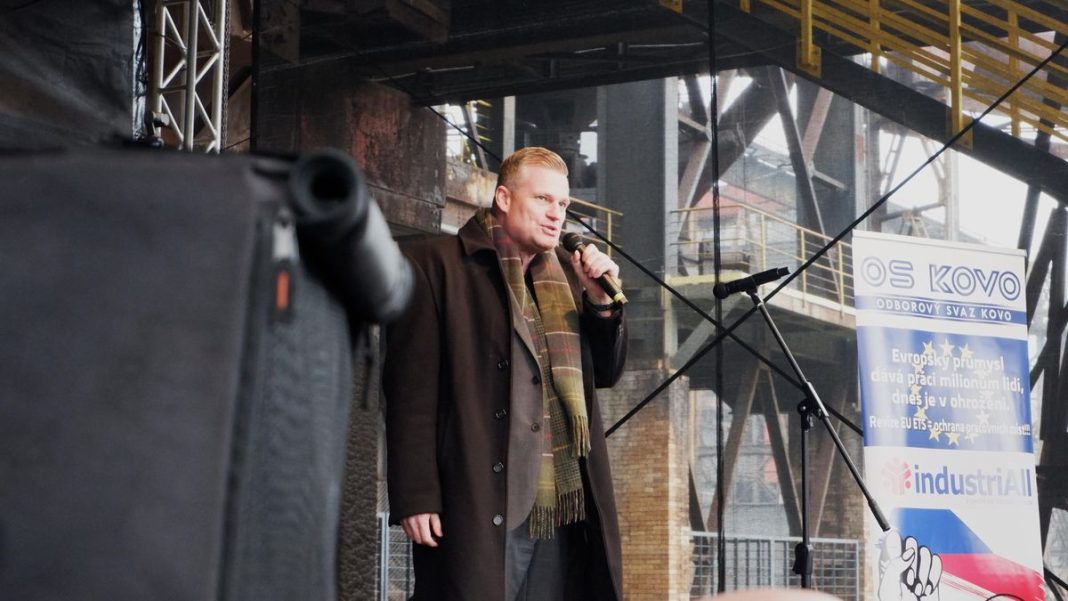

In a bold display of dissatisfaction, several government politicians have rallied against what they perceive as a biased mainstream representation during a major union protest in Prague. This unexpected move has sparked a debate about the role of political figures in union matters.
Union Protest Sparks Political Response

The protest was initially organized by a coalition of unions aiming to voice grievances regarding worker rights and economic policies. Thousands gathered in the heart of Prague, carrying banners and chanting slogans that called for better treatment and fair wages. What added an intriguing twist to the demonstration was the unexpected appearance of certain government politicians, who openly criticized mainstream media for allegedly misrepresenting the aims and scale of the protest.
These politicians argued that mainstream outlets often downplay the significance of public unrest, particularly when it challenges government policies. Their participation has been seen as an attempt to align themselves with the working class and to challenge narratives that they claim overlook legitimate worker concerns.
The politicians’ participation was not just symbolic; they actively engaged with protestors, listening to concerns and promising to address these issues in future parliamentary sessions. This gesture has been met with varying reactions, from applause by union members to criticism from their political counterparts.
Media’s Role Under Scrutiny
The involvement of politicians in media critique highlights the increasing scrutiny surrounding journalist practices in the region. Critics argue that there is a growing distrust between the public and mainstream media, fueled by perceptions of bias and sensationalism.
These concerns are not without merit. Recent studies have pointed to a decline in public trust in media across Europe, particularly in post-communist countries where democratic institutions are still evolving. Such dynamics add complexity to the relationship between the press, politicians, and the public, complicating efforts to form a unified narrative of events like the union protest.
Media organizations, on their part, have defended their coverage, stating that they strive to provide balanced and factual reporting. However, the presence of government figures at the protest criticizing their work suggests a need for ongoing dialogue and potential reforms to address these grievances.
Political Repercussions and Public Reaction

The public reaction to the politicians’ involvement has been mixed, reflecting the diverse opinions in Czech society. Some citizens have applauded the politicians for stepping out of their official roles to show solidarity with everyday workers. Others view it as a political maneuver aimed at gaining populist support without real intent for change.
Within the political sphere, opinions are equally split. Opposition parties have criticized their colleagues for blurring the lines between government responsibility and grassroots activism, suggesting that their participation could undermine governmental integrity. In contrast, some members of the ruling party see this as an essential response to address growing public dissatisfaction.
This development indicates a potential shift in the political landscape, where traditional roles and expectations may need reevaluation to better reflect and address citizen concerns.
Implications for Future Union-Government Relations

The protest and the surrounding controversies could have lasting implications for how the government and unions interact. Trust between the two entities is crucial, especially when negotiating labor policies that impact millions of workers across Czechia.
Moving forward, both sides may need to adopt more transparent and collaborative approaches to ensure that protests lead to tangible improvements. Shared platforms for dialogue between politicians, union leaders, and media representatives might foster better understanding and more effective policymaking.
As the dust settles, it remains to be seen how these events will shape future interactions. Increased communication and cooperation between all parties could pave the way for a more responsive and equitable political environment.
The surprising involvement of government politicians in the Prague union protest underscores significant questions about media representation, political roles, and public engagement. This development could herald change in how such entities interact in the future, with a potential reshaping of the national discourse.
Source: Official Government of the Czech Republic website.