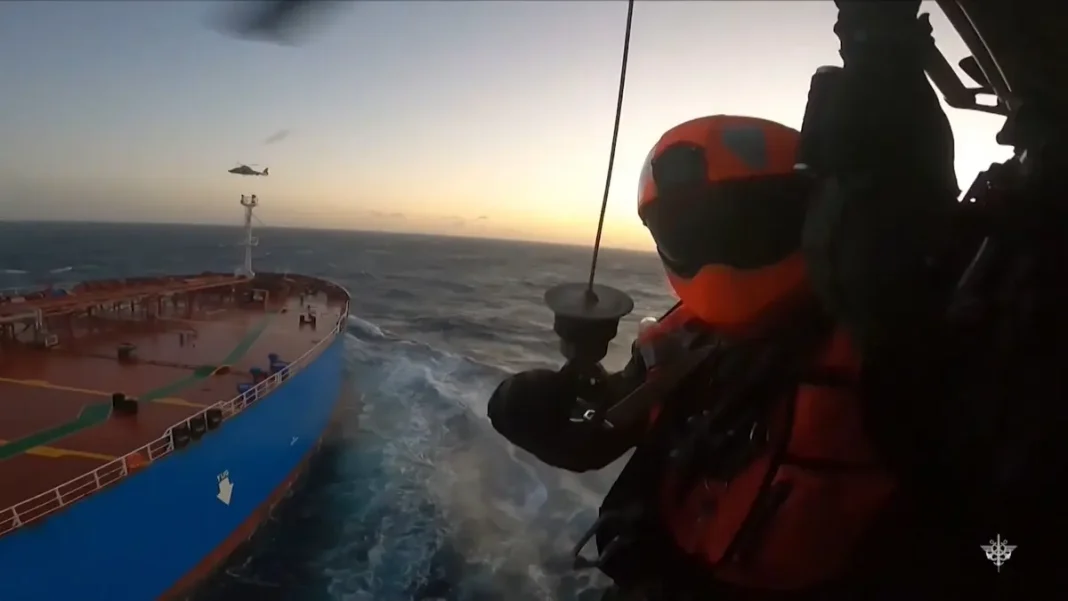

Authorities in France have taken the unprecedented step of detaining the captain of a vessel alleged to be part of the so-called Russian “Shadow Fleet.” This move comes amid increasing scrutiny of maritime activities connected to Russia in European waters.
The Controversial Detainment

The decision to detain the captain has sent ripples through diplomatic channels. The vessel in question is reportedly linked to a network of ships that operate under a web of secrecy, often avoiding regular scrutiny by utilizing flags of convenience. French authorities have expressed concerns about the nature and purpose of these operations, which they claim undermine maritime security and international trade protocols.
Investigators are focusing on the documentation and voyage patterns of the vessel, attempting to unravel any potential connections to sanctioned activities or violations of international maritime law. This detainment marks a significant escalation in enforcement actions by European nations against suspected illegal operations in their waters.
International Reactions

Reactions to this move have been mixed. Russian officials have labeled the detainment as unjust and politically motivated. They argue that such actions are designed to escalate tensions between Russia and the European Union. In contrast, EU members have praised the decisive action taken by France, viewing it as a necessary step in confronting what they describe as covert maritime operations with potential security implications.
The European maritime community has urged caution, advocating for diplomatic engagement to resolve the underlying issues without further exacerbating regional tensions. This incident has rekindled discussions among EU nations about the need for a unified maritime strategy to address such challenges.
Implications for Maritime Security

The detainment has profound implications for the future of maritime security in Europe. It underscores the growing need for expanded monitoring and regulatory frameworks to combat clandestine operations at sea. Experts suggest that this incident could serve as a precursor to more robust joint enforcement mechanisms among EU countries.
Furthermore, the event has sparked discussions about the effectiveness of existing international maritime laws and the ability of countries to enforce these regulations against non-compliant states or entities that operate within the legal grey areas of international waters.
The Role of International Law

This situation raises critical questions about the enforcement of international law on the high seas. Maritime law experts emphasize the importance of adhering to established conventions like the United Nations Convention on the Law of the Sea (UNCLOS), which provides a framework for maritime governance and conflict resolution.
There is an ongoing debate on how to effectively implement these laws, especially when dealing with state or state-affiliated entities that operate beyond legal oversight. The entanglement of political, economic, and security concerns makes it challenging to navigate such enforcement actions without escalating geopolitical tensions.
This incident is a stark reminder of the complexities of maritime security and the intricate balance that must be maintained to ensure lawful and peaceful usage of the seas.
Source: Official maritime security organization website.