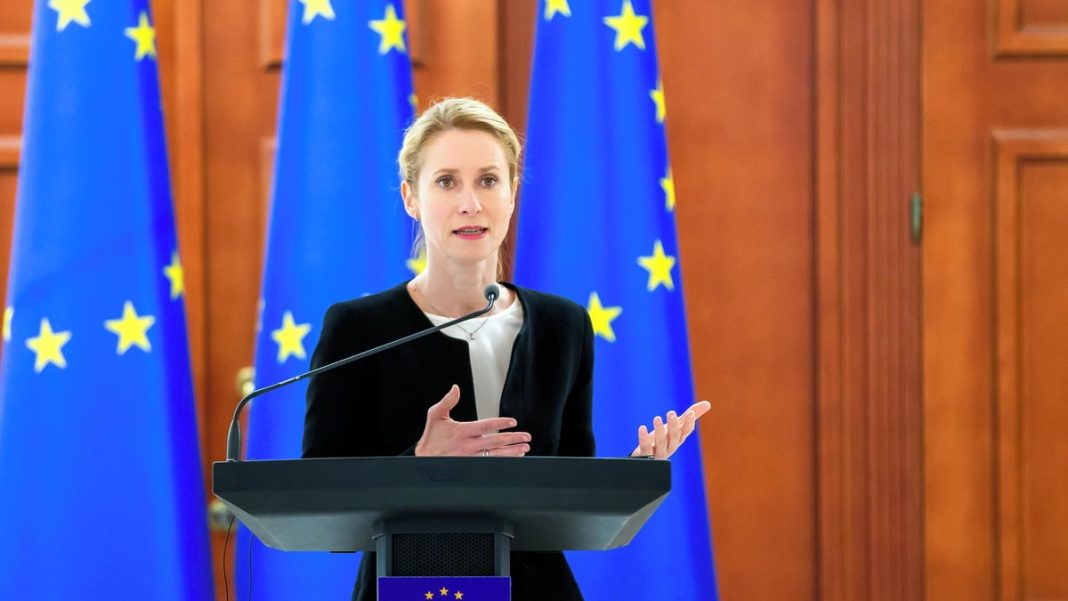

Estonian Prime Minister Kaja Kallas has called for a comprehensive reform of the United Nations Charter during an international conference held in Oslo. Her proposal highlights a growing movement among world leaders to modernize global governance structures.
Kaja Kallas’s Call for Reform

Speaking at the conference, Prime Minister Kallas emphasized the need for the United Nations to adapt to the evolving geopolitical landscape. She argued that the current structure, established in the aftermath of World War II, no longer adequately addresses contemporary challenges such as cybersecurity threats, climate change, and global health crises. Her speech was met with interest from various international leaders and experts who attended the event.
Kallas highlighted the necessity for a more agile and effective UN response mechanism that can swiftly address international conflicts and humanitarian emergencies. She also proposed reevaluating the roles and responsibilities of permanent and non-permanent members of the UN Security Council to ensure a fairer and more democratic global governance system.
International Reactions and Support

The response to Kallas’s proposals was mixed but largely positive, with many delegates expressing support for the need for UN reforms. Some nations, particularly smaller states, welcomed the initiative as a step toward ensuring their voices are better represented on the global stage. Proponents of the reform argue that modernizing the UN Charter would enable it to more effectively tackle pressing global issues.
However, there are challenges to achieving consensus on such reforms. Major world powers might be resistant to changes that could potentially diminish their influence within the organization. Despite these potential obstacles, Kallas is optimistic that reform discussions could pave the way for a more inclusive and responsive United Nations.
Historical Context of UN Charter Calls

Calls to reform the UN Charter are not new, with numerous leaders and scholars having previously advocated for changes. The organization has undergone several amendments since its inception, but critics argue that these have been insufficient in addressing the complexity of modern international relations. Kallas’s proposals build upon this historical context, recognizing past efforts while pushing for more comprehensive updates.
Estonia, an active advocate for digital development and cybersecurity, sees these areas as pivotal in discussions about UN reform. Kallas believes that incorporating these elements into the UN’s agenda would reflect the realities of a rapidly digitalizing world and further safeguard global peace and security.
Next Steps and Potential Challenges

Moving forward, the proposals will likely require extensive negotiation among UN Member States. Kallas hopes to work collaboratively with allies to draft a formal resolution that could be considered at future UN gatherings. Her vision entails a phased approach where incremental changes accumulate to fundamentally reshape the organization over time.
While achieving consensus on UN reform will be a complex undertaking, Kallas’s initiative could serve as a catalyst for broader discussions about international cooperation. Political analysts suggest that sustained diplomatic engagement and coalition-building will be key to overcoming resistance from traditional power structures.
In conclusion, Prime Minister Kaja Kallas’s call for UN Charter reform at the Oslo conference has sparked significant debate on the future of global governance. With growing support and recognition of the need for change, these efforts may usher in a new era for the United Nations.
Source: Official United Nations website.