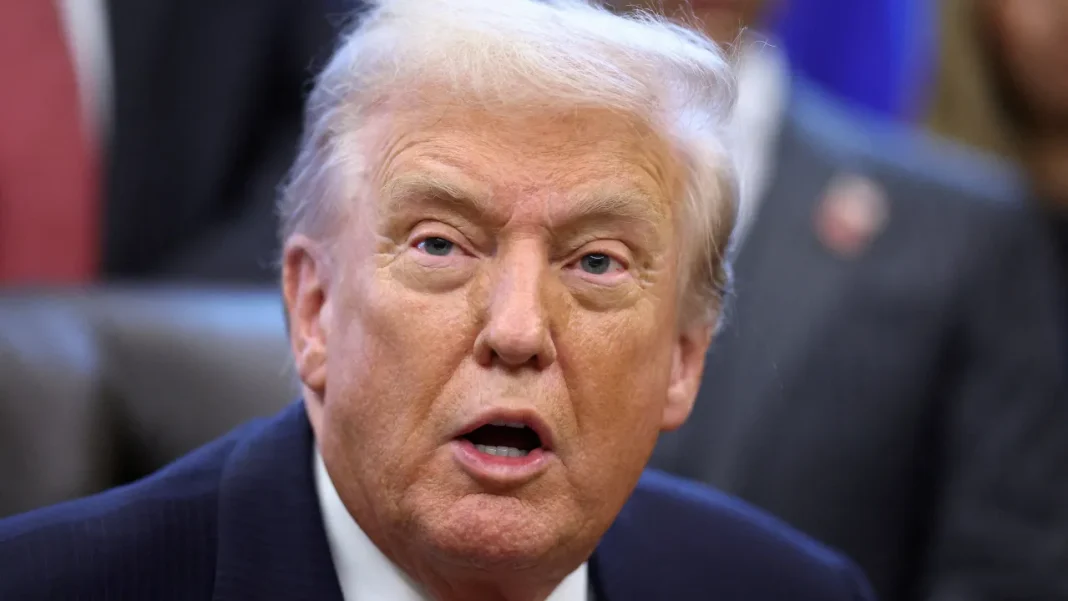

In a recent public outcry, Democrats have been labeled as “traitors” by former President Donald Trump for urging the military to resist illegal orders. The controversial remarks have reignited debates about the balance of power and the role of military compliance in the US political system.
Trump’s Allegations and Political Backlash

Former President Donald Trump’s accusations against Democrats have stoked tensions in an already polarized political landscape. Trump has criticized Democratic leaders for advising military personnel to act with discernment and resist unlawful orders, characterizing such advice as betrayal. These statements have sparked a fierce rebuttal from the Democrats, who argue that their position is rooted in the Constitution and the preservation of democratic principles.
The matter has drawn attention from various political analysts who point out that Trump’s remarks are part of a broader narrative aimed at discrediting the opposition. Trump’s supporters, however, view the Democratic stance as undermining authority and national security, illustrating the deep divide in public opinion regarding military obedience and political responsibility.
Constitutional and Legal Context

The US Constitution and military code dictate that servicemen and women are obliged to follow lawful orders, implicitly condemning illegal directives. Legal experts emphasize that the constitutional advice given by Democrats is meant to reinforce this principle. The military is often placed in a difficult position when political orders clash with legal and moral considerations, making the guidance from lawmakers relevant and necessary.
Historically, the question of obeying illegal orders has been a complex issue within military ethics. The emphasis on legality is crucial to prevent misuse of military power for partisan purposes, a risk that increases during periods of heightened political tension.
The Role of the Military in Political Conflicts

The military plays a critical role as a stabilizing force in times of political turmoil. By adhering to legal standards, military personnel help ensure that democracy and order are maintained. This guidance from political leaders, including those from the Democratic Party, seeks to protect the integrity of military operations and uphold the rule of law.
The necessity for military neutrality becomes even more evident amid accusations of biased political interventions. The goal is to maintain a non-partisan military that serves the Constitution above any single leader or party.
Public Reaction and Implications

Public reaction to Trump’s comments and the Democratic retort has been polarized. Supporters of Trump’s view argue that obedience is critical to national security, whereas opponents stress the importance of scrutinizing orders to prevent unconstitutional actions. This discourse extends into broader discussions about democratic safeguards and accountability.
The implications of this debate stretch beyond immediate political skirmishes, potentially influencing future civil-military relations in the United States. As both sides continue to engage, the discourse highlights the ongoing struggle to balance power within a robust democratic framework.
In conclusion, the narrative surrounding Democrats as “traitors” for advocating defiance of illegal orders underscores the intricate relationship between military obedience, political authority, and constitutional law. It remains pivotal for both political entities and the military to navigate these waters with a focus on upholding democratic norms.