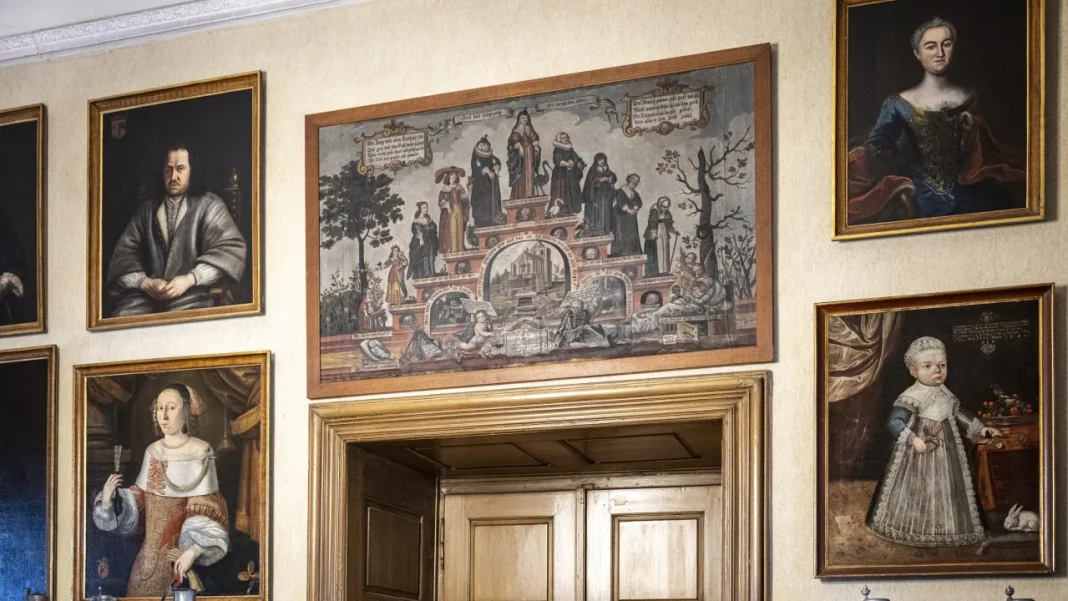

The historic furniture from Hrubý Rohozec Castle may soon be returned to the Walderode family, following a decision by the Czech court. This marks a significant moment in a long-standing legal battle over restitution claims.
Background of the Legal Battle

The legal battle over the furnishings in Hrubý Rohozec Castle has roots in the complex post-war history of property seizures and restitutions in Czechia. The Walderode family, originally owners of the castle, had their property confiscated under the Beneš Decrees following World War II. The family has been fighting for decades to reclaim what they consider rightfully theirs.
In recent years, the Czech courts have been revisiting various restitution cases, aiming to address past grievances. The Walderode case has become emblematic of these legal struggles, highlighting issues of historical justice and the challenges of navigating post-communist restitution laws.
The Significance of Hrubý Rohozec

Hrubý Rohozec Castle, located in the northern region of Czechia, holds historical and architectural significance. With origins dating back to the 13th century, the castle has undergone several transformations, becoming a cultural landmark over the centuries.
The potential return of its furnishings to the Walderode family is not just a legal victory but also a symbolic one, underscoring the complex narrative of heritage, ownership, and restoration in Czech history. The castle, its artifacts, and their stories remain a testament to the country’s turbulent past.
Implications of the Court’s Decision

The court’s ruling could have broad implications for similar restitution cases across the country. It sets a potential precedent, encouraging other families with historical claims to pursue legal action to reclaim their ancestral properties.
Restitution cases often involve lengthy legal procedures and complex evidence gathering, as they must conclusively prove ownership and wrongful seizure. The resolution of the Walderode case may inspire renewed legal efforts from other families facing similar circumstances.
Reactions and Future Prospects
The prospect of the furnishings’ return has been met with mixed reactions. Supporters argue that it rights a historical wrong and restores dignity to the Walderode family, while some local residents express concerns about changes to the public accessibility of Hrubý Rohozec Castle and its museum pieces.
As the decision unfolds, other stakeholders, including historians and legal experts, are closely watching the case. It promises to contribute substantially to the discourse on how modern Czech society reconciles with its historical injustices.
In conclusion, the potential restitution of Hrubý Rohozec’s furnishings back to the Walderode family highlights the intricate interplay of history, justice, and heritage preservation. The case serves as a reminder of the ongoing journey towards reconciliation and historical fairness in Czechia.