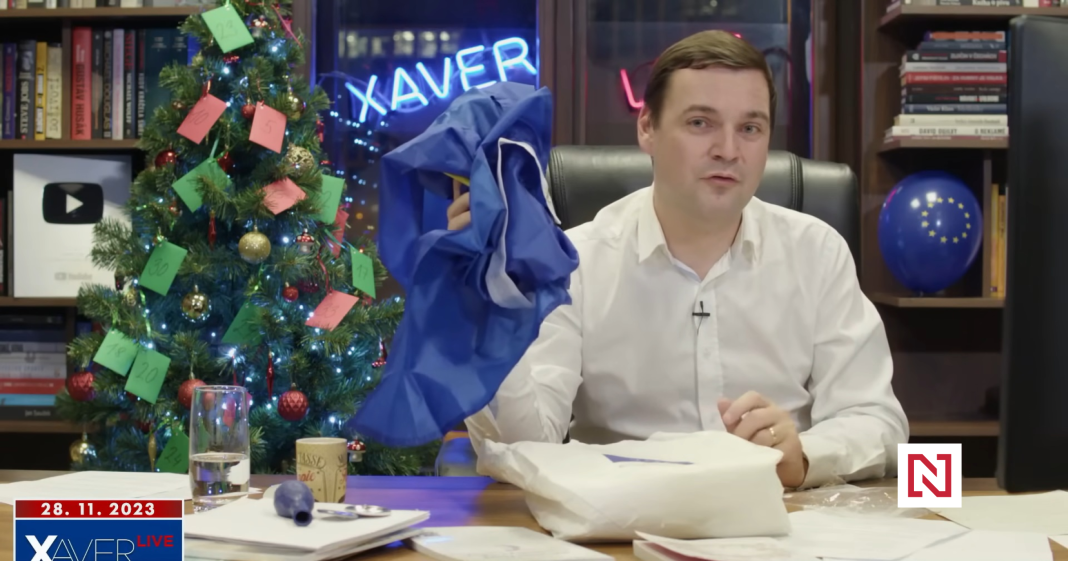

The recent comments by the candidate for Foreign Minister regarding the EU flag burning have sparked significant attention. Describing such actions as “political teleshopping,” the candidate’s remarks have ignited a debate on the nature and boundaries of political expression.
A Controversial Remark

The candidate labeled the act of burning the European Union flag as a form of “political teleshopping,” suggesting that it is a performative gesture aimed at attracting attention rather than genuine political discourse. This statement has prompted reactions across the political spectrum, with some supporting the right to free expression and others condemning the act as inappropriate.
Flag burning in any context is often a contentious subject, reflecting deep-seated opinions about national and supra-national identity. The candidate, who is poised to take on a significant diplomatic role, appears to be positioning this issue within a broader conversation about political marketing and its impact on public perception.
This expression of political gesture, especially in the European context, raises questions about how political symbols are used or misused in public demonstrations. The candidate’s term “political teleshopping” suggests a need for political acts to convey meaning beyond mere attention-seeking.
Reactions from Political Figures

The response from other political figures has been varied. Some interpret the candidate’s comments as a call for more substantive political engagement, while others view them as an underestimation of the motives behind such acts. The discussion extends to the relevance and effectiveness of symbolic actions in today’s politically charged environment.
Critics argue that dismissing these acts as mere “political teleshopping” ignores the genuine grievances that may underlie such demonstrations. They posit that symbolic actions have historically been a crucial part of political expression, serving as catalysts for dialogue and change.
Supporters, on the other hand, suggest that the candidate’s remarks emphasize the need for political actions to be more focused on constructive outcomes. They argue that merely provocative gestures do not contribute to meaningful dialogue and that political leaders should steer discussions toward tangible policy solutions.
Impact on Diplomatic Relations

The candidate’s views could shape the country’s diplomatic stance within the European Union. As potential Foreign Minister, the individual’s approach to such symbolic acts will likely inform how national identity and membership in the EU are balanced on the international stage.
The diplomatic landscape within the EU is complex, with member states navigating shared values and national interests. The question of how to address acts of political expression that challenge the EU’s symbols is a pertinent one, potentially affecting relations within the Union.
The prospective Foreign Minister’s stance suggests a diplomacy that favors dialogue over confrontation, requiring a careful articulation of national positions on contentious issues like sovereignty and identity.
Future Implications for Political Expression

The dialogue surrounding political symbols like the EU flag is crucial in understanding the evolving landscape of political expression. The candidate’s comments have underscored the need for careful consideration of the motivations and implications of such acts.
As political environments become increasingly polarized, the role of symbolic actions in shaping public and governmental discourse cannot be overlooked. The candidate for Foreign Minister’s remarks may influence how political expression is perceived and regulated within the country.
Ultimately, the debate around the EU flag burning and the term “political teleshopping” may lead to a broader discourse on the nature of political protest and its place in democratic societies.
Source: Official European Union website.