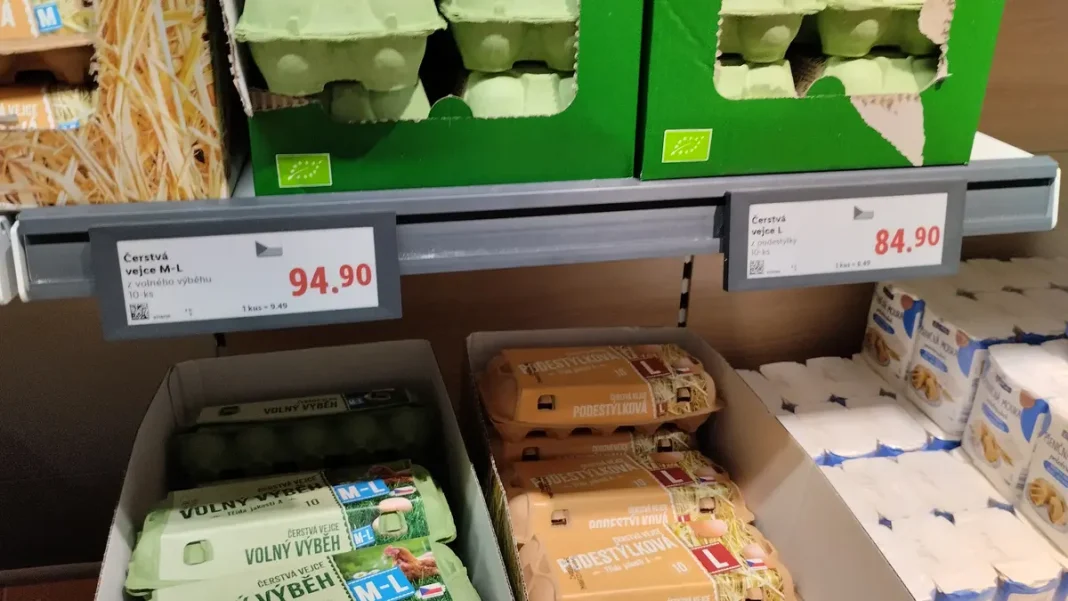

Egg prices in Prague continue to climb, with organic options now reaching up to 14 Koruna per egg. This rise is attributed to several factors impacting both local and global markets.
Impact on Consumer Behavior

The increasing cost of eggs has significantly impacted consumer purchasing habits. Shoppers in Prague are now more inclined to compare prices and seek out discounts, often opting for lesser-known brands to cut costs. This shift not only affects the sale of organic eggs but also influences the broader market as consumers prioritize budget-friendly grocery shopping.
Additionally, health-conscious consumers who normally choose organic options are facing tough decisions. The price surge challenges their commitment to organic products, potentially leading to a decline in overall organic sales as consumers weigh the cost against their health values.
Reasons Behind the Price Surge

Several factors have contributed to the escalating prices. Locally, increased feed costs for poultry have raised production expenses. Veterinary costs and compliance with health regulations have also seen an uptick, causing producers to pass these expenses onto consumers.
Moreover, global supply chain disruptions have played a role. Challenges such as rising transportation costs and import taxes have made it more difficult for Czech producers to secure necessary resources, further driving up egg prices.
Effects on Local Producers

For local farmers, the price rise has been a double-edged sword. While they benefit from higher market prices, the costs associated with organic farming—such as certified organic feeds and maintaining non-GMO standards—have also increased, narrowing profit margins.
Producers face pressure to maintain quality despite these economic challenges. Their commitment to organic practices means they must adhere to strict regulations and quality checks, which require further investment and diligence, despite potential financial strain.
Government and Industry Response

The government and industry leaders are aware of these challenges and are exploring solutions. Initiatives to support local production, such as subsidies for organic feed or tax breaks for small farmers, are being considered to ease financial burdens.
Industry leaders are also advocating for more streamlined regulations to reduce costs for producers while maintaining the quality and standards of organic products. These efforts aim to stabilize the market and ensure that consumers continue to have access to organic options at more affordable prices.
The rising cost of eggs, particularly organic varieties, highlights complex dynamics affecting both consumers and producers in Prague. Addressing these challenges will require coordinated efforts from government, industry, and consumers alike.