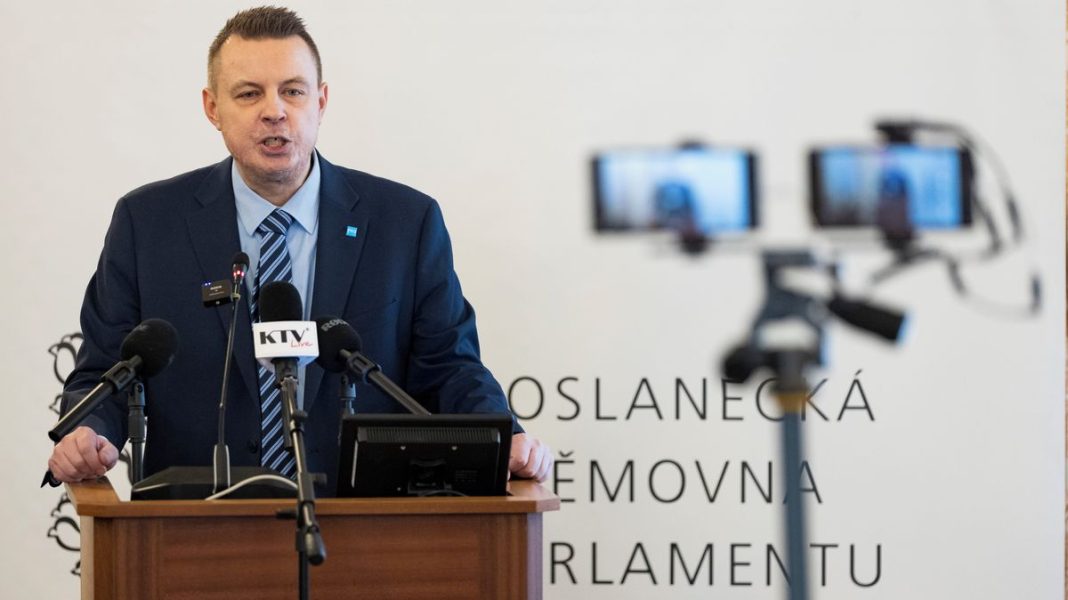

In a recent seminar led by Jindřich Rajchl, a series of claims were made that have sparked considerable debate. The seminar, lasting only fifteen minutes, included nine assertions that experts have termed misleading.
Key Misleading Claims Highlighted

Jindřich Rajchl’s seminar raised eyebrows when he delivered nine contentious claims in a remarkably brief session. These claims touched on various topics, ranging from political policies to economic forecasts. Experts have analyzed these statements, finding discrepancies between Rajchl’s assertions and established facts. The overwhelming consensus is that the information was presented in a way that could easily mislead those unfamiliar with the detailed contexts.
One significant claim pertained to national economic growth, which Rajchl exaggerated by cherry-picking data points. Economists quickly pointed out the selective representation and emphasized the need for a holistic view when discussing economic trends. The misleading nature of such claims can sway public opinion away from factual data, potentially impacting policy discussions.
The Implications of Misinformation

The seminar’s distribution of misleading information poses challenges, particularly in an era where public perception can be rapidly influenced by unchecked assertions. When influential figures like Rajchl present skewed data, it undermines informed decision-making processes. This can lead to misguided public opinions and, ultimately, flawed policy formulations if the claims are not adequately challenged.
Moreover, the dissemination of misleading claims has broader implications beyond immediate discussions. It erodes trust in public discourse, as individuals become skeptical of the information shared by leaders and experts. This phenomenon poses a threat to democratic processes, where informed decision-making and public trust are essential pillars.
Efforts to Combat Misleading Narratives

In response to the seminar and similar events, experts and fact-checkers have intensified their efforts to debunk misleading claims. By providing context and factual corrections, they aim to counteract the spread of misinformation. Educational campaigns are also underway to encourage critical thinking and media literacy among the public, equipping them with the tools to discern fact from fiction.
Public institutions play a crucial role in maintaining transparency and accountability. By actively engaging with the public and clarifying misconceptions, these institutions help uphold the integrity of information. Additionally, cross-collaboration between media outlets and fact-checking organizations is essential for addressing pervasive misinformation.
Looking Ahead: A Call for Responsibility

The need for responsibility in public discourse cannot be overstated. Leaders, educators, and media professionals must prioritize accuracy and transparency to foster a well-informed society. As seen with Rajchl’s seminar, even brief sessions can have lasting impacts if misinformation is left unchecked.
Moving forward, fostering a culture of accountability and evidence-based discussions is imperative. By collectively prioritizing truth and rejecting sensationalism, society can navigate complex issues more effectively and maintain a robust democratic framework.
In conclusion, the recent seminar by Jindřich Rajchl serves as a cautionary tale about the power of misinformation. By addressing and correcting misleading claims, it is possible to ensure that public discussions remain grounded in truth and integrity.