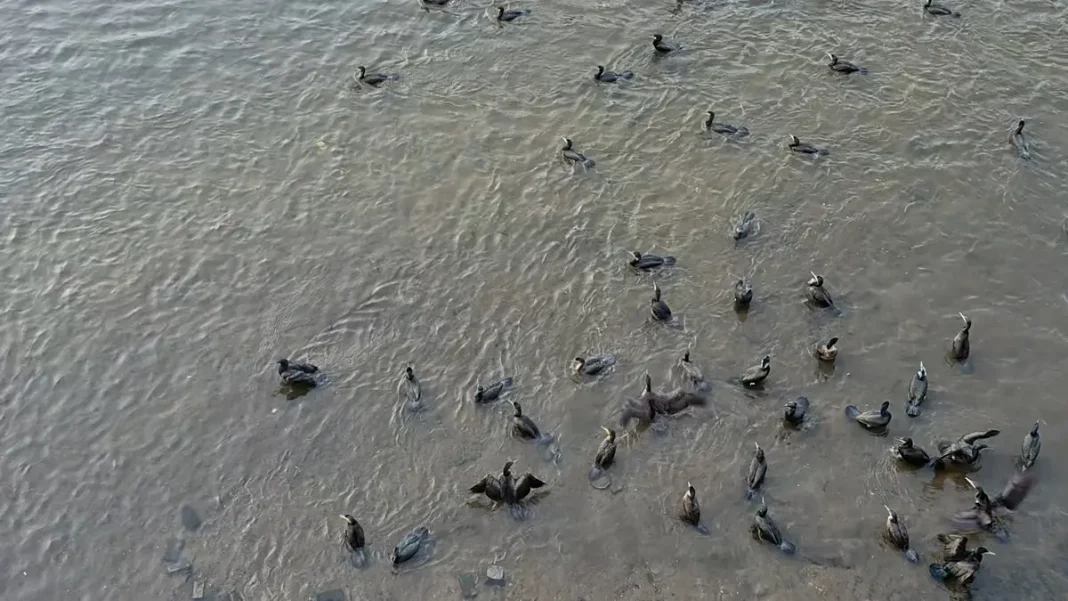

In a recent ecological incident, the Radbuza River in the Plzeň region has experienced a dramatic decline in its fish population due to an unexpected surge in cormorants. This situation has raised concerns among local ecologists and fishing communities.
Impact on the Radbuza River Ecosystem

The Radbuza River, known for its diverse aquatic life, has fallen victim to an overwhelming influx of cormorants. These birds, which are excellent divers and fishers, have found the river to be a plentiful feeding ground. Their intensified activity has led to a significant drop in fish numbers, causing alarm among environmentalists. The river is not just an important ecological zone but also a vital source for local fisheries.
Ecologists are currently studying the full impact of this event, noting that such a rapid depletion of fish can disrupt the entire aquatic ecosystem. The reduction of fish not only affects the biodiversity but also the water quality and the overall health of the river environment.
Concerns from Local Fishermen

Local fishermen, who rely heavily on the Radbuza for their livelihood, have expressed their growing concerns over the cormorant invasion. The decline in fish population directly impacts their earnings and the sustainability of their businesses. Many have noticed a sharp decrease in their daily catches, attributing it to the birds’ predation.
Efforts are being made by community groups and local authorities to address this issue. Some have suggested management strategies to control the cormorant population, ensuring that both the bird and fish populations can sustainably coexist.
Role of Human Activity and Environmental Changes

Experts suggest that environmental changes and human activities might have inadvertently contributed to this situation. Overfishing, pollution, and changes in land use around the Radbuza could have upset the natural balance, making the ecosystem more vulnerable to such invasions.
Additionally, climate change is believed to alter migration patterns of certain species, including cormorants, leading them to new areas like the Radbuza in search of food. Continuous monitoring and research are necessary to understand these dynamics better.
Solutions and Future Preventive Measures

To mitigate this issue, ecologists and policymakers are discussing various strategies. One approach is to create sustainable fish population management plans that could include fish restocking, habitat restoration, and controlling the cormorant population without harming the species.
Public awareness campaigns are also crucial, aiming to educate the community about the importance of maintaining a balanced ecosystem. Encouraging responsible fishing practices and reducing pollution can help restore and preserve the river’s natural environment.
Ultimately, collaborative efforts between local authorities, environmental groups, and the fishing community are essential to safeguard the Radbuza River’s future.
In conclusion, the devastation caused by cormorants on the Radbuza River’s fish population highlights the need for immediate and effective ecological management. This incident serves as a reminder of the delicate balance within our ecosystems and the impacts of environmental changes.
Source: Official Plzeň Region website.