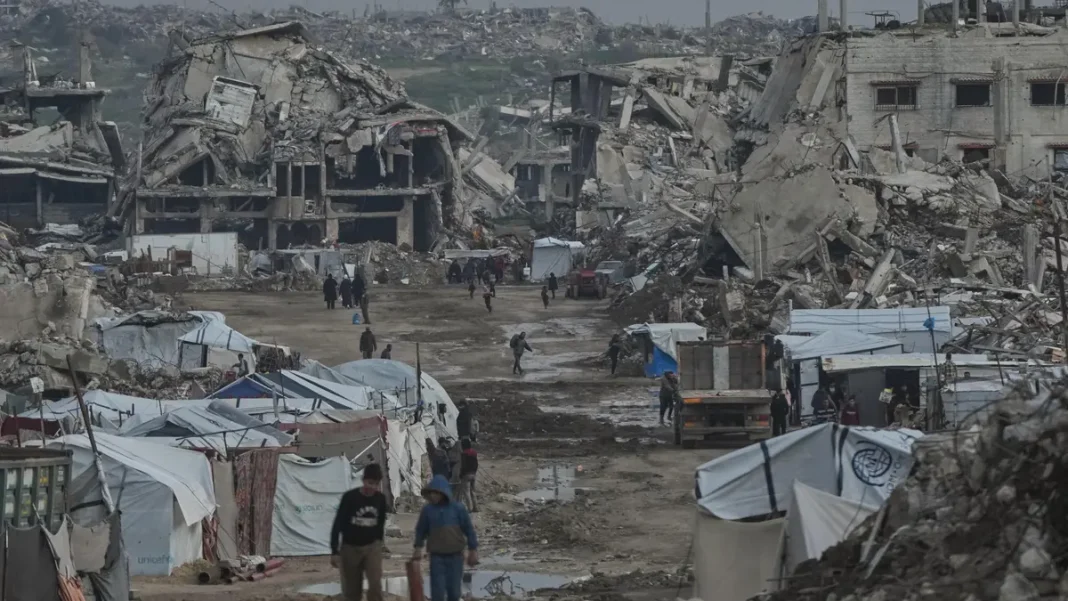

The recent formation of a Gaza Peace Council led by former U.S. President Donald Trump has sparked international interest. This council includes prominent figures like U.S. Senator Marco Rubio, real estate tycoon Steve Witkoff, and former UK Prime Minister Tony Blair.
Background of the Gaza Peace Council

The Gaza Peace Council aims to address the protracted conflict in the Gaza Strip through diplomatic and strategic dialogue. Under the leadership of Donald Trump, who previously attempted to broker peace in the Middle East during his presidency, the council seeks to bring a fresh perspective to the long-standing issues in the region.
Members of the council, such as Marco Rubio, bring significant political clout and experience in international relations. Rubio, who has been involved in foreign policy discussions during his tenure in the U.S. Senate, is expected to play a key role in shaping the council’s diplomatic strategies.
Role of Steve Witkoff

Steve Witkoff, a renowned figure in real estate, represents the private sector’s involvement in peace-building efforts. His participation underscores the potential for economic initiatives to support peace efforts in Gaza. By leveraging private sector resources and insights, the council hopes to provide economic stability as a foundation for lasting peace.
Witkoff’s inclusion signals the council’s intention to explore innovative economic solutions, possibly including investment opportunities in infrastructure and development projects that could benefit both Israelis and Palestinians.
Influence of Tony Blair

Former UK Prime Minister Tony Blair adds a wealth of diplomatic experience to the council. Blair has previously been involved in Middle East peace initiatives, notably as the Quartet Representative, where he worked with the UN, EU, US, and Russia to facilitate peace talks.
Blair’s expertise in international diplomacy and conflict resolution will be invaluable as the council engages with multiple stakeholders in the region. His established relationships with key political figures could help in navigating the complex political landscape of the Middle East.
Challenges and Opportunities Ahead

Despite the council’s strong lineup, it faces significant challenges, including deep-rooted political tensions and historical grievances. Building trust among the parties involved will be crucial for any progress. The council will need a multifaceted approach that addresses political, economic, and social dimensions of the conflict.
Opportunities lie in fostering dialogue and cooperation, creating a platform where different voices can be heard. The involvement of international figures offers a chance for broader global engagement, potentially drawing in more international support for peace efforts.
The creation of the Gaza Peace Council signifies a renewed effort to resolve one of the world’s most complex conflicts. With a blend of political, economic, and diplomatic expertise, the council aims to pave the way for sustainable peace in the region.
Source: Official U.S. Senate website.