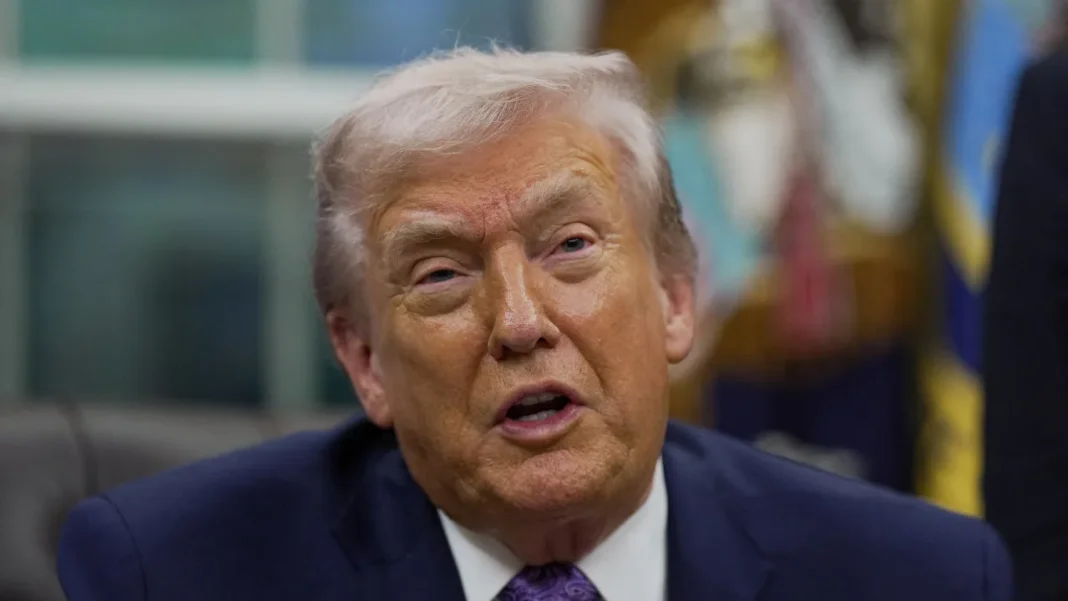

In a surprising move, former U.S. President Donald Trump has announced the establishment of a Peace Council aimed at addressing ongoing tensions in the Gaza Strip. This initiative comes amid continuing international concerns over violence and instability in the region.
Background of the Peace Initiative

The announcement of the Peace Council marks a significant step by Trump to engage in international diplomacy post-presidency. The council will reportedly focus on fostering dialogue between Israeli and Palestinian leaders with the intention of finding long-term solutions to the ongoing conflict in the Gaza Strip. The move aligns with Trump’s previous Middle East policies, which included brokering normalization agreements between Israel and several Arab nations.
Trump’s involvement in Middle East diplomacy is not new. During his presidency, he spearheaded the Abraham Accords, which forged peace agreements between Israel and countries such as the United Arab Emirates, Bahrain, and Sudan. The Peace Council seems to build on these efforts, aiming to address the more complex and deeply rooted issues in Gaza.
Composition and Objectives of the Council

The Peace Council is expected to be an advisory body comprising experienced diplomats, Middle East experts, and former government officials. The team will focus on leveraging diplomatic avenues to reduce hostilities and open dialogue channels. While details about its exact composition and operational logistics are still emerging, initial reports suggest a diverse group to facilitate a more balanced approach.
The primary goal is to establish ceasefires, humanitarian aid access, and eventually, a comprehensive peace framework. This endeavor will likely require collaboration with international entities, including the United Nations and regional governments, to ensure its effectiveness and credibility.
Reactions from the International Community
Responses to Trump’s announcement have been mixed. Some leaders and observers have praised the initiative, suggesting that any effort to stabilize the region is a positive step. However, critics remain skeptical about Trump’s ability to broker peace, given the complex political dynamics and his controversial tenure.
Several Middle Eastern leaders have reportedly shown willingness to engage with the council, while others remain cautious, awaiting concrete proposals and actions. The effectiveness of this initiative will largely depend on the involvement and commitment of key regional players and stakeholders.
Challenges and Future Prospects

One of the main challenges facing the Peace Council is the entrenched nature of the conflict, characterized by decades of mistrust and recurrent violence. Addressing these deeply rooted issues requires a nuanced approach that considers the diverse perspectives and grievances of all parties involved.
While the creation of the Peace Council is a promising development, its success will depend on long-term dedication and the ability to adapt to changing realities on the ground. The council will need to maintain transparency and inclusivity to generate trust and foster cooperation from both sides.
Trump’s initiative represents a bold step towards addressing a long-standing global issue. As the council begins its work, the international community will be watching closely to see if it can make substantial progress in bringing peace to the Gaza Strip.
Source: Official White House Historical Association website.