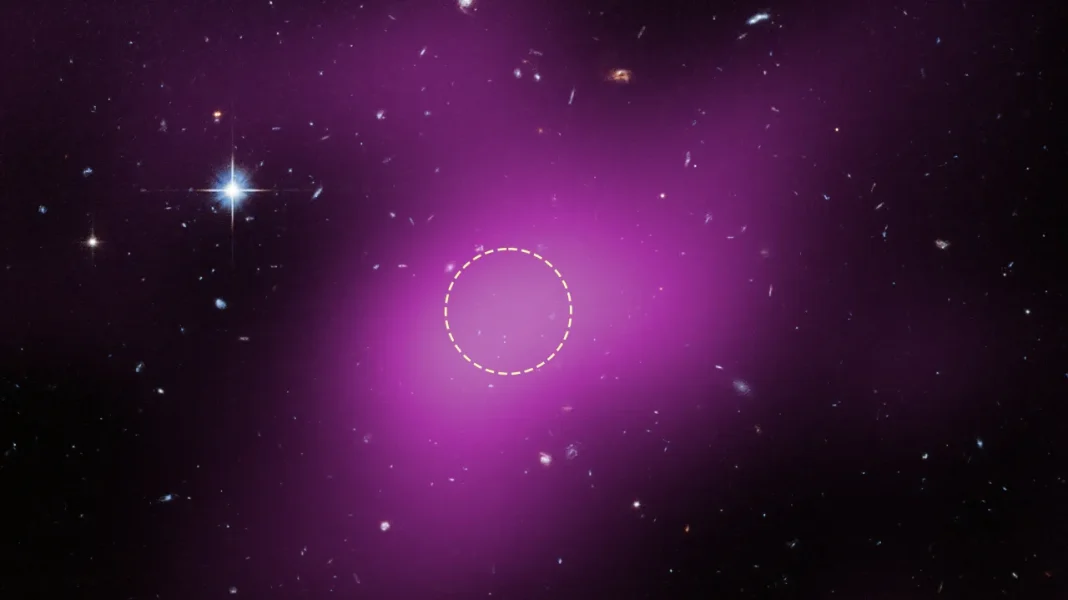

Astronomers around the world are buzzing with excitement over the discovery of a new type of cosmic object, intriguingly dubbed the “Seventh Heaven.” This revelation promises to enhance our understanding of the universe and could potentially redefine celestial classification.
The Discovery of the ‘Seventh Heaven’

The “Seventh Heaven” represents a breakthrough in astronomical research, challenging previous notions of celestial objects. This new class was identified through a combination of cutting-edge telescopic technology and advanced data analysis techniques. What sets the “Seventh Heaven” apart from known categories such as stars, planets, or black holes, is its unique composition and behavior patterns.
Astronomers first noticed the anomaly while surveying distant galaxies with a high-powered telescope. Initial observations revealed unusual light emissions and gravitational effects that did not align with the characteristics of familiar cosmic entities. These findings prompted further investigation, leading to the recognition of this distinct classification.
Implications for Astronomy

The discovery of the “Seventh Heaven” holds significant potential for the field of astronomy. By expanding the categories of known celestial objects, astronomers can explore new theoretical frameworks and understand the universe’s complexities more comprehensively. The observed light patterns and gravitational features of the “Seventh Heaven” could provide new insights into cosmic phenomena, such as dark matter and energy distribution.
This discovery is also expected to drive technological advancements in telescopic equipment and analytical software, pushing the boundaries of what humans can observe and comprehend about the cosmos. As research progresses, this could lead to improved models of galaxy formation and evolution.
Exploration and Research Challenges

While the excitement surrounding the “Seventh Heaven” is palpable, it brings with it numerous research challenges. Understanding the precise nature of these objects requires substantial observation time and expertise. Scientists must develop new models to simulate their behavior and characteristics, which demands collaboration across international research teams.
Funding and resources will play a critical role in advancing this research. The necessity for upgraded equipment and cross-disciplinary study presents logistical hurdles, but the potential scientific rewards make it a worthwhile endeavor.
The Role of International Collaboration

The discovery has sparked a collaborative spirit among global astronomical institutes. By joining forces, scientists can pool resources and share data, accelerating the pace of discovery and innovation. International symposiums and conferences dedicated to discussing findings related to the “Seventh Heaven” are already being organized.
Moreover, this global effort emphasizes the importance of sharing information and leveraging diverse expertise to tackle the mysteries of the universe. It serves as a reminder of the collective quest for knowledge that transcends borders and fosters unity in the scientific community.
In summary, the discovery of the “Seventh Heaven” marks an exciting chapter in astronomical exploration, promising significant advancements in our understanding of the universe. As research continues, this new cosmic object may offer groundbreaking insights into the dynamic and constantly evolving reaches of space.