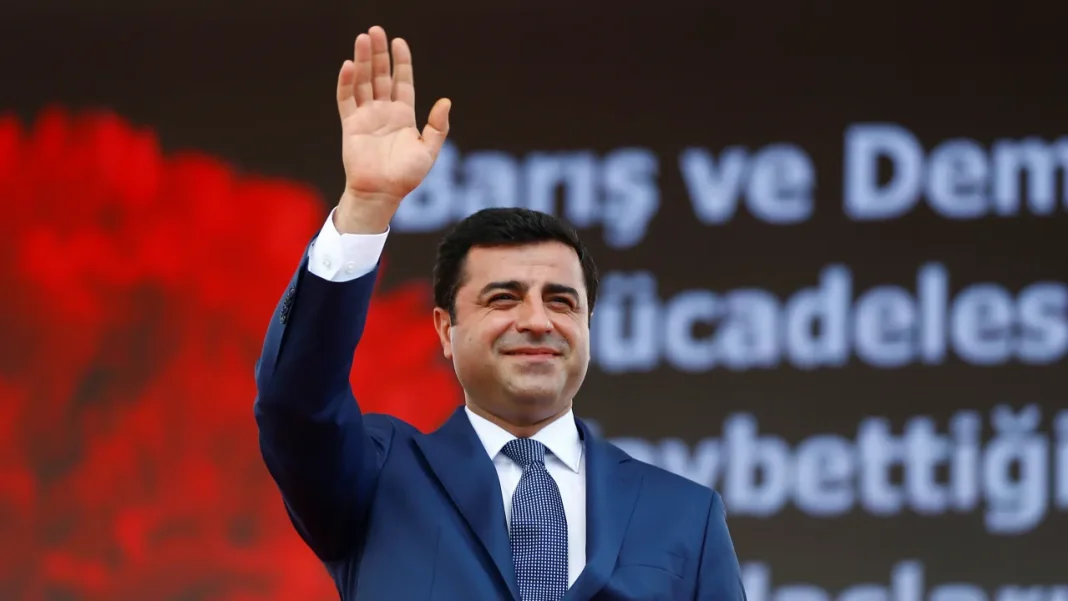

In a significant development for Turkish politics, opposition leader Selahattin Demirtaş, the former co-chair of the Peoples’ Democratic Party (HDP), has been sentenced to an additional 17 months in prison. This decision has sparked widespread reactions both within Turkey and internationally, as concerns grow over political freedoms in the country.
Background of Demirtaş’s Political Career

Selahattin Demirtaş rose to prominence as a charismatic leader of the HDP, advocating for the rights of Turkey’s Kurdish population and other marginalized groups. His political journey has been marked by his outspoken criticism of government policies and his calls for democratic reforms. Despite being imprisoned since 2016 on charges related to terrorism, his influence within Turkish politics has remained significant.
Demirtaş’s leadership contributed to the HDP securing a substantial presence in the Turkish parliament. The party’s progressive platform, championing minority rights and democracy, resonated with a diverse segment of the Turkish electorate. His detention has often been cited by international observers as a reflection of the challenges faced by opposition figures in Turkey.
Legal Proceedings and Charges

The recent sentence stems from charges of insulting the Turkish state and its institutions, a common allegation against government critics in Turkey. The legal proceedings have been criticized by human rights organizations, which argue that such charges are frequently used to stifle dissent.
This additional sentence adds to Demirtaş’s existing prison term, further diminishing prospects for his release in the near future. His legal team has expressed plans to appeal the verdict, emphasizing that the charges are politically motivated and lack concrete evidence.
Domestic and International Reactions

The sentencing has triggered strong reactions within Turkey, with various opposition parties condemning the verdict as a blow to democratic principles. Many citizens have expressed support for Demirtaş on social media platforms, emphasizing the need for judicial independence.
International response has also been swift, with the European Union and human rights organizations calling for Demirtaş’s immediate release. They argue that his incarceration is part of a broader crackdown on freedom of expression and political opposition in Turkey.
Implications for Turkey’s Political Landscape

The continued imprisonment of Demirtaş and other political figures poses significant implications for Turkey’s political future. As the country prepares for upcoming elections, the treatment of opposition leaders is likely to influence both domestic voter sentiment and Turkey’s relations with the international community.
Observers note that the case of Selahattin Demirtaş will be a key factor in shaping the political discourse in Turkey. It highlights the ongoing tension between the ruling government and the opposition, with potential consequences for Turkey’s democratic institutions.
The recent verdict against Selahattin Demirtaş underscores the complex dynamics at play in Turkey’s political arena. As the country grapples with these challenges, the resilience of its democratic structures will be closely watched by both domestic and international stakeholders.
Source: Official Peoples’ Democratic Party website.