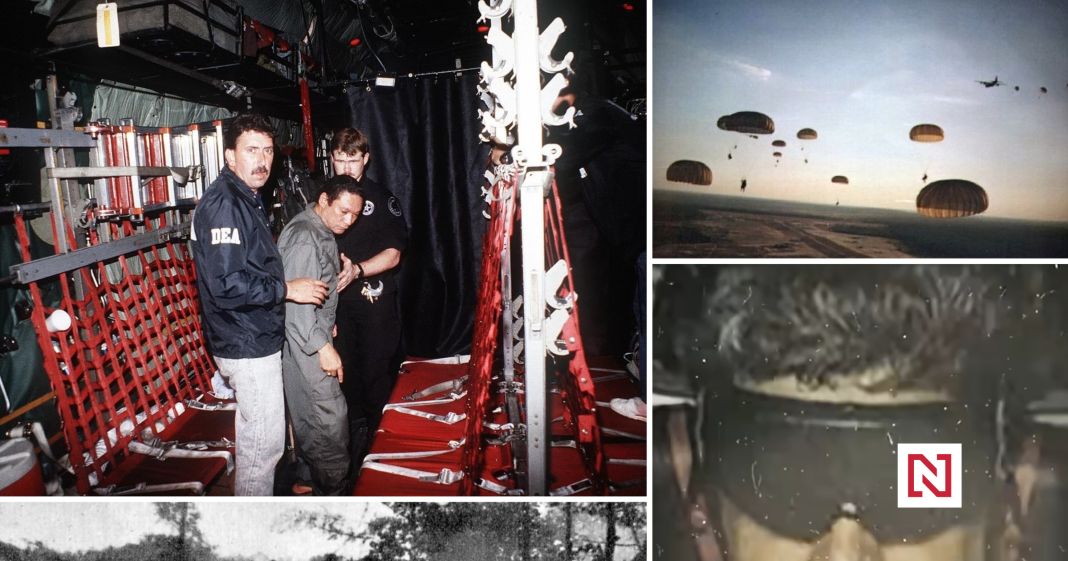

Throughout history, the United States has played a significant role in the political, economic, and social landscapes of Latin America. From military interventions to diplomatic engagements, these interactions have shaped the region in profound ways.
The Monroe Doctrine: Establishing a U.S. Sphere of Influence

In 1823, President James Monroe declared that any European attempts to colonize or interfere with states in the Americas would be seen as acts of aggression against the U.S. This “Monroe Doctrine” positioned the United States as the dominant power in the Western Hemisphere, discouraging European involvement and influencing American foreign policy throughout the 19th and 20th centuries.
While initially a protective measure, the Doctrine evolved into a justification for U.S. interventions. It underscored efforts to suppress European influence, which included various operations and policies aimed at maintaining stability favorable to American interests in the region.
This doctrine served as a cornerstone for U.S. actions in Latin America, setting the stage for future engagements that were often more direct and involved.
The Spanish-American War and the Platt Amendment

The 1898 Spanish-American War marked a pivotal moment, as the U.S. gained control of former Spanish colonies, including Cuba, Puerto Rico, and the Philippines. Although promising independence for Cuba, the U.S. imposed the Platt Amendment, which allowed for significant American intervention in Cuban affairs and established Guantanamo Bay as a U.S. naval base.
The Amendment reflected American interests in securing economic and strategic footholds in the region. It also spurred debates about imperialism and sovereignty, highlighting tensions between U.S. objectives and local autonomy.
This intervention set a precedent for future U.S. involvement in Latin America, illustrating the balance between promoting independence and protecting American interests.
The Panama Canal and Influence over Central America

The construction of the Panama Canal (1904–1914) was a monumental engineering project that enhanced global trade routes and solidified U.S. influence in Central America. By assisting Panama’s independence from Colombia, the U.S. secured exclusive rights to build, control, and protect the canal.
This strategic endeavor underscored the economic motives behind U.S. actions in the region, aligning with broader geopolitical strategies to facilitate commerce and military movement. The canal became not only a commercial boon but also a symbol of American engineering prowess and political clout.
The legacy of the canal continues to impact U.S.-Latin American relations, representing both the ingenuity and the imperial inclinations of early 20th-century America.
The Cold War and Latin American Politics
During the Cold War, the U.S. engaged in a series of covert operations and open interventions across Latin America to counteract Soviet influence. Central to this was the fear of communism spreading throughout the hemisphere, which led to support for anti-communist regimes and opposition to socialist movements.
Significant events included the 1954 Guatemalan coup, orchestrated by the CIA, and the U.S. response to the Cuban Revolution, leading to the failed 1961 Bay of Pigs invasion. These interventions highlighted the Cold War’s ideological battle lines, with Latin America often becoming a proxy battlefield.
This period left a complex legacy, as many countries experienced turmoil and authoritarianism as a direct or indirect result of U.S. policies aimed at containing communism.
The history of U.S. involvement in Latin America is a multifaceted narrative of power, influence, and unintended consequences. These key moments highlight the intricate dynamics at play, offering lessons on diplomacy, intervention, and the pursuit of national interests.