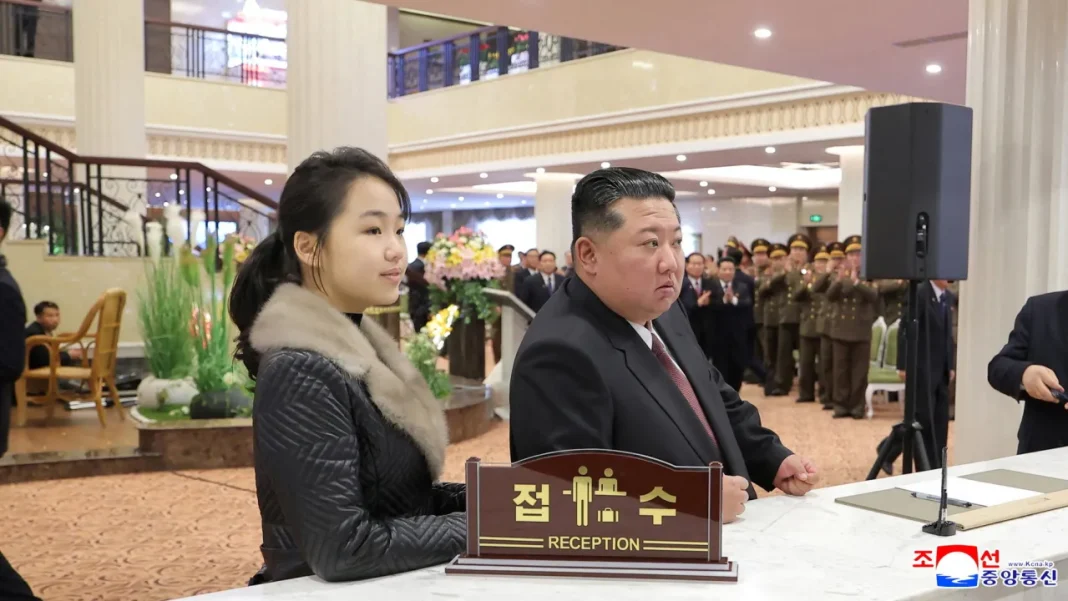

Kim Jong Un’s daughter has reportedly made her first official visit to the ancestral mausoleum of her family, garnering attention from international observers. Such visits are significant events, especially in the context of North Korea’s dynastic leadership.
Significance of the Ancestral Mausoleum Visit

The visit to the Kumsusan Palace of the Sun, which serves as the mausoleum for North Korea’s founding leader Kim Il Sung and his successor Kim Jong Il, is steeped in symbolism. It underscores the young Kim’s role in the deeply rooted dynastic tradition that has defined North Korean governance. Observers see this visit as a calculated move to introduce Kim’s daughter within the nation’s socio-political sphere.
Analysts suggest that such appearances may indicate an attempt to slowly familiarize North Korea’s population with her image and identity, thus paving the way for her potential future involvement in the country’s leadership. This aligns with the historical pattern observed in the Kim dynasty, where family members rise to prominence to ensure the continuation of their political lineage.
The Role of Family in North Korean Politics

Family heritage plays a pivotal role in the political landscape of North Korea. The Kim family has maintained a tight grip on power since the country’s inception, often solidified through carefully orchestrated public appearances by family members, intended to boost their legitimacy and support.
The inclusion of Kim’s daughter in official events reflects the emphasis on ensuring the legacy of power stays within the family. This strategy is not just a mere cultural construct but a calculated political maneuver designed to consolidate the regime’s ideological and political foundation.
International Reactions and Speculations

The news of her visit has raised various speculations among the international community about her future role. While North Korean state media has yet to confirm any official position for her, the appearance suggests that she might be groomed for a significant role down the line.
Internationally, experts are keenly observing the implications of her public role, speculating whether this signifies a shift towards a more overt dynastic succession plan. Such movements within North Korea are often closely guarded and strategically revealed to manage both internal and external narratives.
Future Implications for North Korea’s Leadership

While it remains uncertain what exact role Kim’s daughter might eventually play, her participation in events of national importance indicates a possible deliberate preparation for future responsibilities. This aligns with historical precedents, where long-term positioning has been crucial for maintaining the family’s grip on power.
As North Korea continues to tread carefully in showcasing its dynastic lineage, the prominence of new family members might also reflect attempts to respond to internal dynamics and external pressures, ensuring the regime’s continuity amidst a rapidly changing geopolitical landscape.
In summary, the visit to the ancestral mausoleum by Kim Jong Un’s daughter is a significant development in understanding the intricate workings of North Korea’s leadership dynamics and future succession strategies. The appearance not only marks a continuation of tradition but also hints at potential shifts in the power structure.
Source: Official North Korean News Agency website.