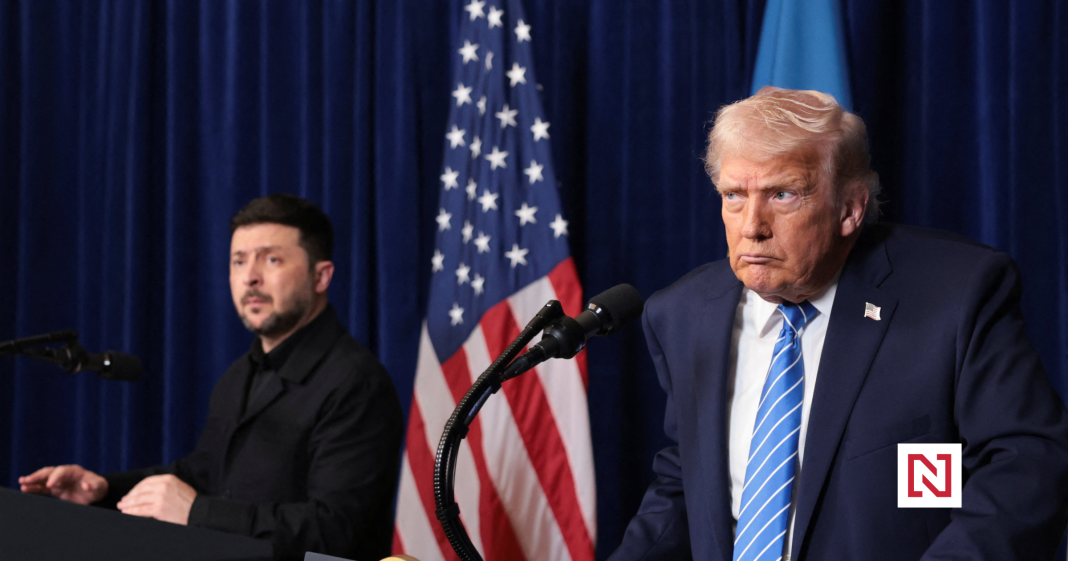

In a surprising turn of events, a summit in Florida aimed at resolving tensions between Ukraine and Russia appears to have hit a snag. Former US President Donald Trump, attempting to mediate discussions with Ukrainian President Volodymyr Zelensky, found the negotiations stalling, while concurrently offering praise to Russian President Vladimir Putin for what he termed a “willingness to help Ukraine.”
Background of the Summit

The summit was convened with the intention of fostering dialogue between key political figures amid the ongoing conflict between Ukraine and Russia. Expectations were high that Trump’s past diplomatic engagements could facilitate a breakthrough. However, reports indicate that discussions did not proceed as planned, leading to increased frustrations and a lack of concrete results.
Trump’s involvement has been largely viewed as a personal initiative rather than an official American diplomatic effort. Critics have argued about the appropriateness and potential effectiveness of Trump’s role in the delicate negotiations, especially given his previous comments regarding both Ukraine and Russia.
Reaction from Ukrainian Officials

Ukrainian President Zelensky reportedly expressed disappointment over the lack of progress during the talks. The discussions, which aimed at securing a compromise or at least a roadmap for peace, seemingly stalled due to differing priorities and expectations on both sides. Zelensky’s administration remains committed to seeking international support in their struggle for territorial integrity and sovereignty.
For many Ukrainians, the ongoing conflict has fueled a strong desire for decisive international action. The failure of the Florida talks highlights the complexities of diplomacy and the challenges facing Ukrainian leadership as they navigate international political landscapes.
Trump’s Praise of Putin

In a move that raised eyebrows, Trump praised Vladimir Putin’s supposed willingness to assist Ukraine. This remark, however, contrasts sharply with the international community’s perception of Russia’s role in the conflict, where many see Russia as an aggressor in the ongoing unrest in Eastern Europe.
Trump’s comments were met with criticism both domestically and internationally, as observers questioned the implications of supporting a nation perceived as an antagonist in the region’s geopolitical woes. This has fueled further debate regarding the appropriateness of his remarks and the potential impacts on US foreign policy dynamics.
Potential Consequences and Future Steps

The lack of progress in Florida may necessitate alternative approaches to be considered by international stakeholders committed to resolving the Ukraine conflict. Diplomats are discussing potential next steps to re-establish productive negotiations.
Moving forward, there may be an increased call for multilateral engagement involving European Union nations, the United States, and NATO, to ensure comprehensive strategy development that aligns with the interests of affected parties, especially Ukraine.
Though the Florida summit did not achieve its intended outcomes, the persistence of diplomatic efforts remains critical. As international discussions continue, it is hoped that a renewed multifaceted approach will pave the way toward a lasting resolution.