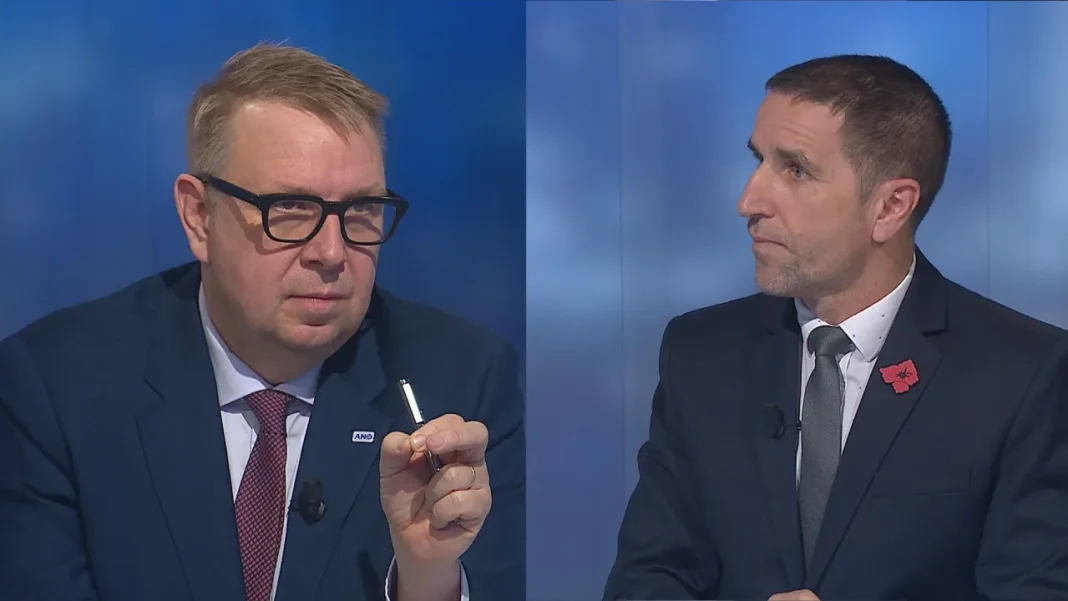

In a recent development, the budgetary dynamics in the Czech Republic have generated heated political debates. Haas has openly criticized the proposed adjustments by the ANO party, while Juchelka has voiced opposition to adopting a provisional budget. This unfolding scenario is playing out in the national spotlight and was a key focus on Czech Television News.
Haas’s Criticism of ANO’s Budget Proposal

Haas, a prominent figure in the Czech political landscape, has expressed significant concerns over ANO’s latest budget shifts. He argues that the amendments proposed by ANO lack clarity and do not adequately address the pressing financial issues facing the country. According to Haas, the revised proposals could potentially exacerbate the existing economic challenges, diverting critical funds away from essential services and infrastructure projects.
The contention arises from ANO’s attempt to modify allocations in key sectors. Haas emphasized that such shifts would negatively impact long-term fiscal stability and lead to unforeseen complications. His concerns resonate with several other policymakers who await more detailed explanations from ANO regarding the rationale behind these changes.
Juchelka’s Opposition to Provisional Budget

In contrast to Haas’s criticism of ANO’s budget plan, Juchelka has firmly opposed any movement towards a provisional budget solution. He believes that establishing a provisional budget would undermine the confidence of both domestic and international investors, which is crucial for sustaining economic growth in the region.
Juchelka articulated that a provisional budget could signal instability, potentially affecting the country’s credit rating and elevating borrowing costs. He insists that a comprehensive and sustainable budget is essential for maintaining the current economic trajectory and meeting the country’s fiscal obligations.
The Impact of Budgetary Debates on Czech Politics

These budgetary debates have marked a pivotal moment in Czech politics, with various parties and stakeholders voicing their perspectives on the fiscal future of the nation. The proposals and counterproposals reflect deeper ideological divides regarding economic strategy and priorities. Public discourse has been intense, with citizens closely observing how these negotiations will shape financial policies.
The ongoing debates also highlight the complex nature of coalition politics in the Czech Republic. The necessity of achieving consensus among different political factions makes the budgeting process even more intricate. Parties are striving to present a unified front while attending to the unique demands of their constituencies.
Potential Outcomes and Future Implications

As discussions continue, the outcomes will be crucial in determining the financial direction the Czech Republic will take in the coming years. A failure to reconcile differences could lead to a prolonged stalemate, affecting public services and economic stability. Conversely, a successful agreement could set a precedent for future budgetary collaborations.
The resolution of these budgetary challenges will serve as a barometer for the efficacy of political discourse in the Czech Republic. Observers are keenly evaluating whether the current political framework can effectively address complex economic challenges and adapt to global economic pressures.
As the situation develops, stakeholders and citizens alike await the final decisions that will chart new fiscal paths for the Czech Republic.
Source: Official Czech Television website.