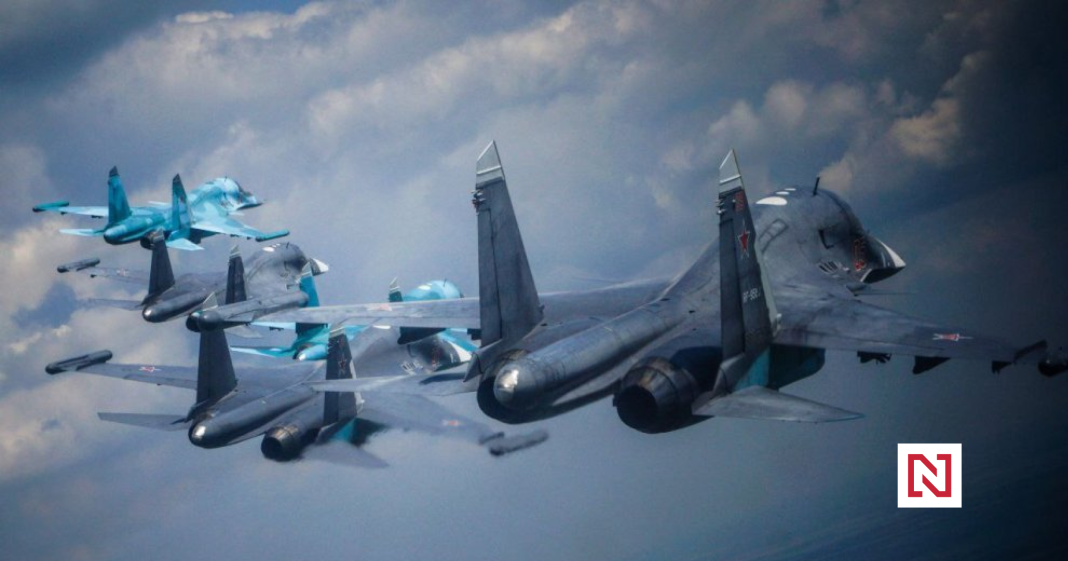

The deployment of Russia’s Su-57 jets, touted as the country’s most advanced fighter aircraft, has faced challenges in Ukraine. Despite their advanced technology, these jets have not succeeded in downing Ukrainian aircraft, raising questions about their combat effectiveness.
Technological Advancements of the Su-57

The Su-57, developed by Sukhoi, represents Russia’s foray into fifth-generation jet technology. Equipped with advanced stealth capabilities, avionics, and a high level of manoeuvrability, the jets were expected to provide a significant advantage in air superiority. Features such as supercruise, supermanoeuvrability, and advanced radar are intended to rival the capabilities of Western aircraft like the F-22 Raptor.
However, recent engagements have shown that these technological advancements have not translated into clear advantages on the battlefield. The jets have failed to match their expectations in combat situations against the resilient Ukrainian air force. This raises concerns about the practical application of theoretical capabilities in real-world scenarios.
Operational Challenges in Ukraine

One of the major hurdles has been integrating the Su-57 into the broader Russian military strategy. Despite the jets’ capabilities, logistical and operational challenges in Ukraine have hampered their effectiveness. Limited numbers and the complexity of their operational requirements have imposed constraints on their deployment.
Moreover, Ukraine’s deployment of effective air defense systems has presented formidable obstacles for the Su-57. The Ukrainian military’s ability to challenge sophisticated aircraft highlights the resilience and adaptability of their defense strategies, which have managed to neutralize the threat posed by these advanced jets.
Implications for Russian Military Strategy

The limited success of the Su-57 in Ukraine prompts a reassessment of Russia’s military strategy. It underscores the need for effective integration of new technologies within existing frameworks. This includes addressing logistical challenges and ensuring sufficient numbers to influence battlefield outcomes.
Additionally, the situation highlights the importance of evolving adversaries. The Ukrainian air force, though under-equipped compared to Russia’s latest technologies, has effectively countered threats, indicating that technological superiority doesn’t always guarantee success.
Global Perception and Future Prospects

The mixed results of the Su-57 deployment impact global perception of Russian military capabilities. Countries considering purchasing the Su-57 may re-evaluate their decisions in light of these deployments. The aircraft’s success in the export market depends not only on its technological prowess but also on proven combat effectiveness.
Looking forward, Russia may need to address the tactical and strategic lessons learned from these engagements. Refining technological integration and operational strategies will be critical to improving future deployments and maintaining the competitiveness of their military exports.
With continued tensions in the region, how Russia adapts its use of advanced technology like the Su-57 will be closely watched by global defense analysts.