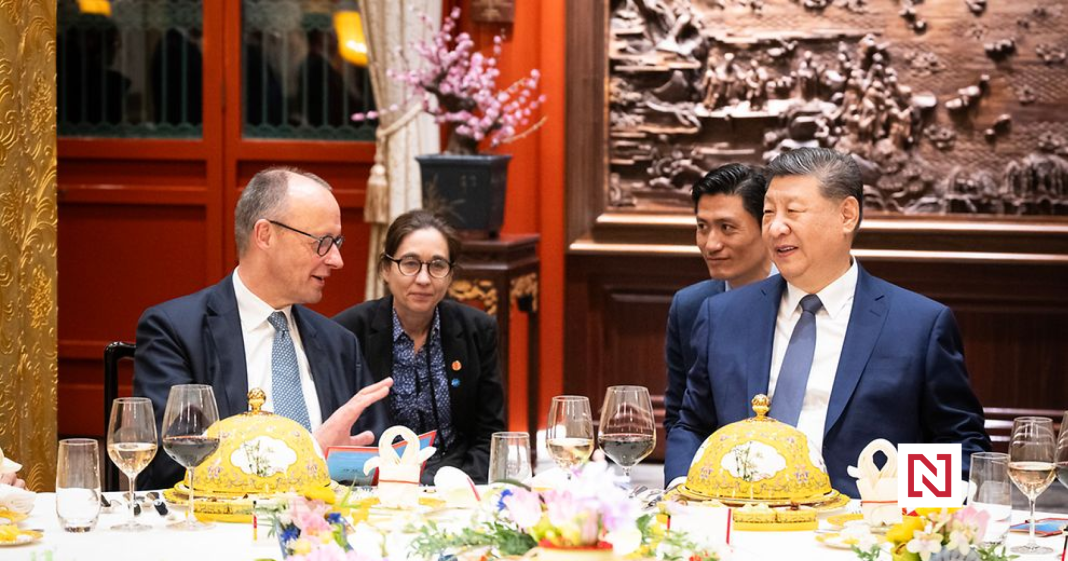

Friedrich Merz, the leader of Germany’s CDU party, is seeking to strengthen ties with China amidst a significant agreement involving 120 Airbus aircraft. This move highlights the strategic importance of trade relations between Germany and China.
Germany’s Economic Strategy
As the world’s largest economy in Europe, Germany continuously seeks to enhance its trade relationships. The recent developments involving Friedrich Merz are part of a broader strategy to ensure strong economic ties with China, a critical global trading partner. Merz’s approach underscores Germany’s commitment to maintaining robust economic collaborations, especially in the aviation sector.
This Airbus deal is seen as a step towards fostering deeper economic connections. The agreement not only signifies the confidence of the German manufacturing giant in the Chinese market but also reflects the mutual benefits both countries anticipate from such partnerships.
The Significance of the Airbus Deal
The procurement of 120 Airbus aircraft by China is a noteworthy event, marking a milestone in international trade relations. This deal will not only bolster the Airbus operations but also enhance transportation infrastructure in China. Such agreements have implications for job creation, technological exchange, and increased diplomatic engagements between nations.
The aviation sector is pivotal for both Germany and China, with trade in this area offering mutual advancements. This agreement establishes a foundation for further collaboration in the aviation industry, potentially leading to joint ventures and technological co-developments.
Political and Economic Implications
The collaboration between Germany and China goes beyond mere business transactions. Politically, it exemplifies a strengthening of bilateral ties in a world increasingly marked by complex geopolitical dynamics. Merz’s efforts reflect a diplomatic maneuver to ensure Germany remains competitive amidst global economic shifts.
Such agreements can also be seen as attempts to balance influences within Europe and Asia. By reinforcing the trade partnership, Germany aims to secure its position as a leader in international diplomacy and economic strategy.
Future Prospects for German-Chinese Relations
Looking ahead, the partnership portends significant prospects for both nations. The successful execution of the Airbus deal is likely to pave the way for further collaborations in various sectors, such as technology, green energy, and digitalization. The potential for innovation and growth stands as a testament to the shared objectives of both countries.
With Friedrich Merz at the helm, Germany is expected to continue fostering strategic partnerships with China. These initiatives will likely drive economic progress while ensuring sustainable and mutually beneficial relations.
In conclusion, the pursuit of stronger ties with China through strategic agreements like the Airbus deal illustrates Germany’s dedication to sustaining its global economic prowess. Such collaborations not only foster commercial benefits but also reinforce political alliances.
Source: Official Airbus website.