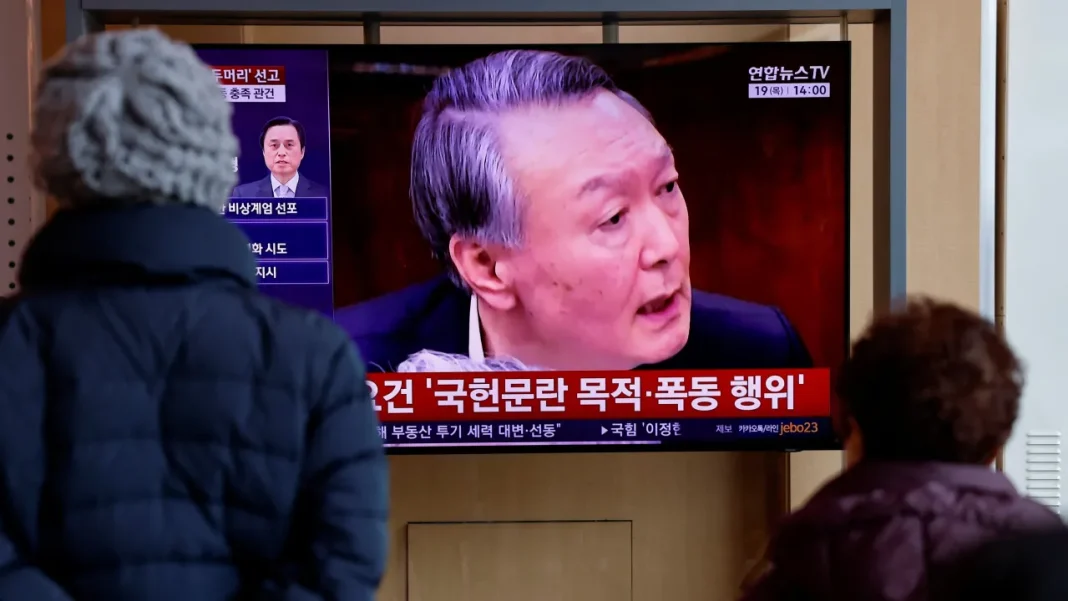

In a significant legal development, former South Korean President has been handed a life sentence for his role in declaring martial law. This verdict is a monumental moment in the country’s efforts to tackle past governmental abuses.
Background of the Case

The former leader’s involvement in instituting martial law was a controversial decision that affected the nation profoundly. Declaring martial law involved deploying the military to suppress significant political unrest and protests against governmental actions. The decision has been a subject of intense legal scrutiny, with many advocating for justice for the events that unfolded under the military’s oversight.
The order to declare martial law was reportedly taken to maintain order during a severe political crisis. However, it led to widespread human rights violations, which included the crackdown on political opposition and detainment of dissenters. This trial aimed to address these abuses and bring a sense of closure to the victims and their families.
Legal Proceedings

The trial was a complex process involving extensive evidence and testimonies from witnesses, victims, and former officials. The prosecution argued that the leader’s actions were unconstitutional and driven by a desire to retain power rather than genuine national security concerns. The defense, on the other hand, maintained that the drastic step was necessary given the political instability at the time.
Ultimately, the court found that the declaration was illegal and resulted in severe consequences for numerous citizens. The life sentence serves as an example of the judiciary’s commitment to upholding democratic principles and addressing past wrongs committed by those in power.
Implications for South Korean Politics
This ruling is expected to have far-reaching implications for South Korean politics. It underscores the importance of accountability and transparency within the government and serves as a deterrent against potential future abuses of power. It also highlights the nation’s efforts to reconcile with its past and strengthen democratic institutions.
The verdict may also impact current political dynamics, influencing how future administrations handle national crises. It serves as a potent reminder of the potential consequences of excessive executive power.
Public Reaction

The public reaction to the verdict has been mixed, reflecting the lingering divisions over past governmental actions. Many citizens, especially those who suffered under martial law, welcome the ruling as a long-awaited acknowledgment of their plight. Advocacy groups and human rights organizations have also praised the court’s decision as a triumph for justice and human rights.
However, there remain factions within the political landscape that question the motives behind the trial, viewing it as an extension of political vendettas rather than a sincere pursuit of justice. The debate over this ruling is expected to continue as citizens grapple with its implications for the country’s future.
South Korea’s journey towards healing and democratic consolidation continues, as the former president’s sentencing illustrates the ongoing process of dealing with past injustices. The nation’s commitment to justice and reform remains a pivotal part of its evolution.