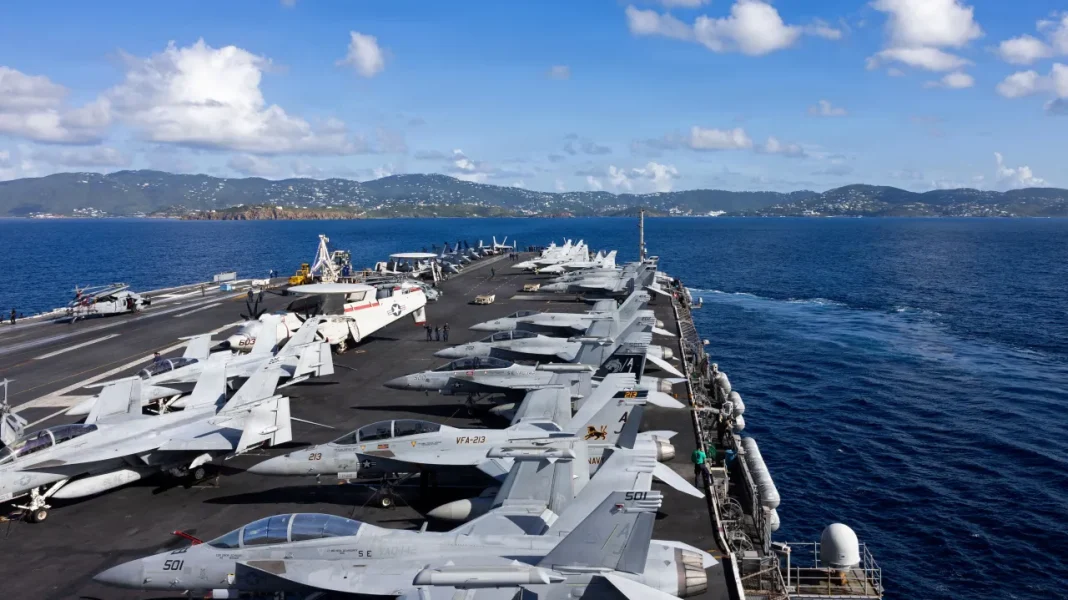

In a significant escalation, former U.S. President Donald Trump deployed a second aircraft carrier to the Middle East as tensions with Iran mounted. The move underscores the intense geopolitical strategies playing out in the region during that period.
Strategic Military Movements
The decision to send an additional aircraft carrier to the Middle East was part of a broader strategy to exert military pressure on Iran. The increased naval presence aimed to demonstrate U.S. resolve and deter Iran from any provocative actions. With the deployment of the second carrier, the U.S. intended to ensure that a rapid response capability was maintained in the volatile region.
The deployment allowed for a flexible range of military options that could be utilized should Iran threaten international security. This measure was complemented by diplomatic efforts to prevent further escalation and foster stability in the region, although military readiness remained a priority.
Diplomatic Implications

Heightened military presence often casts a long shadow over diplomatic relations, potentially complicating efforts at negotiation. While the U.S. aimed to prevent conflict, the stark military posture sent a signal both to allies and adversaries about its commitment to regional security. Allies of the U.S. were encouraged to support the pressure campaign, balancing military strength with the need for diplomatic solutions.
This military strategy had the dual purpose of reassuring regional allies and sending a warning to Tehran about the potential consequences of aggressive actions. The international community watched closely, aware that such actions could influence wider geopolitical dynamics.
Impact on Regional Stability

The increased American naval presence in the Middle East had significant repercussions on regional stability. Neighboring countries found themselves navigating a complex security environment, where a single misstep could exacerbate tensions further. The presence of multiple U.S. carriers was a reminder of past conflicts in the region and became a focal point for discussions about peace and security.
Local allies, including major regional powers, were engaged in dialogues with the U.S. to ensure that any military action would be coordinated, considering the fragile security situation in the Middle East. The presence of the aircraft carriers underscored the need for heightened awareness and preparedness among all parties involved.
Iran’s Response

The Iranian government viewed the deployment as a provocation, reiterating its stance against what it perceived as aggressive American intervention. Tehran emphasized its resilience and ongoing capability to respond to threats, calling for international mediation to counterbalance U.S. pressure.
Iran’s strategic calculations were influenced by domestic and international considerations, including maintaining sovereignty while avoiding direct confrontation. As such, it responded with a mixture of defiance and diplomacy, seeking to rally international support against what it labeled as unjustified U.S. actions.
As the Middle East faced continued uncertainty, the deployment of a second aircraft carrier underscored the delicate balance of military power and diplomacy. The situation highlighted the significance of maintaining open channels for dialogue to prevent escalation.
Source: Official U.S. Government website.