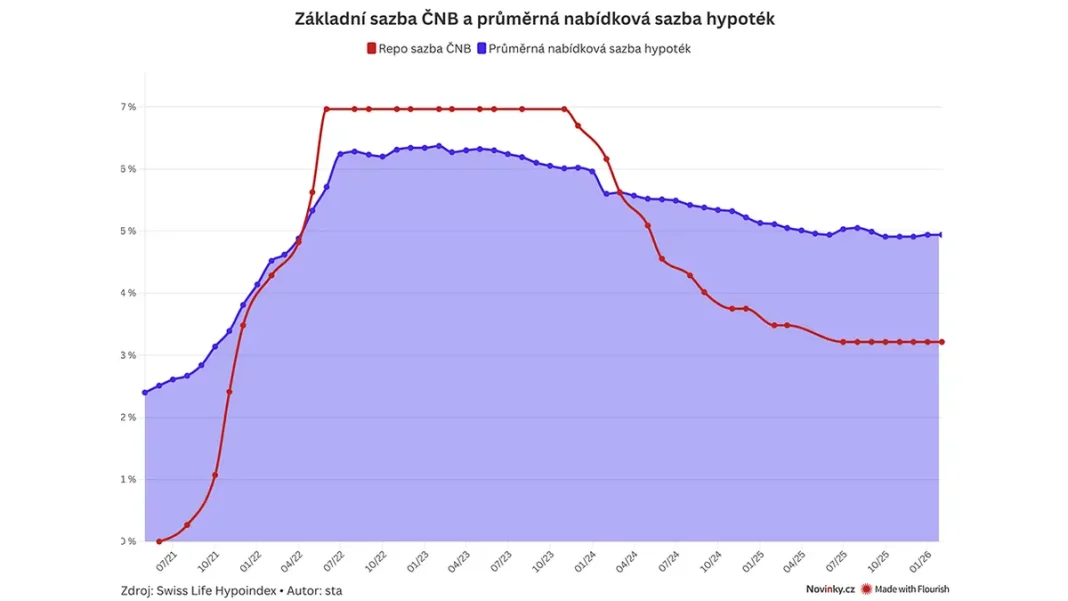

In a move that is sure to have considerable impact on the local real estate market, Prague banks have announced a reduction in mortgage rates by 0.01%. This seemingly modest decrease is expected to influence both current and prospective homeowners in the Czech capital.
Impact on Homebuyers

The reduction in mortgage rates, albeit slight, could ease the financial burden on homebuyers, particularly first-time purchasers. This decrease may translate into substantial savings over the lifetime of a mortgage, offering a welcome reprieve in an increasingly expensive market.
For potential buyers, this rate cut could enhance affordability, allowing them to consider options previously outside their budget. It may also prompt potential buyers to accelerate their home purchasing plans in anticipation of future interest rate changes.
Market analysts suggest that even a minor reduction can significantly affect buyer sentiment, potentially increasing demand in the housing market as more individuals find themselves able to secure loans under favorable terms.
Bank Strategies Behind the Rate Cut

The move to lower mortgage rates is part of a broader strategy by Prague-based banks to remain competitive and attract a diverse clientele. In a market where economic conditions are ever-changing, banks are keen to balance profitability with consumer retention through competitive loan products.
Financial institutions in Prague have also considered external economic pressures and consumer expectations, which have been largely shaped by recent global financial instability. By adjusting their mortgage rate offerings, banks are proactively addressing the needs of clients seeking financial certainty.
This strategy also aligns with efforts to stimulate the local economy by encouraging home ownership, which in turn fuels ancillary industries such as construction, home improvement, and real estate services.
Comparative Analysis with European Markets

Prague’s mortgage rate reduction occurs amidst a backdrop of varying mortgage trends across Europe. In some countries, rates have remained stable or increased slightly due to different economic policies and market conditions.
The Czech banking sector’s approach is illustrative of its commitment to adapting to local economic dynamics, contrasting with strategies seen in neighboring countries. This move could position Prague as an attractive option for international investors looking for lucrative property investments in Central Europe.
While some European markets focus on maintaining stability amidst inflation concerns, Prague banks have chosen to act decisively to foster growth, a decision that might influence future policymaking in the region.
Future Outlook and Considerations

Looking ahead, economic analysts in Prague expect that this move could potentially lead to further rate adjustments, either increases or additional cuts, contingent on broader economic indicators and consumer demand.
The current adjustment serves as a critical signal to both domestic and international investors about the robustness and adaptability of the Czech financial system. It also raises the question of how other financial institutions within the EU may respond.
Stakeholders in Prague’s real estate sector are now closely monitoring the ripple effects of this decision, considering how it may shape market dynamics and consumer behavior in the short to medium term.
In conclusion, while a 0.01% reduction in mortgage rates might appear minor, its potential impact on the Prague real estate market is significant. As banks strive to balance customer demands with economic trends, this adjustment is a timely intervention reflecting proactive financial stewardship.